Have questions? We have answers
Buy Now · Sample Kit · $19.99
In stock · sample kit ships in 2 to 6 business days
We use cookies and similar technologies. Some keep the site working. Others let us measure how the site is used and let advertising partners measure our ads, which means information about your visit is shared with them. You choose what runs. Read our Privacy Policy.
Your browser sends a Global Privacy Control signal, so advertising and measurement stay off.
In stock · sample kit ships in 2 to 6 business days

In stock · production 8 to 10 business days after proof approval
Final price confirmed on your quote and proof.
Bulk pricing from $0.49 per unit · exact price quoted to your specifications
In stock · sample kit ships in 2 to 6 business days














I've worked with Custom Packaging Lane a few times this year on packaging for our soaps. They always deliver great looking boxes within our tight deadlines. Frank is super communicative and a pleasure to work with.
Susi Lu
Happy Customer, here! The team at Custom Packaging Lane was accommodating and thorough with a recent print order I placed. I needed it pretty fast and they did not let me down! Great quality and fast shipping. Sam was my point of contact throughout this process and was amazing! Thank you!
Justin R.
Very happy with Custom Packaging Lane. Sam and Sarah were great to work with. The quality of the printing and speedy delivery was very much appreciated. I use them for 2 of our custom printed boxes and will be using them for more projects moving forward. Sam was wonderful and even caught a typo that I missed. Thank you.
Jamie
Paul and his team went above and beyond to not only deliver a seamless service but to ensure a long term positive relationship as well. We will be looking foreword to working with them in the future!
James B. Davis
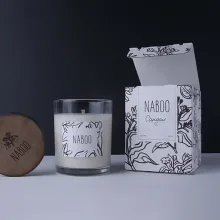
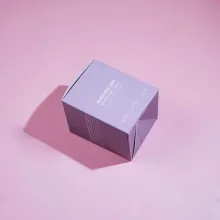
Custom Tissue Boxes play a role in how customers see your product. In stores, homes, offices and healthcare environments packaging is often the first thing people notice. With tissue box printing techniques you can show your brand logo, colors and product details clearly on every box. High-resolution CMYK printing, designs or bold patterns help your packaging stand out.
Custom Packaging Lane offers multiple design options. This way your packaging matches your brand identity. You can choose from modern styles to colorful, family-friendly themes. Customized tissue boxes can instantly reflect your product’s purpose. Many brands also align their tissue packaging with Custom Retail Boxes. This keeps a consistent look across product lines and helps customers to easily recognize the product on shelves.
You can choose single-color prints for a look or full-color designs for maximum visual impact. Inside and outside printing options give you space for branding and any type of information messaging.
You can add a matte or glossy finish, a soft-touch coating, or special effects like embossing or foil stamping. These give a luxurious feel to your tissue box.
The tissues are delicate. Requires protection from dust and moisture. Custom tissue boxes are made from materials such as cardboard, eco-friendly Kraft paper and rigid stock. These keep the tissues clean and protected. The materials help maintain hygiene and ensure that the packaging remains unchanged.
Strong material keeps the tissue box in shape during shipping and regular use. It protects from bursting, bending or collapsing. They are ideal for display and bulk storage. Businesses can maintain quality on large orders with custom tissue box options.
Kraft materials are a popular choice for brands looking for eco-friendly and reusable packaging. It creates a natural, earthy look while providing reliable strength for everyday use. With flexible tissue box sizes such as small travel packs, standard rectangular boxes and large family-sized packs, Kraft boxes can be tailored to suit a variety of product needs while remaining durable.
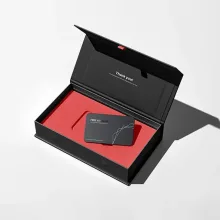
Cardboard and rigid stock materials are really good for making tissue boxes. They are durable. Cardboard is a choice for retail shelves because it is affordable and strong. Rigid boxes are great for luxury products because they feel sturdy and protect the tissues well. These materials make your packaging look good. Keep the tissues safe and clean.
Packaging should be easy to use. Customized tissue boxes are designed to make it easy for people to get the tissues they need. They have features like die-cut openings and perforated tops that make them easy to use every day.
These tissue boxes are easy to store and use at home in the office or in stores. Some brands also use custom boxes that are stylish and look nice like Custom Pillow Boxes for gifts or special packages. This makes their packaging look complete and attractive.
Although tissues usually do not require inserts, structural reinforcements can be added for bulk packaging to maintain shape and stability.
Retailers and distributors can order custom tissue boxes in bulk with consistent quality and branding. Orders can be fulfilled in less time without sacrificing quality or design. This makes it affordable and efficient.
Whether supplying supermarkets, pharmacies, or hospitality businesses, attractive and durable tissue boxes increase product visibility and build customer trust. Well-designed packaging protects tissues and encourages repeat purchases, maintaining a professional image with every order.
When you choose Custom Packaging Lane, you are working with experts who know how to make packaging that looks nice and works well. Our designers will help you create a design that stands out. We offer a lot of customization options. You can order many or as few boxes as you need and we will get them to you quickly without compromising on quality. We also offer shipping and fast production so you can get your customized tissue boxes to market quickly.
Ready to level up your Custom Tissue Boxes? We offer high-quality tissue boxes wholesale at great prices, with fast turnaround and free shipping across the USA. Most orders are produced in 8 to 10 business days after proof approval. Contact Custom Packaging Lane today. You can chat with us or book a call on our website, email inquiry@custompackaginglane.com, or call (833) 327-5627. We’re ready to help you get started.
In stock · sample kit ships in 2 to 6 business days

Filled pack length, width, height, tissue count, compressed stack height, and dispensing orientation are the core production inputs. Measurements should come from the tissue stack in its normal packed condition, not from an empty reference carton. Mark the loading end, the shelf-facing panel, the opening centerline, and whether the first sheet presents through a slit or a film-covered aperture. A stack photo can show the fold pattern, but the measured pack controls the cutting layout.
Straight tuck ends suit long, end-loaded rectangular packs, while an auto-lock bottom helps an upright or cube carton hold its base during filling. A reverse tuck end separates the two closure flaps when the packing sequence needs access from opposite faces. The dispensing cutout must align with the tissue fold, and the glue seam belongs outside the pull path. A filled dummy should expose panel bowing, difficult loading, torn sheets, or a first tissue that drops back inside.
| Tissue format | Common industry specification | Job control |
|---|---|---|
| Long rectangular dispenser | C1S or SBS paperboard selected within 12 to 24 pt | End-load direction and top-panel bow |
| Upright or cube dispenser | Kraft board choices commonly include 18, 20, and 24 pt | Base squareness and score response |
| Film-covered opening | 0.2 to 0.3 mm PET window film | Bonding edge, registration, and pull resistance |
| Two-sided artwork | C2S paperboard with outside and inside print | Scuffing at the opening and closure flaps |
Apertures should face away from concentrated stack pressure so the cut edge or film is not distorted before filling. Set the row pattern with glued seams square, then establish the master-carton count from the actual flat-pack thickness instead of a drawing estimate. Grain direction, score depth, and glue placement affect how quickly cartons open on a packing station. Pallet overhang can crush an edge before the blanks reach that station.
Comparable folding-carton details appear on bath bomb boxes and belt boxes. A tissue job still requires its own cutout position, stack compression, loading direction, and first-sheet trial.
Separate panel maps prevent logos and instructions from rotating or disappearing when the format changes. Lock the brand marks and copy hierarchy, then assign a unique product code and revision to every size. Digital printing can handle several low-quantity versions without a new plate set for each one. Offset printing becomes worth comparing when one design repeats across enough sheets to absorb setup. Sheet yield, ink coverage, version count, and expected waste determine the practical crossover.
A quiet border around the cutout reduces chipped ink, broken foil, and raised coating where fingers contact the panel. Foil stamping, spot UV, embossing, and heavy ink coverage need separation from scores, glue areas, and the aperture edge. Low-resolution logos lose detail, RGB art can shift during press preparation, and type placed on a score becomes hard to read after folding. Extend background color through the trim area so a small cutting movement does not leave a white hairline.
Use the custom packaging design guide to organize the panel file, then compare board stiffness, fold behavior, and surface treatments with a sample kit.