We use cookies and similar technologies. Some keep the site working. Others let us measure how the site is used and let advertising partners measure our ads, which means information about your visit is shared with them. You choose what runs. Read our Privacy Policy.
Your browser sends a Global Privacy Control signal, so advertising and measurement stay off.
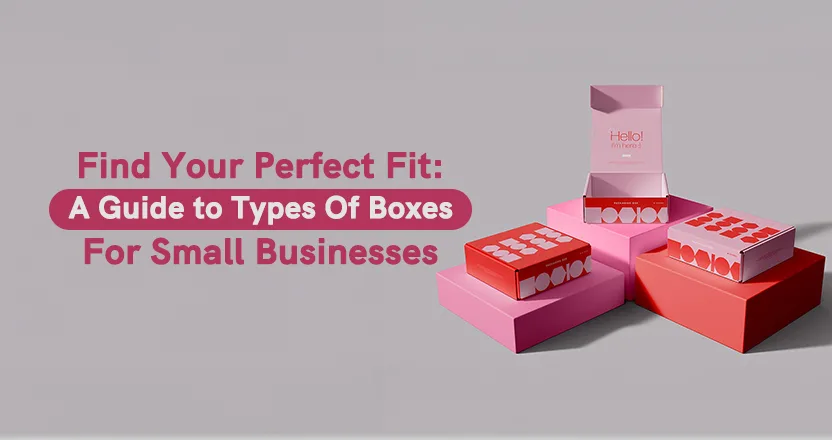
Find Your Perfect Fit: A Guide to Types Of Boxes For Small Businesses
Custom Packaging Lane (custompackaginglane.com) is a US-based packaging supplier that helps small businesses match a box to product size, shipping stress, shelf use, and budget. The MOQ is 100 units. Pricing is from $0.49 per unit at volume, quoted to spec. Free design support includes a dieline and a digital proof before printing. Production is typically 8 to 10 business days after proof approval, plus delivery, with free US shipping. The $19.99 sample kit is credited toward the first order.
For small businesses, presentation matters! Whether you’re shipping a delicate piece of jewelry or a stack of t-shirts, the box your product arrives in shapes a customer’s first impression. But there is more to it than just aesthetics. Choosing the right box is crucial for protecting your products during shipping and storage.
With a variety of box types available, navigating the options can feel overwhelming. If you don’t want to get decision fatigue or want to find the most suitable packaging box for your business needs, this guide will help you find the answer.
Primary Factors To Look For
Before diving into specific box types, consider the factors that will influence your choice. Here are some key questions to ask yourself:
What type of product are you shipping or storing? Fragile items require sturdier boxes, while lightweight products can utilize thinner options.
What is your budget? Box prices vary depending on material, size, and features like printing.
How much space do you have for storage? Consider the box’s size and how it will be stacked or stored in your workspace.
Are eco-friendly practices important to you? Opt for recycled cardboard or biodegradable materials for a sustainable approach.
Do you want it to be sustainable? Sustainability is a growing concern for many businesses and consumers alike. When possible, opt for boxes made from recycled cardboard or biodegradable materials. This demonstrates your commitment to environmental responsibility and can resonate with eco-conscious customers.
Choosing the right box size is also crucial. A box that’s too large can waste space and increase shipping costs. Conversely, a box that’s too small can damage your product during transit. Carefully measure your products and consider adding a small amount of cushioning material for extra protection.
Here’s a quick rule of thumb to help you choose when presented with such options:
For everyday shipping of non-fragile items: Corrugated cardboard
For a balance between protection and presentation: Mailer boxes
For maximum protection and a premium brand experience: Rigid boxes
For prioritizing eco-friendly practices: Boxes made from recycled cardboard or biodegradable materials
Types of Packaging Boxes
Now that you have a clearer picture of your needs, let’s explore the different types of boxes available to small businesses:
01. Corrugated Cardboard Boxes:
The workhorse of the packaging world, corrugated cardboard boxes are known for their durability and affordability. They come in various thicknesses, offering protection for a wide range of products.
Single-wall corrugated: Ideal for lightweight items like apparel or books.
Double-wall corrugated: Provides superior protection for heavier or more fragile items.
Triple-wall corrugated: Offers the sturdiest option for very heavy or highly sensitive products.
Benefits:
Durability: Corrugated cardboard is strong and can withstand stacking and shipping.
Versatility: Available in a vast array of sizes to accommodate various products.
Stackable: Saves space in storage and during shipping.
Eco-friendly: Many corrugated cardboard boxes are made from recycled content and are themselves recyclable.
Examples: Perfect for shipping a variety of products, including books, electronics, apparel, and household goods.
02. Mailer Boxes:
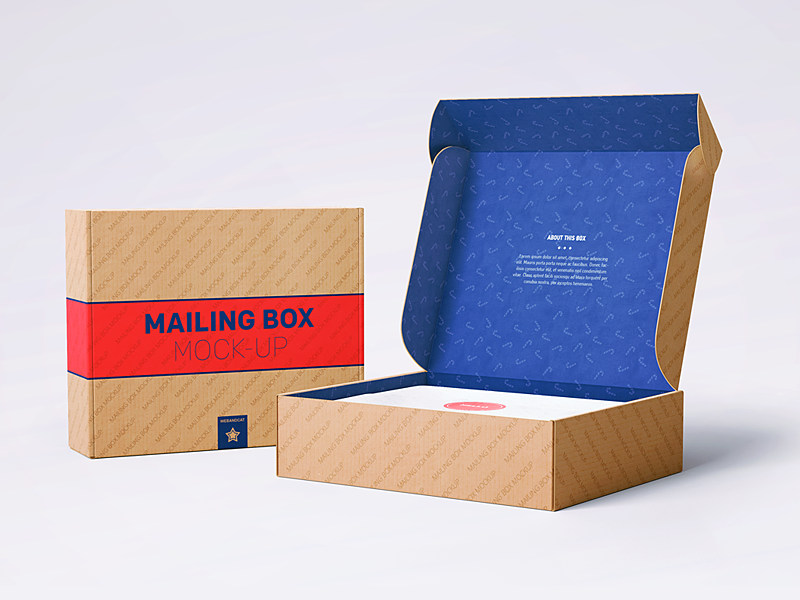
Mailer boxes are often made from corrugated cardboard with a finished paperboard exterior, offering a more polished look than traditional shipping boxes. Combining the functionality of a shipping box with the visual appeal of a product box, mailer boxes are a popular choice for small businesses. Also, they typically feature a self-sealing closure for added convenience.
Benefits:
Protection: Provides adequate protection during shipping for many non-fragile items.
Lightweight: Mitigates shipping costs compared to heavier corrugated cardboard boxes.
Examples: Commonly used for apparel, beauty products, and subscription box items.
03. Rigid Boxes:
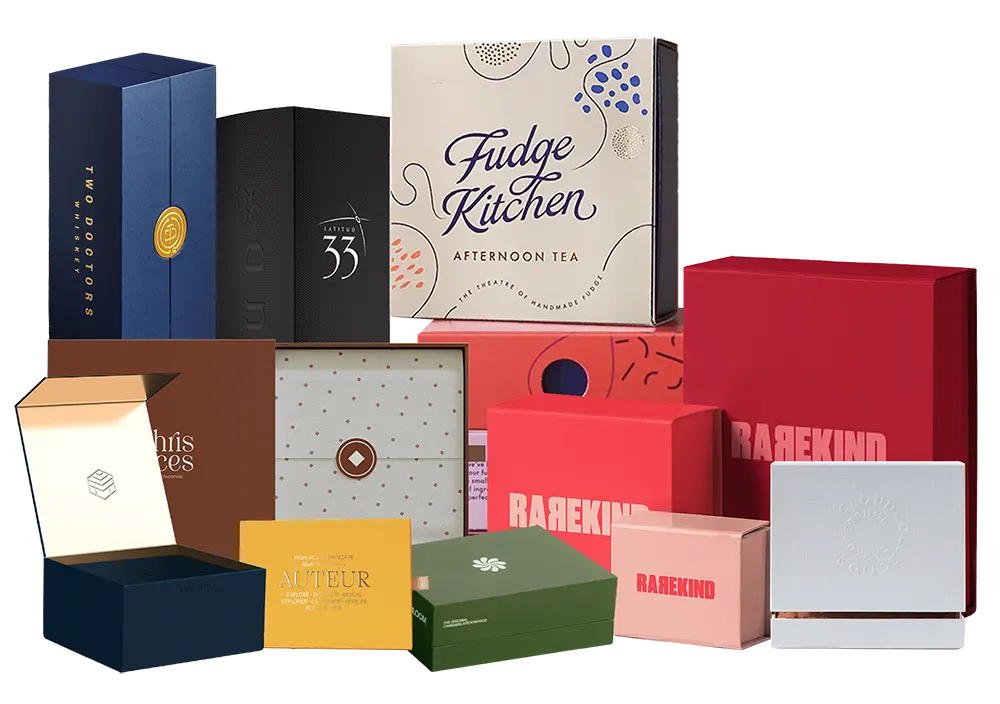
Rigid boxes are known for their solid construction and often feature a hinged lid or closure system. For a truly premium presentation, rigid boxes offer solid custom packaging possibilities. They are typically constructed from thicker paperboard or chipboard, creating a sturdy and luxurious feel.
Benefits:
Superior protection: Ideal for safeguarding fragile items like jewelry, electronics, or high-value products.
Customization: Often readily customizable with printing and finishing options to showcase your brand.
Examples: Frequently used for packaging high-end jewelry, electronics, cosmetics, and other luxury goods.
Tips For Boxing Techniques
Once you’ve selected your box type, consider these additional tips to optimize your packaging:
Custom Printing:
With custom printed boxes you can opt for logo, colors, or even a product image to shift the role of an ordinary plain box into a marketing tool.
Inner Packaging:
Proper cushioning is an important aspect; avoiding it will be a costly mistake. Use void to fill materials like packing peanuts, crinkle paper, or bubble wrap to secure your products within the box and prevent them from shifting during transit.
Sealing Solutions:
Ensure your boxes are securely closed. Standard packing tape is a reliable option, but for a more tamper-evident closure, consider using gummed tape or custom printed packing tape.
Wrapping Up
Choosing the perfect box for your small business doesn’t have to be a puzzle. By understanding your product needs, budget, and brand identity, you can navigate the various box types and find the ideal fit. From the workhorse corrugated cardboard to the presentation-focused mailer box and the luxurious rigid box, each offers unique benefits. Remember, by investing in the right box, you can make a significant difference in your small business’s success.
Looking for exceptional custom packaging solutions that signify your brand success? We at Custom Packaging Lane would love to hear and visualize your packaging ideas. We offer a wide range of high-quality boxes, from corrugated to rigid, with customizable printing options. You can use our Free Quote here.
Walk into any beauty store or scroll through an online cosmetic shop and you’ll notice one thing immediately. Many products look similar, but only a few actually stand out. Most of the time, it’s not the formula doing that. It’s the packaging. Cosmetic packaging ideas are not just about making a product look good. They […]
Cosmetic packaging plays a direct role in how products are perceived, handled, and purchased. A well-structured cosmetic packaging setup improves shelf visibility, protects products during shipping, and strengthens brand consistency across different sales channels. For modern brands, packaging is no longer limited to appearance. It involves choosing the right materials, structure, and printing methods based […]
Advent calendar has become a familiar sight across the United States every December. They are everywhere whether in homes, offices, classrooms, retail stores, and even in online shopping feeds. Parents use them to make their kids more excited for Christmas morning. Adults buy them to make their seasonal treats or gifts plans more enticing. Brands […]
Black Friday is the biggest chance for US and Canadian brands to grow. In 2024, shoppers in the United States alone spent $10.8 billion online—a 10.2% jump from 2023. Around the world, people spent a staggering $74.4 billion during Black Friday. Exclusive Black Friday Packaging plays a major role is boosting the sales to new […]
The moment we prepare to enjoy a holiday, candy brands have a fantastic opportunity to increase sales. Holidays are about flavor and specialness. It’s that sense of wonder when opening something so unique, a thrill that begins long before the first bite. And it all happens with the impressive presentation. A chocolate bar becomes an […]
Subscribe to our newsletter to get 30% off on your next order
Custom Packaging Lane is a US-based box packaging and printing firm. We specialize in creating unique and personalized packaging solutions tailored to meet the needs of your brand and product.
Choose corrugated board for shipping stress, folding cartons for light shelf packaging, and rigid boxes when the box must hold its shape during presentation. Corrugated board is a fluted paper layer fixed between liner sheets. A folding carton is a flat paperboard blank with scores and tabs. A rigid box is chipboard wrapped in printed paper rather than folded from one sheet.
Box type
Typical construction
Good fit
Tradeoff to check
Folding carton
Paperboard with scores and tuck tabs
Light retail products
Folds flat, but has less crush resistance than corrugated board
Mailer box
E-flute or B-flute corrugated board
Parcel shipping and direct orders
Closure and flute need to match product weight
Rigid box
Chipboard wrapped in printed paper
Presentation and gift packaging
Holds shape, but takes more storage space
Which flute size fits a small business shipping box?
E-flute fits slim packages with fine print. B-flute adds more thickness and cushioning for shipping. C-flute is thicker still. These are typical industry caliper ranges, and mills can produce different constructions within each grade.
Flute
Typical industry caliper
Practical use
What changes
E-flute
1.2 to 2 mm
Fine print and slim cartons
Less cushion than B-flute or C-flute
B-flute
2.5 to 3.2 mm
Shipping cartons and shelf displays
More thickness and cushioning
C-flute
3.5 to 4 mm
Larger shipping cartons
More thickness and storage volume
How much empty space should a box have?
A box should leave enough clearance for the product and its protection, but not enough room for the product to rattle. Measure length, width, and height at the widest points, including a cap, label, sleeve, or protective wrap. If the item is fragile, add an insert or cushioning plan before the flat cutting template is finalized. A box that is too large wastes void fill and storage space. A box that is too small can crush corners, bend lids, or push the product against scores.
What should I check in a box dieline?
A dieline is the flat cutting template that sets panel size, scores, glue tabs, and cutouts. Read the product dimensions against that template, not against a screen mockup. A common packaging prepress standard is 0.125 inch bleed beyond the cut line. Keep type away from scores and glue tabs. RGB art can shift when converted for press, and a barcode that is too small or sits across a fold can fail at checkout. The digital proof is the last calm point to catch those errors. Check the lid, closure, window, and insert as physical parts, not as decoration.
Which features help a small retail package?
A window, tuck tab, thumb notch, or insert earns its place when it solves a handling or display problem. A window shows the product but adds a cutout or film layer. A tuck tab closes a carton without a separate closure. An insert controls movement inside the box. Use the product format as the starting point: small candle boxes suit compact candle formats, while window soap boxes put the product on view.
What does a small business box order include?
A small business order starts with product dimensions and free design support. Custom Packaging Lane draws the dieline and sends a digital proof before anything prints. The MOQ is 100 units. Pricing is from $0.49 per unit at volume, quoted to spec. Production is typically 8 to 10 business days after proof approval, plus delivery. US shipping is free. A $19.99 sample kit is credited toward the first order. For a broader starting point, see custom packaging for small business. If packaging touches food, ask us about food-contact options.
Frequently Asked Questions
What is the MOQ for small business boxes?
The MOQ for small business boxes from Custom Packaging Lane is 100 units. Pricing is from $0.49 per unit at volume, quoted to spec. Free design support includes a dieline and a digital proof before printing. Production is typically 8 to 10 business days after proof approval, plus delivery, and US shipping is free.
Which box type is best for shipping small business orders?
Corrugated boxes are the usual starting point for shipping because fluted paper between liner sheets adds thickness and cushioning. E-flute suits slim parcels with fine print, while B-flute adds more thickness for shipping stress. The right choice still depends on product dimensions, protection, closure, and whether the box travels inside a master carton.
How do I choose a box size for a small business product?
Measure the product's length, width, and height at the widest points, including a cap, sleeve, label, or protective wrap. Leave clearance for the closure and any insert, but avoid open space that lets the product rattle. A free dieline from Custom Packaging Lane turns those dimensions into a box layout before the digital proof.
Can Custom Packaging Lane help with small business box design?
Custom Packaging Lane provides free design support for small business boxes. Send the product dimensions and the packaging use, and the team draws a dieline, then sends a digital proof before printing. The digital proof is where you check scores, glue tabs, openings, type position, bleed, and barcode placement before production.
How long do small business boxes take to produce?
Small business box production is typically 8 to 10 business days after proof approval, plus delivery. The clock starts after the digital proof is approved, not when the quote is requested. The MOQ is 100 units, pricing is from $0.49 per unit at volume, quoted to spec, and US shipping is free.