
























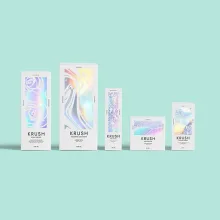
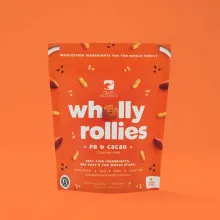
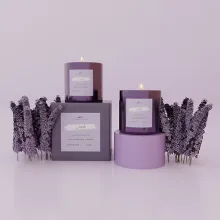
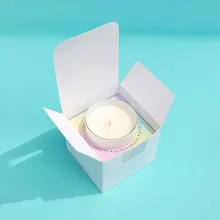



































What makes custom retail packaging readable on a shelf?
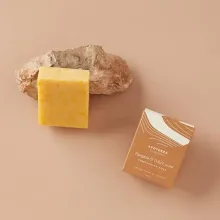
Custom retail packaging is readable when the brand, product name, and variant form a clear visual order on the panel a shopper sees first. The box has to work under store lighting, beside other products, and during the handling that happens before purchase. A strong first panel does not need every detail. It needs a clear identity and a reason to turn the package over.
Start with the shelf position, the visible panel, the product dimensions, and the copy that must appear. Then draw the structure around those facts. A package that is designed only as a flat artwork file can place a logo over a score, put a barcode on a seam, or hide the product name on a side panel.
Should I use a hang-tab, shelf-ready case, or carton?
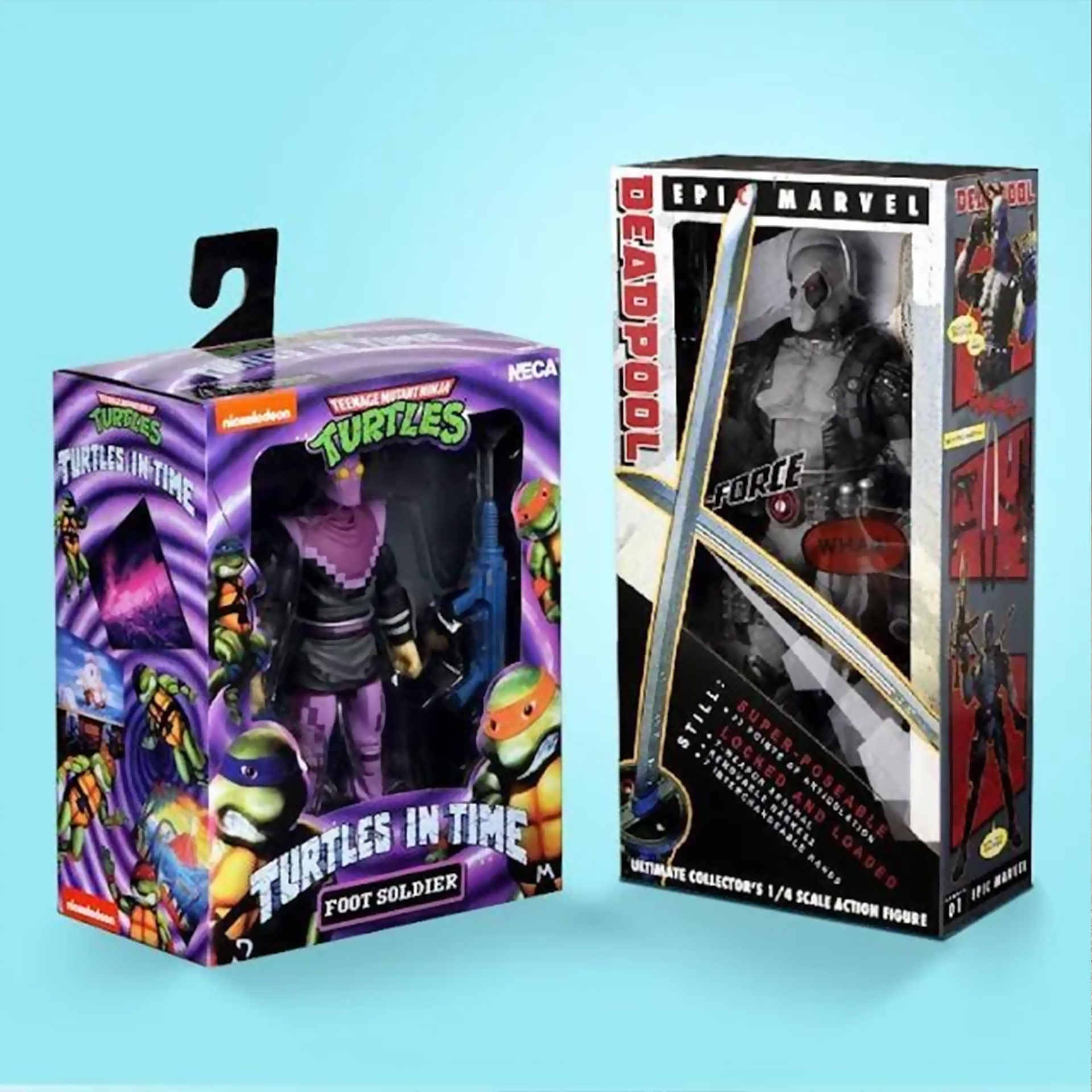
A hang-tab is suited to pegboard placement, a shelf-ready case is built for case-pack restocking, and a standard carton is suited to a product that sits as an individual package. The store task should decide the format.
| Format | How it is used | What to settle first |
|---|---|---|
| Hang-tab package | Hangs from a pegboard or display hook | Tab position, product weight, front panel, and hole placement |
| Shelf-ready case | Reaches the shelf as a case with a removable front section | Case opening, product facings, replenishment, and visible copy |
| Folding carton | Sits as an individual retail package | Product fit, panel order, closure, and barcode location |
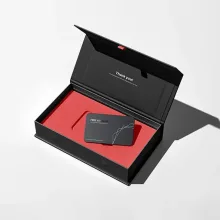
| Rigid box | Holds a fixed shape for a presentation-led item | Product support, wrapped panels, lid action, and handling |
Use the luxury packaging category when the structure and wrapped presentation need discussion. For simpler brown-board directions, compare custom kraft boxes. Food packaging has its own material questions, so use the food packaging category when the package may touch food.
Where should a barcode go on retail packaging?
A retail barcode should sit on a flat, unobstructed panel away from scores, folds, glue seams, windows, and heavy texture. A quiet zone is the blank space around a barcode that helps a scanner separate the symbol from nearby artwork.
Keep the barcode on the panel that will remain visible during handling. Follow the barcode owner's published requirements for size, contrast, and magnification. Do not place a barcode over a dark pattern because the box looks more decorated there. The proof should show the final barcode file, panel assignment, and surrounding quiet space.
How do board and finishes change shelf handling?
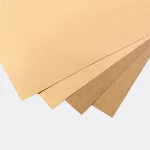
Board and finish change how a retail package feels, folds, prints, and handles. Kraft board has a brown base that affects color. White board gives the artwork a neutral surface. Corrugated board adds a fluted inner layer and is used when the package needs more structure than a thin folding carton.
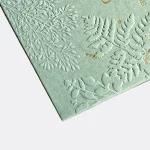
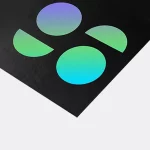
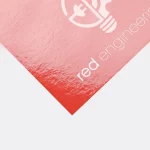
Matte lamination reduces glare and gives the panel a quieter surface. Gloss lamination adds shine and can make dark color look deeper. Spot UV creates a glossy area over selected artwork. Foil adds a metallic detail. Aqueous coating dries on the sheet and remains easier to handle around glue flaps than some harder surface treatments. Put the finish into the proof so the team checks the actual surface treatment.
How does retail packaging survive distribution and restocking?
Retail packaging moves through case packing, pallet handling, transport, unpacking, and shelf placement. The package should be checked at the points where it is lifted, stacked, opened, and pulled forward. Board choice, flute profile, scores, glue tabs, and the location of printed details all affect that work.
Custom rigid boxes use chipboard wrapped in printed paper, so the box holds its shape instead of folding flat like a carton. A lighter carton can suit a different product and shelf task. For related product directions, compare custom tin packaging and custom printed macaron packaging boxes against the actual product and display position.
How can I check shelf color and structure before ordering?
A physical check is the best way to judge how board, color, coating, and structure work under real light. Order the sample kit for $19.99, credited toward the first order, before the production proof is approved if those choices are still open.
Free design support can organize the supplied logo, product name, barcode, panel order, and finish direction. The digital proof is the place to catch artwork that crosses a score, a file that is too small to print cleanly, or copy that is too close to a glued flap.
What are the commercial terms for custom retail packaging?
Custom retail packaging uses a 100-unit MOQ. Pricing is from $0.49 per unit at volume, quoted to spec. Free US shipping and free design support are included. Production typically takes 8 to 10 business days after proof approval, plus delivery.
Send the product dimensions, preferred format, quantity, destination, artwork status, barcode file, and shelf position through the contact page. If the package may touch food, ask us about food-contact options before the box structure is approved.
What should a retail packaging brief include?
A useful brief names the store position, the package format, the product dimensions, the visible panel, the barcode location, the board or finish direction, the quantity, and the destination. Include a photo or sketch of the shelf task if the package must hang, face forward, or open in a particular way. The custom packaging solutions hub can help when the format is still being defined.
Frequently Asked Questions
What is the minimum quantity for custom retail packaging?
Custom retail packaging starts at 100 units. Pricing is from $0.49 per unit at volume, quoted to spec, with free US shipping and free design support. Production typically takes 8 to 10 business days after proof approval, plus delivery. Send the product, format, artwork, destination, and shelf details for a current quote.
How do I choose a shelf-ready case?
A shelf-ready case fits a product that reaches the store as a case and opens for restocking on the shelf. Check the case opening, product facings, visible copy, product weight, and how staff will pull units forward. A standard folding carton may fit better when each product is stocked as an individual package.
Where should a retail barcode go?
A retail barcode should sit on a flat, unobstructed panel with blank space around the symbol. Keep it away from scores, folds, glue seams, windows, and heavy background texture. The final proof should show the approved barcode file, contrast, panel assignment, and quiet zone before printing.
Can Custom Packaging Lane help with artwork and structure?
Custom Packaging Lane provides free design support and draws the dieline from the product information supplied for the project. A digital proof comes before anything prints. Check the product name, barcode, panel order, bleed, scores, glue areas, colors, and finish in that proof before approval.
Can I see the board and finish before ordering?
A $19.99 sample kit gives a team a physical reference for board, color, coating, and structure before a production order. The sample kit is credited toward the first order. Use it when screen artwork does not answer how the package feels in hand or looks under the intended shelf lighting.