




























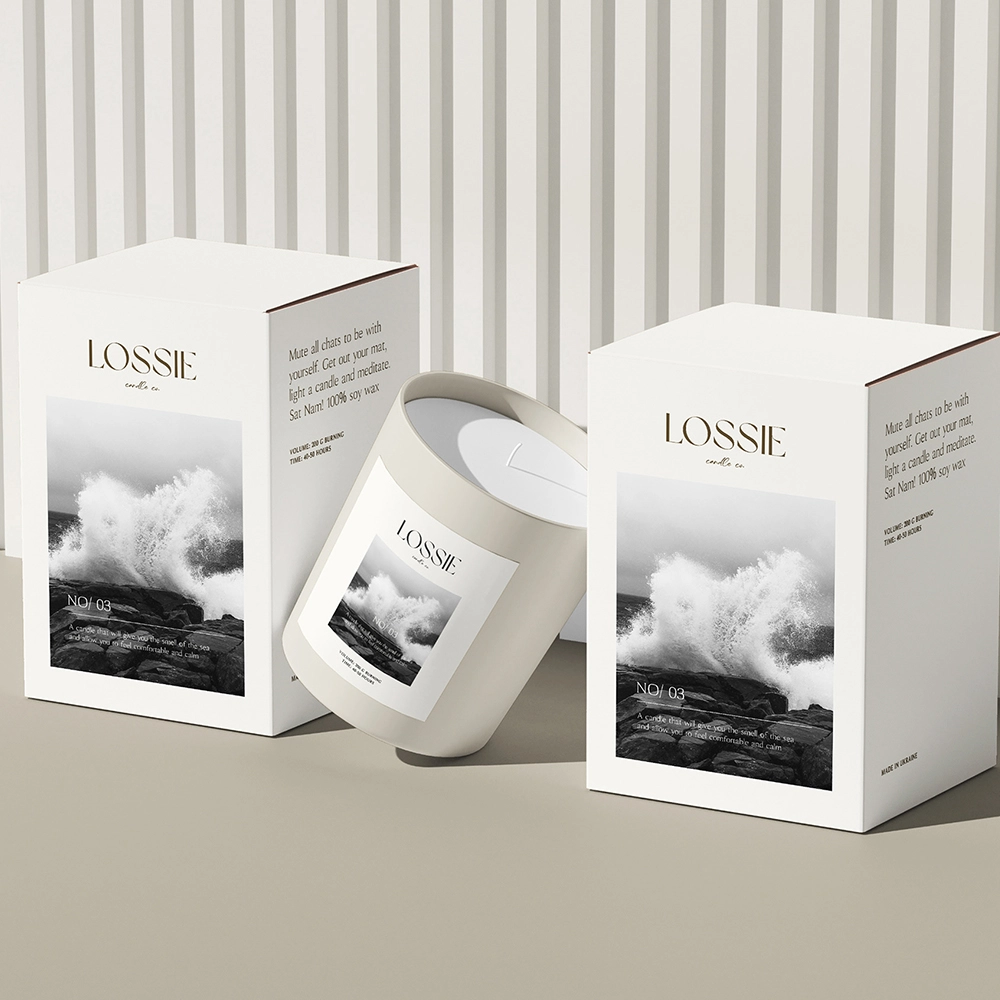




















































Custom labels start with the surface, the product information, and the moment when the label has to be read. A custom printed label is a printed adhesive piece applied to a package or product surface. A dieline is the flat template used to plan a box's cuts, folds, and glue areas. The same brief covers custom printed labels and customized labels. Before you order custom labels, define the package material, label size, copy, artwork, quantity, and destination. The custom packaging solutions hub is useful when the label will be paired with a box, bag, pouch, or container.
What information should an order for custom labels include?
An order for custom labels should include the product, package or surface, label purpose, dimensions, final copy, artwork status, quantity, destination, and desired arrival window. The label may identify the product, carry the main brand mark, or sit inside a larger package system. Name that job first, because it controls the hierarchy and proof review.
- Product and application surface.
- Label purpose, dimensions, and final copy.
- Logo, images, and artwork status.
- Quantity, destination, and timing need.
How should custom printed labels be designed?
Custom printed labels should be designed around one clear reading order. Put the product name or brand mark first, place supporting copy second, and keep small details away from the edge, cut line, and any area that may curve around the package.
| Label question | Proof check | Useful input |
|---|---|---|
| Which words must be read first? | Main mark and product name lead the layout | Approved logo and final copy |
| Where does the label sit? | Artwork matches a flat or curved surface | Package example and placement |
| Will the label wrap? | Copy stays clear at the overlap | Container shape and label direction |
| Is the label part of a system? | Related packages share a clear hierarchy | Box, bag, pouch, or container references |
Send vector logo art if available. Low-resolution art can show jagged edges. RGB files can shift when converted for print. A digital proof should show the label at the intended size and placement, not as a large screen graphic alone.
Which label stock and finish should I discuss?
Discuss stock, adhesive, finish, and application surface together. Paper can give a familiar printed texture, while film can suit a surface that flexes or sees more handling. The right choice depends on the product and package. Matte reduces glare. Gloss reflects more light and can make color look brighter, but it can also show fingerprints.
If you do not know the construction, say what the package is made of, whether it is flat or curved, and how the label will be applied. Ask for the label direction to be shown in the proof.
Which products can help plan a label and package together?
Start with printed labels when the label itself is the main purchase. If the label will sit on a bottle-led presentation, review custom woozy bottle boxes. For a candle package, custom votive candle boxes can frame the discussion about the label and outer box as one system.
What should the label proof check?
The proof should show the finished size, panel or surface placement, type, color direction, bleed, cut line, and any barcode at its intended scale. Check that type does not run into the cut line and that copy remains readable on a curve. If the label wraps around a container, show the overlap and the point where the label begins and ends.
Free design support can organize the label artwork and draw a dieline when a surrounding box needs one. Approve a digital proof before anything prints. That is where you catch missing bleed, reversed artwork, or a logo placed too close to an edge.
What are the MOQ, price, and production window?
Custom label orders start at 100 units. Pricing is from $0.49 per unit at volume, quoted to spec. Production is typically 8 to 10 business days after proof approval, plus delivery. Free design support and free US shipping are available.
A $19.99 sample kit can help you compare the label direction with the surrounding package before approving the proof. Prepare the product, surface, copy, artwork, quantity, destination, and timing need, then request a quote.
Frequently Asked Questions
What information is needed to order custom labels?
To order custom labels, provide the product, application surface, label purpose, dimensions, final copy, artwork status, quantity, destination, and timing need. Include the logo and any existing layout. If the label belongs to a box, bag, pouch, or container, describe that package context in the brief.
Can CPL help with custom printed labels?
Custom Packaging Lane provides free design support for organizing custom printed label artwork and its package context. Share the logo, copy, images, surface, dimensions, quantity, and destination. The project can then move to a digital proof that shows the agreed label direction before anything prints.
What is the MOQ for custom labels?
The MOQ for custom labels is 100 units. Pricing is from $0.49 per unit at volume, quoted to spec. Include the product, application surface, artwork status, quantity, and destination so the quote reflects the actual label and print brief.
How should I read custom label pricing?
Custom label pricing is from $0.49 per unit at volume, quoted to spec. That is a qualified starting reference, not a flat price for every label. Share the stock direction, finish, dimensions, quantity, artwork status, and destination before requesting project-specific terms.
When should custom label production be planned?
Custom label production is typically 8 to 10 business days after proof approval, plus delivery. Schedule artwork preparation and internal review before proof approval, especially when the label must match a box or container. Free US shipping is available, and the destination still belongs in the request.












