




























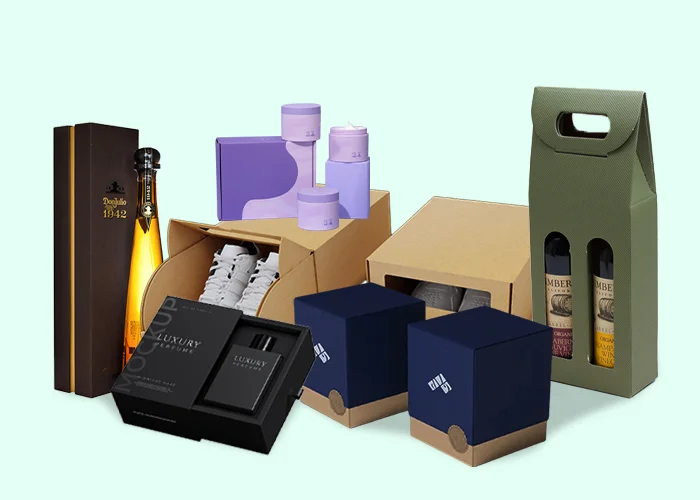




















































What are custom retail boxes used for?
A custom retail box is a printed package planned for a product's shelf, display, or counter position. It has to identify the item, fit the product, and give a shopper a clear first read before the box is handled. The box also has a job in the back room: it must arrive with its panels intact, open as intended, and close without fighting the glue tabs or scores.
Custom retail packaging can mean a folding carton, a display structure, or a small box built around a vial or bar. Start with the place where the box will sit, the product dimensions, and the information that must stay visible. That short brief prevents a shelf package from being chosen only for its artwork.
Which retail box format fits the product?
The right format follows the product shape and the shelf job, so a bottle, vial, bar, and display item should not share one assumption.
| Retail job | Box direction | First details to settle |
|---|---|---|
| Counter or shelf display | Retail display box | Visible panel, placement, replenishment, and artwork |
| Small bar or packaged item | Compact printed carton | Product size, variant, opening, and copy hierarchy |
| Bottle presentation | Bottle box | Bottle fit, closure, handling, and front panel |
| Small information-led product | Vial box | Label area, product visibility, and supplied wording |
| Carry-away purchase | Box versus retail bag | Display role, carrying task, and product protection |
Use retail display boxes for a display-led brief, custom mushroom chocolate bar boxes for a compact bar format, and custom woozy bottle boxes for a bottle presentation route. Custom vial boxes fit a smaller information-led package. When the box type is still open, the custom packaging solutions hub is a useful starting point.
How does a dieline affect a retail box?
A dieline is the flat cutting and folding template used to lay out a box before printing and cutting. The dieline starts with the product's length, width, and height, then adds panels, scores, glue tabs, and the opening sequence. A box drawn around the wrong product dimensions can look right on screen and still pinch the product at the fold.
Keep type, barcodes, and important artwork away from scores and glue seams. Add bleed where the printer's file setup calls for it. Low-resolution art, RGB files that shift during press conversion, and missing bleed belong in the prepress check, not on a finished pallet. Free design support includes drawing the dieline, followed by a digital proof before anything prints.
What should custom printed retail packaging show first?
Printed retail packaging should make the brand and product name readable before secondary copy. Put the variant and the most useful supplied information where the shopper can find them without turning the box around several times. Match the artwork hierarchy to the panels visible at the shelf or display position.
Matte lamination reduces glare across a broad panel. Gloss lamination adds a shinier surface and can make color feel more saturated. Spot UV puts a hard glossy area over selected artwork, while foil adds a metallic accent. These finishes change the surface, so include the chosen finish in the proof instead of judging the artwork on an uncoated screen.
Can a retail box handle shelf and back-room work?
A retail box needs a structure that fits its display position and the way staff replenish it. A display box may need an open face or a visible product panel. A bottle or vial box may need closed panels and a tighter opening sequence. The folding carton, board choice, scores, and glue tabs should be checked together.
Ask where cartons will sit, how they will be pulled from a case, and which panels can be touched during restocking. A box that looks good in a single product photo can still fail the practical check if the barcode sits across a score or the opening catches on a flap.
Should I choose a box or a custom retail bag?
A box is the better route when the product needs defined panels, a repeatable display shape, or a controlled opening. A retail bag may fit a purchase where carrying is the main task and a rigid front panel is less useful. Compare the product shape, shelf position, carrying task, artwork area, and customer opening before choosing the format.
The phrase custom retail bags does not answer the packaging question by itself. Write the actual job into the brief. If the product needs to sit upright, show information on several panels, or arrive with a structured presentation, start with a box route and test it against the product dimensions.
What are the order terms for custom retail boxes?
Custom retail box projects use a 100-unit MOQ. Pricing is from $0.49 per unit at volume, quoted to spec. Free US shipping and free design support are included. Production typically takes 8 to 10 business days after proof approval, plus delivery. The clock starts at proof approval, not at the first inquiry.
A sample kit is $19.99 and is credited toward the first order. If the package may touch food, ask us about food-contact options. If the project needs a child-resistant feature, ask what can be built into the package for the intended use.
What should I send for a custom retail box quote?
Send the product dimensions, retail setting, preferred format, artwork status, quantity, destination, and desired arrival window. Include the panel that must carry the brand mark, product name, variant, barcode, or other supplied copy. Then compare the proposed dieline and digital proof against the real shelf task before approval.
Frequently Asked Questions
What does a custom retail box need to do?
A custom retail box needs to identify the product, fit its dimensions, read clearly at the shelf or display position, and open as intended. The project brief should name the retail setting, product shape, artwork hierarchy, and opening task. A folding carton, display box, bottle box, or vial box may fit different jobs.
Can I use a retail bag instead of a box?
A retail bag can fit a purchase where carrying is the main task, while a box fits a product that needs defined panels, a display shape, or a controlled opening. Compare the product dimensions, shelf position, artwork area, carrying task, and customer interaction before choosing between a bag and custom retail boxes.
Which product formats can start a retail box brief?
Retail display boxes, mushroom chocolate bar boxes, woozy bottle boxes, and vial boxes can each start a product-specific packaging brief. The correct route depends on the product dimensions, display position, supplied artwork, opening sequence, quantity, destination, and information the box must carry.
What do custom retail box orders cost and how fast are they?
Custom retail box orders use a 100-unit MOQ and pricing from $0.49 per unit at volume, quoted to spec. Free US shipping and free design support are included. Production typically takes 8 to 10 business days after proof approval, plus delivery, so approval timing belongs in the project plan.
Should I order a sample kit for a retail box?
A custom retail box sample kit costs $19.99 and is credited toward the first order. It gives the team a physical reference for structure, board feel, color, and finish before artwork and the digital proof are approved. The sample kit is useful when the shelf position or opening sequence is still being settled.












