


















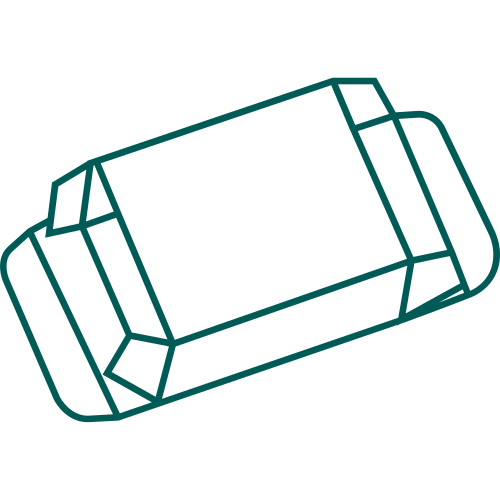






















































A dieline size guide helps turn a finished package idea into a measurable layout. A dieline shows where material is cut, folded, glued, and kept clear for artwork. It is not only a flat drawing of a box. The finished inside dimensions, board or material choice, closure, insert, and production structure all affect the final template. Use this page to understand the anatomy, create a simple planning estimate, and prepare a clean brief for free design support.
How do I use this dieline size calculator?
Enter the inside length, width, and height you want the assembled package to hold. Add the glue flap and closure flap measurements used in your preferred layout. The calculator returns a simple flat-layout planning estimate for a wrap-style structure. It does not account for every tuck, locking tab, material thickness, trim allowance, or production convention, so the result should be reviewed before artwork or proof approval.
Use one consistent unit for every measurement.
What is the anatomy of a dieline?
- Panels define the surfaces that become the front, back, sides, top, or base.
- Fold lines show where the material changes direction.
- Cut lines define the outside shape, openings, and structural details.
- Glue flaps identify areas used to join the package.
- Closure flaps determine how the package opens and closes.
- Artwork-safe areas keep important text and marks away from folds and cuts.
Which dimensions belong in a dieline brief?
| Dieline input | How to measure it | Why the designer needs it |
|---|---|---|
| Inside length | Longest usable product direction | Sets the main panel span around the item. |
| Inside width | Side-to-side product space | Controls the second panel direction and fit. |
| Inside height | Product depth or vertical space | Shapes side panels and closure alignment. |
| Flap allowances | Structure-specific joining or closure space | Changes the flat layout without changing the product footprint. |
How do common box formats use a dieline?
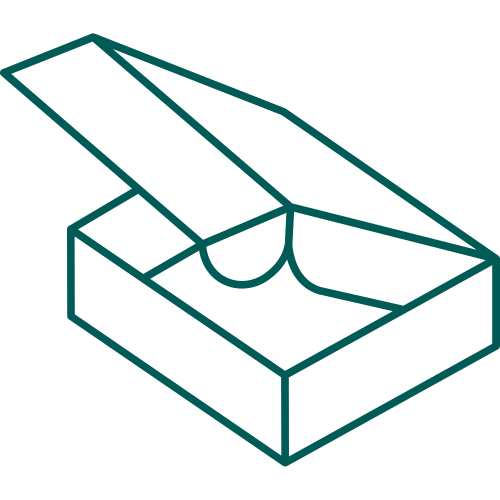
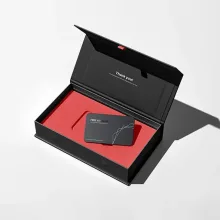
A mailer structure usually puts more attention on the opening sequence, locking features, and side walls. A rigid printed box needs a layout that reflects the wrap, board, covering, and assembly method. A shipping box needs the product fit and closure to work with handling demands. Review custom mailer boxes, rigid printed boxes, and custom shipping boxes as separate structural directions rather than treating every package as the same template.
What should I send before artwork begins?
Send the finished inside dimensions, product orientation, closure preference, insert requirements, material direction, and the artwork priorities. Include which surfaces must remain clear for folds, cuts, glue, labels, or handling. If the package needs a window, handle, locking tab, or special opening, describe that before the layout is prepared. Generic downloadable templates can be useful for reference, but they should not replace a structure-specific dieline.
Can I start without design software?
Yes. Start with measured dimensions, a simple sketch, product photos, and notes about how the package should open. The calculator gives you a flat-layout planning estimate, while the design team can translate the brief into a production-ready direction. CPL offers free design support, so you do not need to create a finished vector file before asking for help.
What is the CPL dieline and quote path?
Use the custom packaging solutions hub to compare structures, then send your measurements and product context with the quote request. CPL has a minimum of 100 units. Pricing is always hedged as from $0.49 per unit at volume. Production is typically 8 to 10 business days after proof approval, plus delivery. Free US shipping is available, and the $19.99 sample kit can help you compare materials and opening styles before proof approval.
Why should the dieline be checked before proof approval?
A flat layout can look correct while still missing a closure, insert, fold direction, or usable artwork area. Check the assembled dimensions, the order of panels, the glue location, and the way the product enters and exits the package. A careful review at this stage reduces avoidable redraws and gives the packaging supplier a clearer path to the next proof.
Frequently Asked Questions
What is a dieline?
A dieline is the structural layout used to show where a package will be cut, folded, joined, and prepared for artwork. It represents the package before assembly. The correct layout depends on the finished dimensions, material, closure, insert, and production method, so a generic flat drawing should be treated as planning reference only.
How do I measure a box for a dieline?
Begin with the usable inside length, width, and height of the assembled package. Then note the closure, joining, insert, and opening requirements. Keep every measurement in the same unit and explain which direction the product should face. A supplier can use that brief to develop the structure-specific layout.
Do I need design software to start a dieline project?
No. A measured sketch, product photos, and written notes can be enough to begin. Describe the desired opening, closure, material direction, artwork priorities, and insert needs. CPL offers free design support, so you can start with the information that defines the package instead of waiting until you have a finished vector file.
Why is a generic template risky?
A generic template may use a different structure, material thickness, flap pattern, or closure than your package needs. It can also place artwork across folds or cuts. Use generic references to understand terminology, but have the final layout checked against the product, assembly method, and intended presentation before artwork is approved.
Can Custom Packaging Lane prepare dieline support?
Yes. Share the product dimensions, package format, closure idea, artwork needs, and any insert or window requirements. CPL provides free design support and can help turn the planning measurements into the next design step. The minimum is 100 units, pricing is always hedged as from $0.49 per unit at volume, and production is typically 8 to 10 business days after proof approval, plus delivery.