




















































What does DIY packaging do well?
DIY packaging is packaging a small business assembles, prints, decorates, or sources in-house instead of ordering a defined custom structure. It can be a sensible test when the product, artwork, or opening method is still changing. DIY also exposes work that is easy to miss in a mockup: cutting, folding, tape, labels, packing time, and inconsistent placement.
That control has a limit. When every order needs the same fold, label position, insert, or printed surface, the manual method can become the job rather than part of the job. The decision is not about making DIY sound bad. It is about whether the current workflow still fits the product and the time available to pack it.
When does custom packaging become the better workflow?
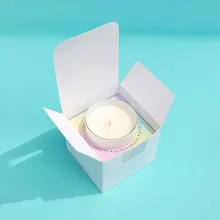
Custom packaging becomes the better workflow when the package needs a repeatable structure and manual steps are creating friction. A custom package starts with the product, its dimensions, the opening, the artwork, and the way the buyer receives it. A digital proof gives the business a defined version to review before anything prints.
| Decision area | DIY direction | Custom direction |
|---|---|---|
| Concept changes | Easy to change by hand as the idea moves | Changes are reviewed against a defined proof |
| Printed consistency | Depends on repeatable manual placement | Artwork follows an approved package structure |
| Assembly | The business performs each packing step | The package is planned around folding, glue, and closure |
| Starting quantity | Set by the materials and time available | CPL custom projects start at 100 units |
| Physical review | Uses the current handmade or sourced version | Can use a $19.99 sample kit before the production proof |
The table describes workflow differences, not a universal ranking. DIY can remain the right choice for a changing concept. Custom packaging is worth assessing when the business needs the same package to look and open the same way from order to order.
How should a small business compare DIY and custom packaging?
Compare the DIY package and the custom format with the same product, handling, and presentation questions. Write down what the current package does well, where it takes too long, and what the buyer sees when the package arrives. Then ask whether the custom version can preserve the useful part without keeping the manual friction.
Use product-specific examples to make the brief concrete. Custom tin packaging can be a starting point for a compact giftable item. Custom taper candle packaging gives a candle project a format to discuss. A food-related presentation can be compared through custom printed macaron packaging boxes. A paper product can use custom greeting card packaging. A technical product can use custom drone packaging boxes. The product should set the structure.
What should the custom packaging brief answer?
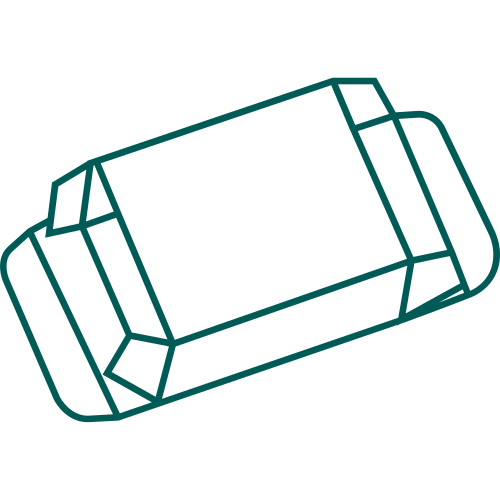
The custom packaging brief should answer what the package holds, how it opens, and what the buyer should see first. A dieline is the flat cutting template that shows panels, scores, cuts, and glue tabs. Free design support can help draw the dieline from the product dimensions, then CPL sends a digital proof before anything prints.
- Product dimensions and orientation inside the package
- Opening, closure, insert, and storage needs
- Artwork status, logo placement, and printed panels
- What the DIY package already does well
- What creates friction during packing or delivery
Keep the package brief tied to a real product. If the product rattles inside an insert, the insert needs attention before the artwork is polished. If type sits too close to a score, move it before proof approval. Those are packaging decisions, not style preferences.
What do the MOQ and sample kit change?
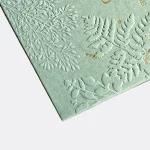
The 100-unit minimum gives a small business a defined starting quantity for a custom project. The $19.99 sample kit gives the team a physical reference before the production proof is approved. Use the sample to compare feel, finish, opening, and fit questions that a screen cannot settle.
Free design support and free US shipping also belong in the planning math. Pricing is from $0.49 per unit at volume, quoted to spec. Visit the custom packaging solutions hub when the brief needs a broader format reference.
When does custom packaging production begin?
Custom packaging production begins after proof approval. A production run is typically 8 to 10 business days after proof approval, plus delivery. That estimate does not cover the time needed to settle the product dimensions, dieline, artwork, insert, opening, or internal signoff. Send the brief early, review the proof carefully, and approve it only when the package matches the intended handoff.
Frequently Asked Questions
Should a small business start with DIY packaging?
A small business can start with DIY packaging when the product presentation or opening method is still changing. DIY gives direct control over cutting, labels, assembly, and packing. The approach becomes harder to repeat when every order needs the same structure or printed placement. Compare the current workflow with a custom brief before switching.
What usually causes a DIY package to become hard to repeat?
Manual cutting, folding, labeling, inserts, and packing steps can make a DIY package hard to repeat when each order needs the same result. The practical test is whether the business can keep the product fit, opening, artwork placement, and packing time consistent. A custom format may be worth assessing when those steps create friction.
How many units are needed for a custom packaging order?
The minimum order for Custom Packaging Lane custom packaging is 100 units. That starting quantity can fit a focused small-business project when the product, structure, and artwork have a clear job. Pricing is from $0.49 per unit at volume, quoted to spec, so the quote still depends on the selected format and quantity.
What does the CPL sample kit cost?
The Custom Packaging Lane sample kit costs $19.99. It gives a small business a physical reference for comparing board feel, print treatment, finish, opening, and fit before approving a production proof. Use the sample with product dimensions and a clear brief so the comparison answers a real packaging question.
When does production time start for custom packaging?
Production is typically 8 to 10 business days after proof approval, plus delivery. The production estimate starts after the proof is approved, not when the first idea is discussed. Allow time before approval for the dieline, artwork, product fit, insert, opening, and internal review.