





















































What makes lid and base boxes different from other rigid boxes?
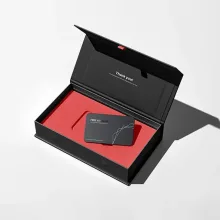
A lid and base box has two separate pieces: a top that lifts away and a lower tray that holds the product. With no hinge joining them, the structure can show a deliberate band of the base when closed. Lid depth controls that reveal, while the contact between the two wrapped pieces affects how easily the top lifts.
Custom rigid boxes with lids suit buyers who want this complete lift-off opening. The top panel carries the first brand impression, but the base reveal, inner walls, and product position become visible during opening. Those surfaces should be planned as one sequence rather than as separate decoration areas.
Orders begin at 100 units, with pricing from $0.49 per unit at volume. Production is typically 8 to 10 business days after proof approval, plus delivery. Free US shipping and free design support are included.
Which materials suit premium paper lid and base boxes?
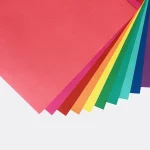
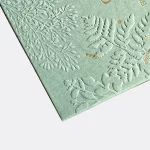
For this two-piece product, a common rigid-paper build uses 1.5 to 3 mm chipboard wrapped in 100 to 157 gsm art paper. The dense core forms the lid and base walls, while the wrap creates the visible printed or decorative surface. Available directions include rigid or press board with white, colored, textured or linen, foil metallic, holographic, or kraft stock.
A kraft presentation can be developed through custom kraft boxes with lids. Projects using wrapped press board belong in the custom rigid boxes family, which keeps the structural decision separate from folding-carton construction. Matte, gloss, or soft-touch lamination can change the hand feel. Foiling, spot UV, embossing, and debossing should be positioned with the lid edge, corner turn-ins, and visible base band in mind.
How should custom lid and base boxes fit the product?
Begin with the product's packed orientation, then decide what the buyer should see and touch first. A shallow lid leaves more base visible. A deeper lid covers more of the tray and creates a longer contact path during removal. If an insert is part of the packout, its cavity and finger access should support removal without forcing the buyer to pull on the box walls.
| Design decision | Specification to record | Effect on the pack |
|---|---|---|
| Lid coverage | Shallower or deeper lid | Changes the visible base reveal and lift-off contact |
| Product position | Orientation and insert cavity | Controls the opening view and product movement |
| Removal path | Direct lift or removal from an inner pack | Determines finger access and usable clearance |
| Printed surfaces | Outside, inside, or both | Places artwork across the closed and opened states |
| Outer protection | Rigid box alone or inside corrugated protection | Keeps shipping contact separate from the presentation surface |
Comparing custom cardboard boxes with lid and tray with custom lid and tray boxes focuses the choice on the packed product, desired reveal, lid coverage, and removal path. The lid label alone does not resolve those decisions.
When do lid and base boxes need corrugated protection?
A premium paper lid and base box is primarily a presentation package. If it will travel through parcel handling, a separate corrugated outer layer can keep labels and tape off the wrapped lid and reduce rubbing at decorated corners. Design that layer around the fully packed rigid box, including the product and any insert, rather than around the empty shell.
The outer pack needs enough clearance to avoid pressing the lid tightly against the base. Internal restraint should also keep the two-piece box from sliding into the outer walls. This is especially important when foil, spot UV, embossing, or a textured wrap sits close to the lid edge, where repeated contact can interrupt the intended reveal.
What belongs in a custom OEM lid and base box specification?
An OEM specification should identify the product dimensions, packed weight, orientation, lid depth, visible base reveal, board and wrap direction, artwork, printed surfaces, and finish locations. State whether the product sits directly in the tray, uses an insert, or remains in another primary pack. For a compact item, custom lid and tray soap boxes illustrate why cavity fit and finger access must be resolved alongside the artwork.
- Map the artwork across the lid top, lid walls, base exterior, and visible interior.
- Mark foil, spot UV, embossing, or debossing away from foldovers and high-contact edges where appropriate.
- Record the closed reveal, opening grip, product orientation, and removal path.
- Include the filled presentation box when specifying any corrugated outer protection.
A digital proof is sent before printing so the selected surfaces and finish positions can be checked with the two-piece structure.
The $19.99 sample kit is available before you finalize the box specification.
Frequently Asked Questions
How is a lid and base box different from a hinged box?
A lid and base box uses two independent pieces, so the top lifts completely away and reveals a band of the lower tray. A hinged box keeps the top attached along one edge and controls the opening path. The two-piece choice is useful when lid depth, visible base color, and a clean all-around reveal are central to the presentation.
How should board and paper wrap be selected for a rigid lid and base box?
Rigid or press board forms the lid and base walls, while the paper wrap carries the visible color and print. Product weight, box span, lid depth, and lift-off feel affect the core choice. Wrap stock also changes corner turn-ins and finish behavior, so the board and wrap should be specified together rather than treated as separate cosmetic choices.
Why does lid depth matter on a two-piece box?
Lid depth determines how much of the base remains visible when the box is closed. A shallower lid creates a wider reveal, while a deeper lid covers more of the tray and changes the contact area during opening. The choice should also account for how the customer grips the box and whether an outer pack adds pressure around it.
When should corrugated protection be added around a rigid box?
Add a corrugated outer layer when the wrapped presentation box will face parcel labels, tape, rubbing, or repeated handling. Design that outer pack around the filled lid and base box, including the product and any insert. Clearance and internal restraint should keep the decorated lid from contacting the shipping walls or shifting away from the base.
What should an OEM lid and base box specification contain?
An OEM specification should identify the product dimensions, packed weight, orientation, lid coverage, visible base reveal, board and wrap direction, printed surfaces, and finish locations. It should also describe any insert and corrugated outer layer. These inputs connect the artwork to the physical opening sequence and help prevent a visually correct box from handling poorly.