
































































What are luxury packaging materials?
Luxury packaging materials are the papers, boards, films, and metals that set a package's surface, stiffness, weight, and opening behavior. Material alone does not decide the result. The product fit, structure, closure, artwork, interior, and finish have to agree with the use case.
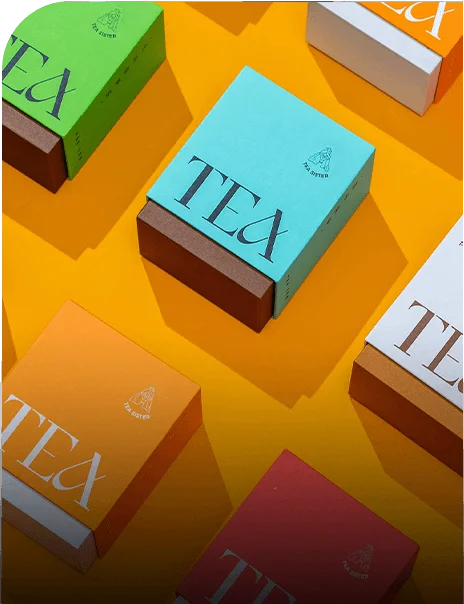
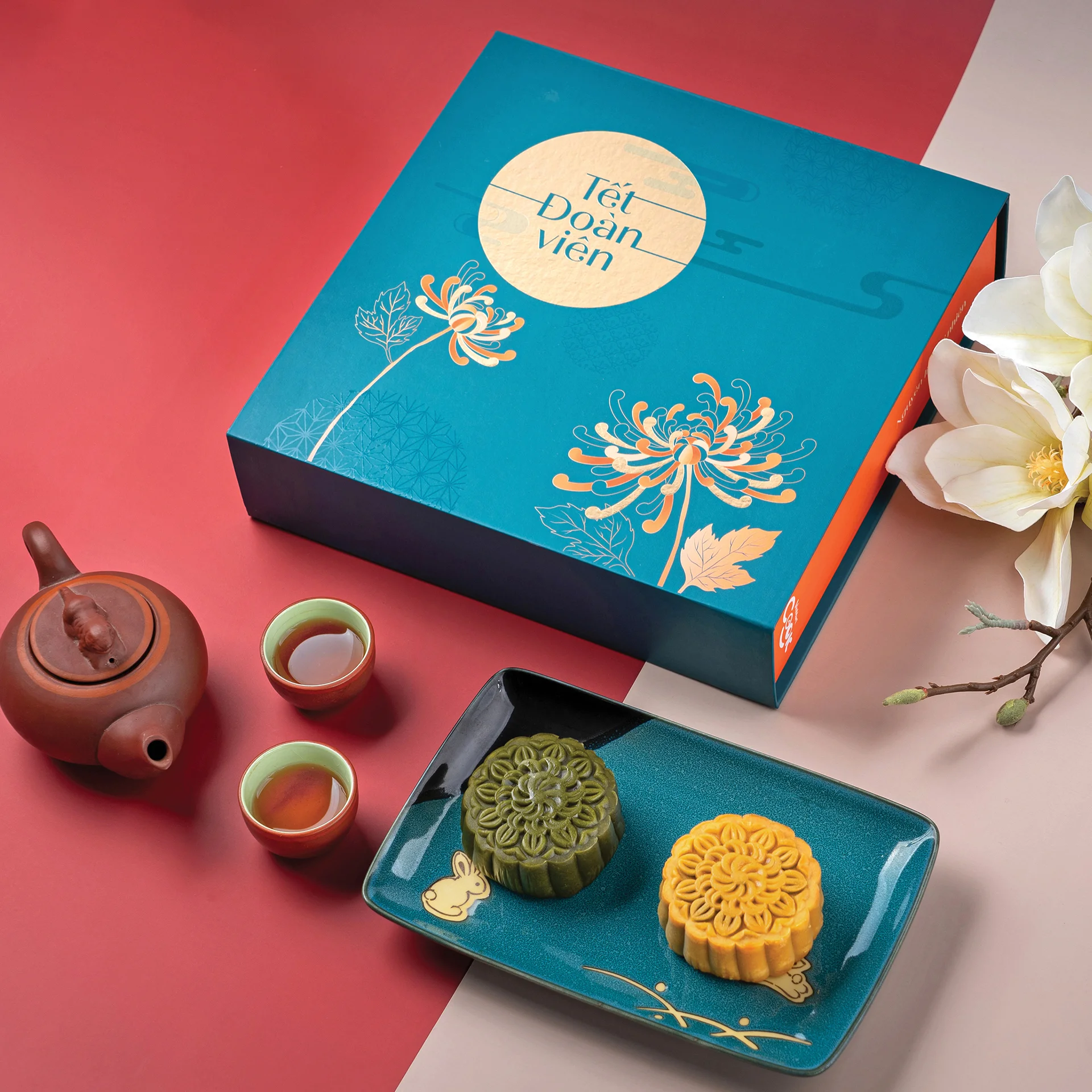
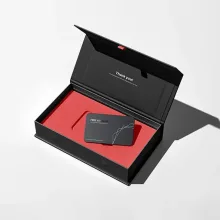
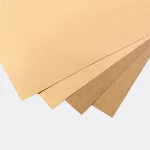
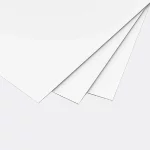
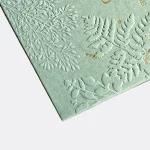
Smooth paperboard gives a clean printed face and folds into cartons. Textured paper changes the hand feel and can make small type harder to read if the texture is strong. Rigid board is a firm chipboard structure wrapped in printed paper, so it holds a box shape without folding like a carton. Tin or metal creates a container-led format with its own closure and reuse questions.
Which luxury packaging material should I compare?
Compare the material against the product, opening, shelf position, and delivery route. Start by naming the thing the package must do, then test the surface and structure against that job.
| Material direction | What it changes | Buyer decision |
|---|---|---|
| Smooth paperboard | Clean printed face and folding carton structure | Choose closure, board, folds, and finish |
| Textured paper | Hand feel and visible surface grain | Check type legibility and artwork coverage |
| Rigid board | Firm box shape and structured opening | Plan lid, tray, fit, and interior treatment |
| Tin or metal | Container structure and closure behavior | Define dimensions, artwork, and reuse plan |
The tradeoff is practical. A textured surface can add touch but compete with fine copy. A rigid box can hold its shape but needs a clear lid, tray, or closure plan. A metal container changes the opening and storage conversation. Ask for a proof and sample that show the selected material as a complete package.
How do finishes change a luxury package?
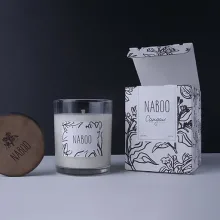
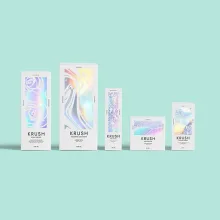
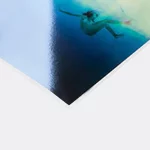
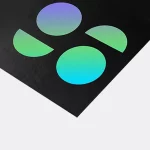
Finishing changes the surface after printing. Matte lamination lowers glare and gives a flatter hand feel. Gloss lamination reflects more light. Spot UV adds localized gloss to a selected area, while foil creates a metallic accent. UV coating cures hard and glossy, but it can crack along score and fold lines and is harder to write on. Aqueous coating dries fast, is water-based, and usually takes glue and ink well on flaps.
Use finish where the customer will touch or read the package. Keep fine type away from scores. If a folded carton has heavy ink coverage, review the fold and coating direction on the proof because the surface treatment does not fix a weak dieline.
How should I compare luxury packaging companies?
When comparing luxury packaging companies or luxury packaging manufacturers, ask for the proposed material, structure, closure, artwork map, finish, quantity, proof process, and delivery terms in writing. A dieline is the flat cutting template that shows panels, scores, folds, glue tabs, and bleed. The quote should identify the construction rather than relying on the word luxury.
Ask how the package will hold the product, how the customer opens it, and which surface receives the artwork. Free design support can help draw the dieline from the product dimensions. A digital proof comes before anything prints, so the team can check panel order, type clearance, bleed, and the intended finish.
Which product formats can start the material discussion?
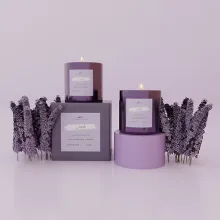
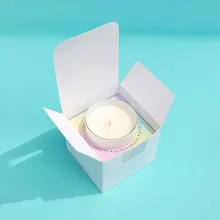
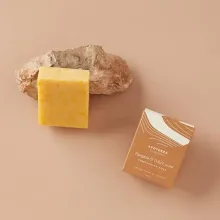
Use wine box packaging to discuss a bottle-led presentation. Review wax packaging when surface, product identity, and panel hierarchy matter. See shoe box packaging for a larger product format, and explore private label packaging when several products need a shared packaging direction.
These product pages are starting points, not one material recipe. Send the product dimensions, packed shape, closure, artwork, shelf or delivery context, and interior plan before selecting the material.
What should a custom luxury packaging quote include?
A useful quote names the construction before it names the finish. Include the product dimensions, material direction, board or container structure, closure, interior fit, artwork status, finishing, quantity, destination, and approval contact.
- Material surface and structure.
- Closure, folds, scores, glue tabs, and interior fit.
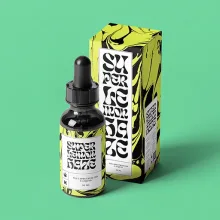
- Artwork coverage, bleed, and type clearance.
- Finish and the panels where it appears.
- Quantity, destination, proof approval, and shipping details.
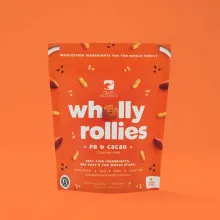
For food-related products, ask us about food-contact options for your product. Do not treat the material label or finish as an answer to that question.
What are the sample, price, and timing details?
Custom luxury packaging orders use an MOQ of 100 units. Pricing is from $0.49 per unit at volume, quoted to spec. Production is typically 8 to 10 business days after proof approval, plus delivery.
The $19.99 sample kit can help compare surface, structure, and opening before proof approval, and it is credited toward the first order. Free design support and free US shipping are available. Use the custom packaging solutions hub to start a format-specific quote.
Frequently Asked Questions
What are luxury packaging materials?
Luxury packaging materials are the papers, boards, films, and metals used to set a package's surface, stiffness, weight, and opening behavior. Smooth paperboard, textured paper, rigid board, and tin or metal each create different tradeoffs. The product, structure, artwork, closure, and finish must be reviewed with the material.
What makes luxury packaging boxes feel considered?
Luxury packaging boxes feel considered when the material, proportions, closure, artwork, interior fit, and finish support the same product and opening. Smooth paperboard gives a clean printed face, rigid board holds a firm shape, textured paper changes hand feel, and metal changes the container and closure. Compare the complete package, not one surface.
How should I compare luxury packaging companies or manufacturers?
When comparing luxury packaging companies or luxury packaging manufacturers, ask each supplier to state the material, structure, closure, artwork map, finish, quantity, proof process, delivery terms, and design support. A clear dieline and digital proof make the proposed construction easier to check than a general luxury label.
Which products can use luxury packaging materials?
Wine, wax, footwear, and private label products can each use luxury packaging materials, but they need different structures and surfaces. Wine needs a bottle-led fit, wax needs product and panel clarity, footwear needs a larger format, and private label lines need repeatable rules. Share dimensions and the opening plan before choosing.
What are the MOQ, price, and production details?
Custom luxury packaging uses an MOQ of 100 units. Pricing is from $0.49 per unit at volume, quoted to spec. Production is typically 8 to 10 business days after proof approval, plus delivery. Free design support and free US shipping are available, and the $19.99 sample kit is credited toward the first order.