




















































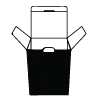

What should custom pharmaceutical display boxes do in a pharmacy?
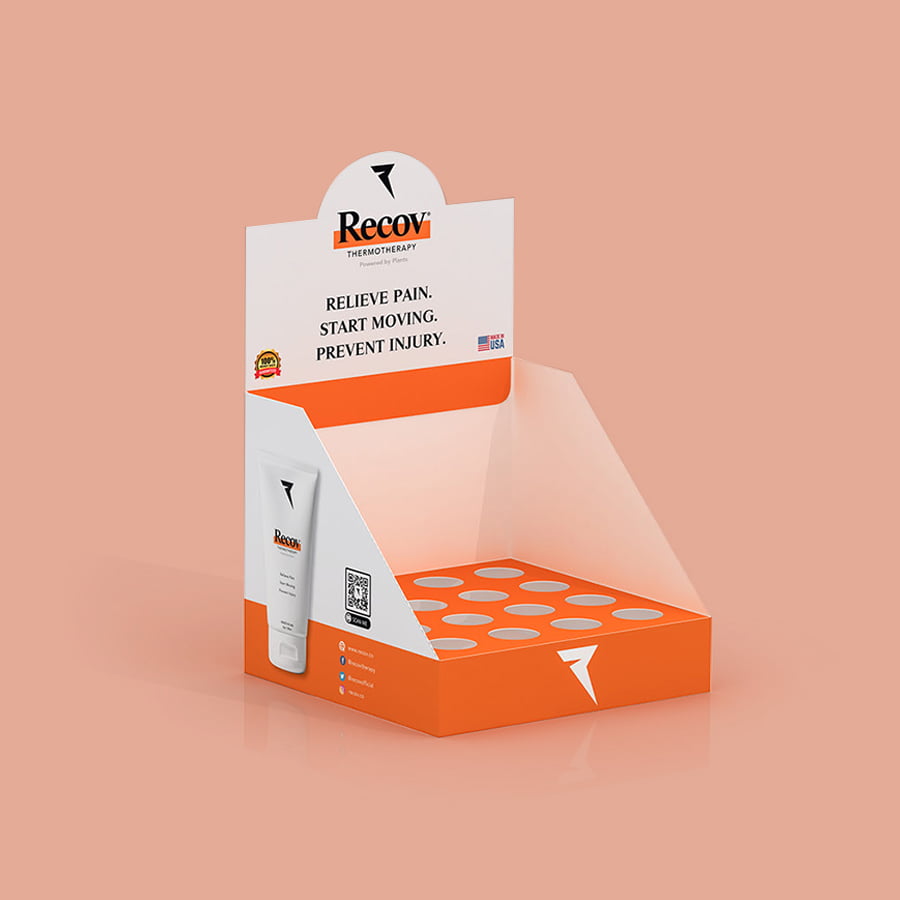
A pharmaceutical display box is secondary retail packaging for finished saleable packs, not the container that directly holds a formulation. On a pharmacy shelf or OTC counter, it should keep cartons facing forward, separate variants, and give staff a predictable refill pattern. Define the packed item, such as a tablet, capsule, syrup bottle, vial, or small device carton, plus its filled weight, closure profile, and readable panels.
The display boxes collection is the closest structural family. Cardboard display boxes, auto-bottom counter display examples, and cosmetic display boxes provide related presentation, base, and compact-carton references. Treat them as references, not availability promises. List the requested format, material, insert, loaded weight, and retail position.
Which layout fits the medicine or OTC pack format?
The layout should follow the pack profile and the way pharmacy staff replenish it. A single product may need one uninterrupted facing, while several strengths, forms, or counts need fixed positions that stay clear as stock decreases.
| Finished pack | Layout direction | Fit issue to check |
|---|---|---|
| Blister or wallet carton | Single-depth front-facing row | Prevent packs from falling face-down and covering the buyer-marked title panel |
| Small bottle or vial carton | Individual cells or lane dividers | Limit sideways movement during replenishment |
| Tall syrup carton | Height-matched rear support with pull clearance | Reduce leaning while leaving room for a hand grip |
| Mixed strengths or counts | Dedicated lanes with a printed location map | Keep neighboring variants in their assigned positions |
| Small device carton | Open-front presentation with finger clearance | Provide a removal path without bending the carton |
How should buyers define fit before requesting a quote?
Measure the completed saleable pack at its widest, deepest, and tallest points. Include any cap, pump, dropper, tuck bulge, shrink band, or carton tab that changes the outer profile. State the units per facing, number of facings, loading direction, filled weight per unit, and whether the display is shipped loaded or filled at the destination. Empty-carton dimensions can miss changes that appear after filling and closing.
For mixed variants, provide a planogram showing the location and quantity of each product. Test the arrangement at full count and when only a few units remain. The near-empty check can reveal leaning packs, hidden labels, loose dividers, or a front edge that blocks the last unit.
How should pharmacy and OTC copy be mapped across the display?
Assign a job to each visible surface before artwork begins. The header can identify the product family, the front edge can carry a short category or variant cue, and divider tops can label lanes. Map buyer-designated fields such as product name, dosage form, strength, count, barcode, lot or date area, and warnings where they remain visible in the loaded state. Do not rely on color alone to distinguish neighboring variants.
Folds, glue areas, inserts, and openings can hide artwork. Check the digital proof against the load plan, with final wording and evidence under buyer approval.
Which inserts, openings, and evidence-of-opening details should be specified?
Name each requested component instead of using a broad label such as secure display. A divider grid, stepped insert, removable header card, tear-away front section, dust flap, or locking tab changes setup and access in a different way. If evidence of opening is requested, state whether the feature belongs on the display or the individual saleable unit, who opens it, where the visible change should appear, and what opening motion is expected. Describe it as a feature, not as regulatory status.
If shoppers need to see a contained item, window patching with PET around 0.2 to 0.3 mm is a common packaging reference. The cutout removes supporting area, so check its position beside scores, tabs, lane dividers, and the loaded product. A smaller viewing area may preserve more space for pharmacy copy and variant identification.
What print and finish choices support pharmacy presentation?
Offset printing supports detailed folding-carton graphics, while digital printing can suit shorter runs. Matte or gloss lamination changes glare and surface feel. Spot UV, foil stamping, embossing, and debossing can isolate a brand element, but should not compete with product identification or buyer-supplied warning copy. Confirm visible panels, lane labels, and barcode areas on the digital proof.
What information belongs in a pharmaceutical display quote?
Send the finished pack or an accurate mockup, its dimensions and filled weight, unit count, facing map, retail location, loading method, artwork, finish request, and any divider, insert, window, or evidence-of-opening feature. The order minimum is 100 units. Pricing starts from $0.49 per unit at volume, with the exact amount based on the specification. Production is typically 8 to 10 business days after proof approval, plus delivery. Free US shipping and free design support are available. Buyers can also order the $19.99 sample kit.
How should the loaded pharmaceutical display be evaluated?
Load the intended products in their assigned lanes, then remove and replace units from the position staff will use. Check whether the remaining cartons stay upright, variant labels remain visible, dividers stay located, and the final unit can be reached without crushing its panels. Repeat the check after moving the display from storage to its shelf or counter position, especially when it will travel already loaded.
Frequently Asked Questions
Is a pharmaceutical display box the same as an individual medicine carton?
No. The display usually groups completed saleable packs for shelf or counter presentation, while the individual carton surrounds one product unit. Build the display specification from the finished pack outward, including its filled weight, closure profile, visible panels, loading direction, and removal path. The display should not be treated as a substitute for the primary container or inner packaging.
How should several strengths or pack counts be organized?
Give each variant a fixed lane or cell, then supply a planogram that shows the intended facing order and quantity. Use printed lane labels as a secondary guide, and check the arrangement when full and nearly empty. Product name, strength, dosage form, and count should remain readable according to the buyer's approved artwork, without relying only on color.
What should a loaded mockup test before printing?
Test setup, loading, product removal, replenishment, and the near-empty state. Look for leaning cartons, moving dividers, blocked labels, hard-to-reach final units, and panels that bow under the combined load. Also move the mockup from its storage position to the intended pharmacy shelf or counter, because handling can expose problems that a stationary empty sample does not show.
Can a pharmaceutical display include a clear window?
A patched window can reveal a contained product, but the opening removes part of the supporting panel. Check its location beside folds, tabs, divider ends, artwork, and the loaded item. Use a loaded mockup to compare visibility with panel behavior and available print area, then decide whether the window supports the intended shelf task.
How should an evidence-of-opening feature be requested?
Describe the expected opening action, the component that changes, the place where that change should remain visible, and whether the feature belongs on the display or on each saleable unit. Include who opens the pack and at what stage. This frames a structural request clearly without presenting the feature as proof of regulatory status or approval.