Have questions? We have answers
Buy Now · Sample Kit · $19.99
In stock · sample kit ships in 2 to 6 business days
We use cookies and similar technologies. Some keep the site working. Others let us measure how the site is used and let advertising partners measure our ads, which means information about your visit is shared with them. You choose what runs. Read our Privacy Policy.
Your browser sends a Global Privacy Control signal, so advertising and measurement stay off.
In stock · sample kit ships in 2 to 6 business days
In stock · production 8 to 10 business days after proof approval
Final price confirmed on your quote and proof.
Bulk pricing from $0.49 per unit · exact price quoted to your specifications
In stock · sample kit ships in 2 to 6 business days













I've worked with Custom Packaging Lane a few times this year on packaging for our soaps. They always deliver great looking boxes within our tight deadlines. Frank is super communicative and a pleasure to work with.
Susi Lu
Happy Customer, here! The team at Custom Packaging Lane was accommodating and thorough with a recent print order I placed. I needed it pretty fast and they did not let me down! Great quality and fast shipping. Sam was my point of contact throughout this process and was amazing! Thank you!
Justin R.
Very happy with Custom Packaging Lane. Sam and Sarah were great to work with. The quality of the printing and speedy delivery was very much appreciated. I use them for 2 of our custom printed boxes and will be using them for more projects moving forward. Sam was wonderful and even caught a typo that I missed. Thank you.
Jamie
Paul and his team went above and beyond to not only deliver a seamless service but to ensure a long term positive relationship as well. We will be looking foreword to working with them in the future!
James B. Davis
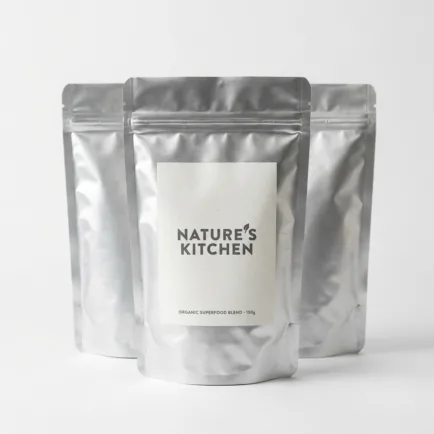
Custom Aluminum Packaging Bags are metalized barrier bags for products that need light, oxygen, moisture, or aroma protection in a lightweight printable format. They work best for coffee, powders, snacks, pet treats, supplements, small hardware refills, and sample packs when the structure is chosen around the product instead of forcing every item into a stock container. CPL starts with dimensions, filling or packing method, and the customer opening moment, then builds the material and print plan around that use case.
Structurally, custom aluminum packaging bags can use foil laminate, metalized film, kraft-laminate combinations, zippers, tear notches, hang holes, valves, and heat-seal zones. The format can be scaled into round tins, square tins, rectangular tins, shallow sample formats, deep storage formats, and nested gift-set sizes. During the spec step, CPL looks at lid fit, edge safety, insert movement, stackability, product aroma, and whether the tin is primary packaging or a gift-ready outer pack so the final package is not overbuilt, underbuilt, or awkward for staff and customers to use.
Branding for custom aluminum packaging bags can be built through full-color print, spot colors, matte or gloss varnish, metallic ink, foil labels, embossing, debossing, sidewall art, lid windows, and fitted insert cards. CPL keeps decoration tied to function: labels need space, panels need hierarchy, and opening cues should make sense. Free design support is available for dieline setup, typography, color planning, and practical production guidance.
These custom aluminum packaging bags are a fit for food makers, candle brands, wellness sellers, promotional teams, retailers, and ecommerce brands that want a sturdy premium container. They are especially useful when a brand has multiple variants, seasonal drops, regulated information, or a product that needs more explanation than a label alone can provide. CPL can support one clean launch SKU or a coordinated family of related designs.
The commercial details for custom aluminum packaging bags stay straightforward with CPL: transparent pricing, low MOQs, free US shipping, and support from designers who understand packaging production. MOQ starts at 100+ units for this specialty format. Standard production runs 8 to 10 business days after approval, with complex or high-volume orders taking longer, plus 2-5 days delivery and express options when timing is tight.
Reusable metal can support a practical sustainability story because the container can be refilled, displayed, or repurposed instead of thrown away immediately. For a cleaner quote on custom aluminum packaging bags, send product measurements, fill weight or item count, desired quantity, artwork files, and any shipping or retail constraints. CPL can then recommend the right path before production starts.
They are used for coffee, powders, snacks, pet treats, supplements, small hardware refills, and sample packs. CPL sizes the structure around the product, channel, and handling needs instead of forcing a generic stock format.
MOQ starts at 100+ units for this specialty format. CPL confirms the exact minimum after reviewing structure, material, finish, and quantity targets.
Material options can include foil laminate, metalized film, kraft-laminate combinations, zippers, tear notches, hang holes, valves, and heat-seal zones. Size options can be built around round tins, square tins, rectangular tins, shallow sample formats, deep storage formats, and nested gift-set sizes, based on your product measurements.
Yes. CPL provides free design support and can quote finishes such as full-color print, spot colors, matte or gloss varnish, metallic ink, foil labels, embossing, debossing, sidewall art, lid windows, and fitted insert cards, depending on material, structure, and budget.
Standard production runs 8 to 10 business days after artwork approval. Complex or high-volume orders can take longer, plus 2-5 days delivery, with express options available.
Yes. CPL includes free US shipping and keeps pricing transparent so you can compare structure, finish, and quantity options before ordering.
In stock · sample kit ships in 2 to 6 business days

On this page, the term means a flexible pouch made with an aluminum foil or metalized layer, not a rigid metal container. Buyers searching for a custom aluminum box should specify whether they need a formed container with a lid or a sealable flexible pack. The two formats use different drawings, tooling, decoration methods, closure tests, and shipping assumptions, so a box request should not be priced from a pouch specification.
A common foil laminate uses PET, AL, and PE layers, with each layer doing a different job. PET is polyester film used as the outer print carrier, AL is the aluminum foil barrier layer, and PE is polyethylene used as the inner heat-seal layer. A metalized PET film is different: it carries a very thin vacuum-deposited aluminum coating instead of a continuous foil sheet. The exact construction should be quoted against the product and required barrier targets.
| Layer or film | Position | Primary job | Specification check |
|---|---|---|---|
| PET | Outer layer | Carries reverse-printed artwork and adds toughness | Print adhesion and scuff performance |
| AL foil | Middle layer | Creates an opaque continuous barrier | Foil continuity after forming |
| PE | Inner layer | Forms the heat-sealed seam | Seal temperature window and seal strength |
| Metalized PET | Barrier film | Uses a deposited metal coating | Measured barrier target for the finished laminate |
Stand-up pouches commonly run from 3 to 7.5 inches wide, but usable capacity also depends on height, bottom gusset, seal width, and product density. Measure the filled pack, not only the flat face, and leave functional room for filling and closing. The nominal pouch width should never be treated as the same thing as the usable opening.
Critical text belongs inside the printable safe panel, clear of the top seal, side seals, bottom fold, and any hardware cutout. Reverse printing places ink on the inner face of the outer film so the laminate protects the image from direct rubbing. The artwork proof should identify the front, back, opening direction, seal zones, and the area that disappears when the gusset folds. Dense color across a fold also deserves a formed-sample check for visual distortion.
OTR and WVTR provide useful comparison metrics, followed by seal and leak testing on the finished pouch. OTR means oxygen transmission rate, and WVTR means water vapor transmission rate. Lower results indicate less passage under the stated test conditions, but values are meaningful only with the method, temperature, and humidity attached. A bubble-emission test submerges a package under vacuum to reveal gross leak paths, but it does not predict shelf life.
A spout pouch controls pouring through a fitted closure, a stand-up pouch presents a bottom gusset, and a flat pouch minimizes structure for compact portions. Product flow, particle size, fill temperature, and opening frequency determine which route to test. Compare an aluminum foil spout pouch with black mylar bags, then use the custom packaging solutions guide to frame the full pack. The sample kit provides physical laminate references before a specification is finalized.