


















































What does custom soft drinks mean in a packaging search?
For this page, soft drink packaging means the secondary pack placed around an already sealed can or bottle. Custom Packaging Lane supplies that packaging. Beverage formulation, carbonation, filling, canning, bottling, and primary closures are outside this scope. The finished container drives the pack because can rims, bottle shoulders, caps, heels, and filled weight all affect how panels close and carry the load.
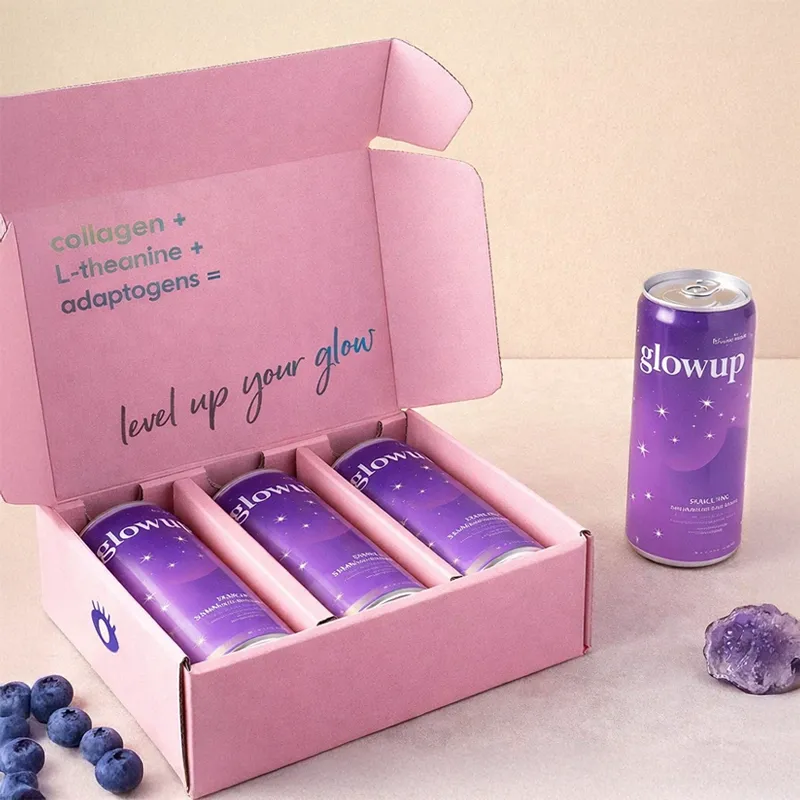
The beverage packaging collection groups CPL's stated material directions for bottled drinks, soda cans, juices, and kombucha. Custom soda boxes are the direct reference for branded can and bottle cartons. Custom woozy bottle boxes show how a bottle profile changes panel layout, while bottle neckers add information or branding near a closure without acting as a load-bearing box.
Which structures suit cans, bottles, and soft drink multipacks?
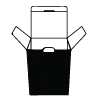
Standard, slim, and sleek can bodies create different group footprints even when the pack count stays the same. A single-can carton may use a straight tuck end or reverse tuck end. A sleeve or folding carrier can group cans, but its retention points must account for the raised rim, also called the chime. A crash-lock bottom can support a folding bottle carton that needs a preglued base. Partitioned cases keep bottles from striking one another, and a perforated tray can convert a grouped case into a shelf display.
| Container format | Common structure direction | Pack detail to evaluate |
|---|---|---|
| Single standard, slim, or sleek can | Straight or reverse tuck carton | Rim clearance and closing-panel contact |
| Can multipack | Sleeve or folding carrier | Base support, rim retention, and hand access |
| Single capped bottle | Tuck carton or crash-lock bottom | Cap, shoulder, body, and heel clearance |
| Bottle assortment | Partitioned corrugated case | Container separation and divider height |
| Retail-ready group | Perforated tray or display case | Tear path, product facing, and pack removal |
How should bottle shape and container contact guide the structure?
A bottle should not hang from its cap or shoulder unless the complete structure was designed around that load path. Glass bottles concentrate more filled weight in the pack, while PET bottles can flex at contact points. Dividers can separate sidewalls, but their height and slot pattern should follow the actual bottle profile. The base should remain flat when the pack is lifted from its intended grip area.
A neck piece has a different job. It can carry promotional copy or identify a flavor, but it does not replace a carton, carrier, or shipping case. For mixed flavors or bottle shapes, map each position in the pack instead of assuming one divider grid will hold every container the same way.
Which material and print options fit chilled retail packs?
Cardboard can wrap sealed single containers or compact multipacks. Corrugated can form partitioned bottle cases and tear-open retail trays. Kraft gives a brown fiber-led surface, while rigid construction can frame a presentation set where display matters more than case efficiency. If the request calls for a waterproof or recyclable option, describe the actual moisture exposure and disposal goal so those terms are evaluated against the finished soft drink pack.
Condensation can soften exposed paper fibers, change scuffing, and reduce stiffness around grips or bottom panels. State whether drinks enter the carton warm, chilled, or wet from refrigeration. Matte or gloss lamination changes appearance and surface behavior, but the loaded pack still needs a condition test. Offset printing commonly handles detailed folding-carton graphics, flexographic printing is common for corrugated trays and cases, and digital printing can suit short runs or artwork trials. Keep flavor names, barcodes, and deposit copy away from scores, glue areas, handles, and tear lines.
What should buyers send when comparing retail packaging manufacturers for soft drinks?
Start with the actual sealed container and identify whether it is a standard, slim, or sleek can, a glass bottle, or a PET bottle. Add the pack count, arrangement, upright or side orientation, filled weight, intended grip point, opening sequence, cooler or shelf setting, condensation exposure, artwork coverage, and finish preference. For a retail-ready tray, explain which panel should tear away and which container faces must remain visible after setup.
Orders begin at 100 units. At volume, pricing starts from $0.49 per unit, with the final quote tied to the chosen container, structure, material, print, and finish. Production typically takes 8 to 10 business days after proof approval, plus delivery. US shipping and design support are free. A digital proof is sent before printing, and the $19.99 sample kit is available for material and finish comparison.
How should a soft drink pack be tested before print approval?
Load the intended sealed containers, close the pack, lift it from the expected grip, and place it in its retail orientation. Check base deflection, rim and cap clearance, bottle contact, divider movement, handle behavior, tear control, barcode visibility, and product removal. Repeat the check under the expected chilled or ambient condition. For can multipacks, watch for rims rubbing score lines or a sleeve creeping. For bottle packs, confirm that dividers stay upright and caps do not take unintended vertical load.
Frequently Asked Questions
Does CPL create custom soft drinks or only the packaging?
Custom Packaging Lane supplies the secondary pack around a sealed drink container. It does not formulate, fill, carbonate, can, or bottle beverages. A useful inquiry starts with the finished can or bottle, then identifies how many containers sit in each pack, their orientation, filled weight, retail presentation, opening method, and expected chilled or ambient handling.
What measurements matter for a soft drink can or bottle pack?
Record the closed container at its widest and tallest points, including the can rim or the bottle cap, shoulder, body, and heel. For a grouped pack, map the full arrangement, divider locations, grip point, and removal direction. The loaded sample matters because a carton that fits an empty container may flex differently under filled weight.
Which structure works for a custom soft drink can multipack?
Can multipacks commonly use a paperboard sleeve, folding carrier, or enclosed carton. The choice turns on retention at the can rim, base support, hand access, opening sequence, and how much of the label should remain visible. If a tear-open retail tray is planned, the perforation path should release cleanly without weakening the area that carries the load.
How does condensation affect secondary beverage packaging?
Condensation can soften untreated fiber surfaces and change scuffing, glue performance, or panel stiffness. Describe whether containers enter the pack warm or chilled and whether the filled package will sit in refrigeration. Evaluate the complete printed pack after exposure to the expected condition, paying close attention to the base, grips, edges, and contact points between containers.
Which print method suits custom soft drink can packaging?
Offset printing is commonly used for detailed folding-carton graphics, flexographic printing is common on corrugated trays and cases, and digital printing can suit short runs or artwork trials. Place flavor names, barcodes, deposit text, and other required copy away from scores, handles, glue areas, and tear lines so the information remains readable after the pack is assembled.