















































What are booklet mailing boxes sized around?
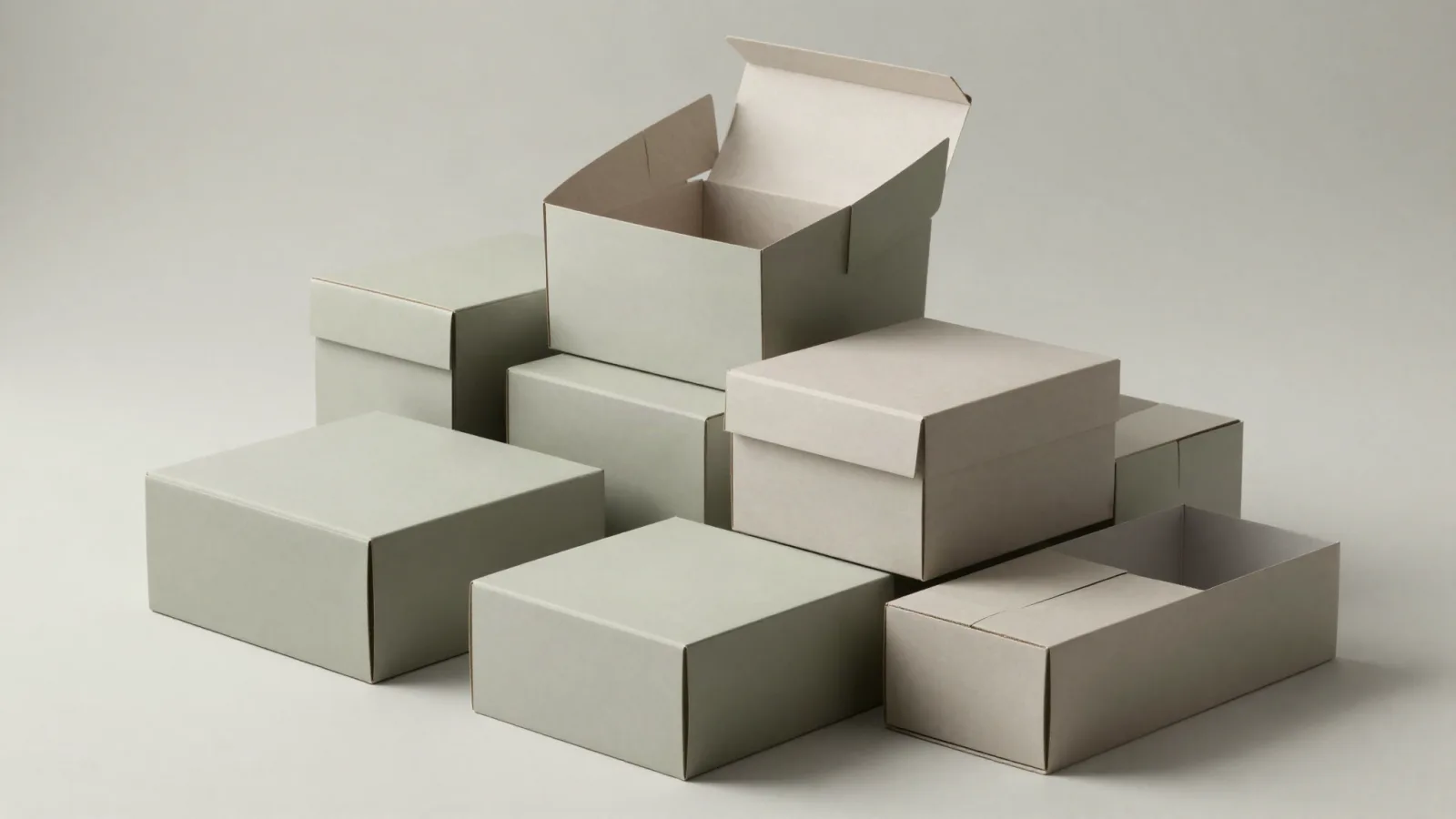
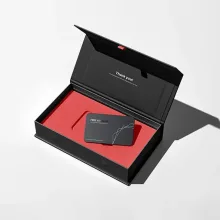
Booklet mailing boxes are sized around the finished booklet or book, its packed thickness, and every piece that travels inside it. A mailer box is a folding or corrugated box with a closing flap that can move through a direct mailing workflow. Measure the complete set before a dieline is drawn.
Common reference formats include 5.5 x 8.5 inches, 6 x 9 inches, and A5. A5 is 148 x 210 millimeters. Those are finished printed sizes, not box sizes. A cover, binding, sleeve, card, or insert changes the outside dimensions.
What dimensions should you record before ordering?
Record the packed length, width, and height, plus the booklet thickness, opening direction, closure, and label area. If the box goes inside another shipper, record that role too. The mailer should be drawn from the set that will actually be packed, not from a cover file or a nominal booklet size.
A dieline is the flat cutting template that shows panels, scores, folds, glue tabs, and cut edges. It translates the packed dimensions into a box that folds around the set. Send a dimensioned drawing or a finished stack when available.
| Printed format | Record for the box | Proof check |
|---|---|---|
| 5.5 x 8.5 inch booklet | Finished footprint, cover, and packed thickness | Cover closes without pressure |
| 6 x 9 inch book | Binding, sleeve, insert, and overall pack-out | Book loads in the approved direction |
| A5 booklet | 148 x 210 millimeter page size and finished stack | Label panel and closure stay clear |
| Booklet with cards or inserts | Every enclosed piece and its position | Set fits without movement or cover damage |
How should the outside panel handle a mailing label?
The outside panel should leave a clear area for the address label, sender information, and any supplied campaign mark. Identify whether the label is applied by hand or through an existing mailing workflow. A direct-mail box needs that panel planned before art is approved.
On a direct mailer, the label panel also needs clear space for the actual label dimensions supplied by the mailing team. Do not shrink the product name to make room after the proof. Reserve the area on the dieline first, then place artwork around it.
Keep essential copy away from folds, seams, closure cuts, and the label area. A flat file can look balanced while a label covers the product name on the assembled box. Free design support can help map the panel, but the buyer supplies and approves the mailing information.
What changes when a booklet box goes inside another shipper?
If the booklet box travels inside an outer shipper, the inside box can put more attention on the opening sequence and interior message. If it travels alone, its exterior needs the mailing label area, closure, and handling role planned from the start.
State which package reaches the recipient first. Show the booklet, insert, sleeve, card, and outer shipper relationship in the proof. The same printed format can need different structures when the delivery role changes.
How can several booklet editions share one box workflow?
Keep the shared box structure, panel order, logo position, and opening direction in one record. Keep each title, cover treatment, enclosed card, and artwork version in a separate edition record. When packed thickness changes, request a new dimension check before the next proof.
Name files with the edition and artwork version. That handoff stops a finished box from being paired with the wrong printed item and gives the next quote a clean reference.
Custom booklet boxes are the closest catalog reference. Window display boxes can frame a presentation-led package when visibility matters. Wallet boxes are an adjacent compact-format reference for a flat item. Use these pages to start the discussion, then size the mailer from the actual packed set.
What should the mailing handoff preserve after approval?
Preserve the approved dimensions, printed item, included pieces, dispatch role, label area, closure, destination, and artwork version in one project record. That record should travel with the pack-out sample and the approved digital proof.
CPL's MOQ is 100 units. Pricing is from $0.49 per unit at volume, quoted to spec. Production is typically 8 to 10 business days after proof approval, plus delivery. Free US shipping and free design support are available. Use wholesale custom packaging for a recurring or multi-version request. The $19.99 sample kit lets you compare board and finish direction before approval.
Frequently Asked Questions
Can booklet mailing boxes hold books as well as booklets?
Booklet mailing boxes can be planned around a finished booklet, bound book, or printed set. Send the complete packed footprint and thickness, including covers, sleeves, cards, and inserts that remain inside. The box should follow the actual contents and dispatch role rather than the title alone.
What should a supplier know about the mailing label area?
The mailing label area should be identified on the outside panel before artwork approval. State whether the label is applied by hand or through an existing mailing workflow, then keep the area clear of folds, closures, seams, and essential copy. The assembled proof should show the label panel in its delivery position.
How can several booklet editions share related packaging?
Several booklet editions can share a box structure and panel order when the finished pack-out stays the same. Keep each edition's title, cover treatment, enclosed pieces, and artwork version in a separate record. If packed thickness or included contents change, update the dimensions before requesting the next proof.
Should a booklet box change for direct mailing?
A booklet box for direct mailing needs an exterior label area and a closure that fit the delivery workflow. A booklet box used inside another shipper can put more attention on the inner opening sequence. State which package reaches the recipient first, then show that role in the assembled proof.
What are the order terms for booklet mailing boxes?
The MOQ for booklet mailing boxes is 100 units. Pricing is from $0.49 per unit at volume, quoted to spec. Production is typically 8 to 10 business days after proof approval, plus delivery, with free US shipping, free design support, and a $19.99 sample kit available.