




























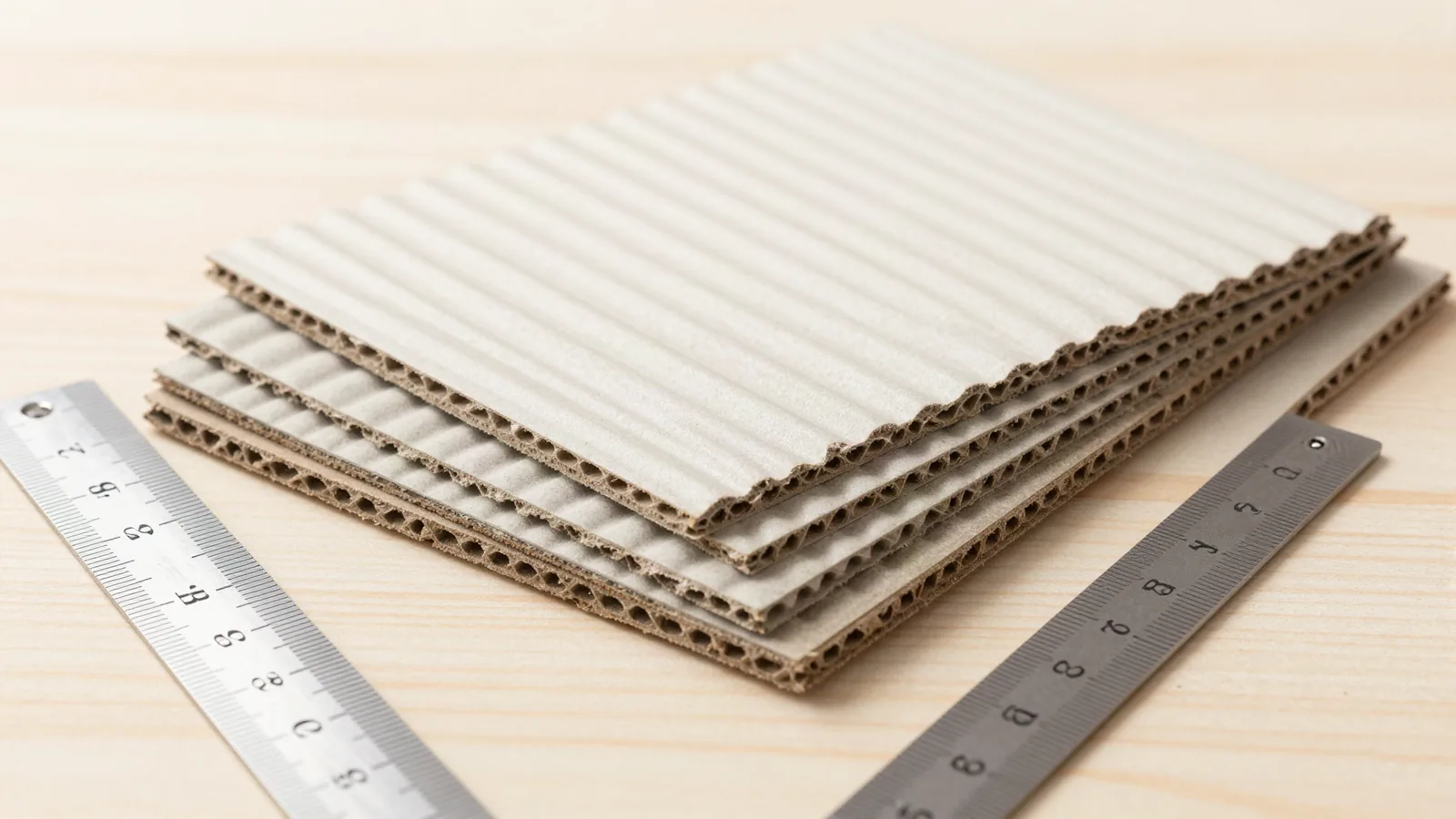




















































Cereal box cardboard thickness is a board-caliper decision tied to the carton footprint, product load, filling method, and shelf handling. Caliper is the board thickness, usually stated in points. A thicker sheet can add stiffness, but it can also change scores, folds, flap clearance, and the way the carton runs through packing. Start with a real paperboard range, then check a blank and a folded carton. Keep retail board separate from corrugated shipping references.
What thickness is common for a cereal carton?
A common folding-carton starting range is 12 to 24 pt for SBS, C1S, or C2S paperboard. Kraft board commonly falls in the 18 to 24 pt range. The caliper affects panel stiffness, score depth, fold response, and the way the top closure returns to position. Treat these as general packaging standards, then check the carton footprint, product load, panel width, print coverage, and handling path.
| Board reference | Common convention | Question for the carton brief |
|---|---|---|
| SBS, C1S, or C2S paperboard | 12 to 24 pt | How will the caliper fold, score, and carry CMYK artwork? |
| Kraft board | 18 to 24 pt | How will the natural surface affect contrast and finish? |
| Corrugated E flute or 32 ECT | Shipping-box reference | Is this an outer shipper rather than the retail carton? |
Are points and gsm the same measurement?
Points describe caliper, while gsm describes paper weight, so the figures are not interchangeable. Gsm means grams per square meter. Ask for the actual caliper, board grade, and surface treatment in the quote. The selected board also needs compatible scores and folds. A physical blank shows whether the front panel stays flat, the side seam lands correctly, and the closure returns to its intended position.
Does thicker board make a better cereal carton?
Thickness alone does not decide the carton. More caliper can stiffen a panel, but the score and fold still control how the blank becomes a carton. A board that is too heavy for the chosen structure can fight the closure or make the seam harder to place. Check the filled bag, the top opening, the bottom panel, and the shelf-facing panel together before changing board.
Which closure works for a cereal carton?
Straight tuck end and reverse tuck end are common folding-carton structures. An auto-lock bottom changes the blank and assembly method, so compare it with the filling direction and base load. The top panel needs room for the opening method, and the side seam needs a clean glue area. Choose the structure before placing artwork because flap positions can move copy, barcode placement, and the visible front panel.
How do print and finish affect the board choice?
Large solid areas show board texture and coating differences more clearly than small copy. Offset CMYK is commonly used for detailed folding-carton artwork, while digital printing can suit short runs or version testing. Matte or gloss lamination changes surface sheen. Soft-touch, spot UV, foil stamping, embossing, and debossing add focused surface effects.
Check the color and finish on a folded sample. A flat sheet does not show what happens at the scores, side seam, top closure, or bottom folds. Keep barcode placement, bleed, and small type away from those working areas.
How should cereal box dimensions be measured?
Inside length x width x depth is the useful convention when the filled bag or inner package must fit a defined cavity. A common planning tolerance is about 1/16 in, or 1.5 mm. Measure the filled bag, closure, and any headspace, the empty room above the fill, rather than relying on the empty carton. Confirm the bottom panel, side seam, flap clearance, and shelf-facing panel together because changing one panel can alter the blank.
Which cereal box products can I compare?
The closest catalog starting points are custom cardboard cereal boxes and custom cereal boxes. kraft cardboard boxes help compare a natural board surface, while shoe box packaging gives another folding-board reference for panel proportions. A sample kit helps compare board surfaces and finishes before proof approval. For larger purchasing programs, use the wholesale custom packaging hub.
Custom Packaging Lane scopes cereal cartons from a 100-unit minimum. Pricing is from $0.49 per unit at volume, quoted to spec. Production is typically 8 to 10 business days after proof approval, plus delivery. Free US shipping, free design support, and a free dieline support material selection. The $19.99 sample kit is credited to the first order.
Frequently Asked Questions
What caliper should I start with for a cereal carton?
A common starting range for a folding cereal carton is 12 to 24 pt SBS, C1S, or C2S paperboard. Kraft board commonly falls in the 18 to 24 pt range. Final selection depends on footprint, panel width, product load, scores, closure, print coverage, and shelf handling, so check a folded carton rather than choosing by caliper alone.
Does gsm tell me the cereal carton thickness?
Gsm does not state carton thickness. Points describe caliper, while gsm describes paper weight, so the figures are related but not interchangeable. Ask for the board grade, actual caliper, surface treatment, and score layout. A physical blank shows fold response and stiffness in a way a paper-weight number cannot.
What should be decided before cereal carton artwork?
Decide the carton structure, filling direction, top opening, base load, side-seam glue area, and barcode position before placing artwork. Straight tuck end, reverse tuck end, and auto-lock bottom structures change the blank and flap positions. The artwork should follow that approved structure, not force copy into a moved closure panel.
Will a thicker board change printing or finishing?
A thicker board can change score depth and fold response, while large solid CMYK areas can show board texture or coating differences. Offset CMYK suits detailed folding-carton artwork, and digital printing can suit short runs or version testing. Matte or gloss lamination, soft-touch, spot UV, foil stamping, embossing, and debossing each change the surface.
How should food-contact questions be handled for cereal boxes?
Ask Custom Packaging Lane about food-contact options for the intended cereal product and packaging path. Share whether the cereal sits in an inner bag, which layer may touch the product, and how the carton is filled and stored. Board caliper, ink, coating, and carton structure alone do not answer the direct-contact question.












