




























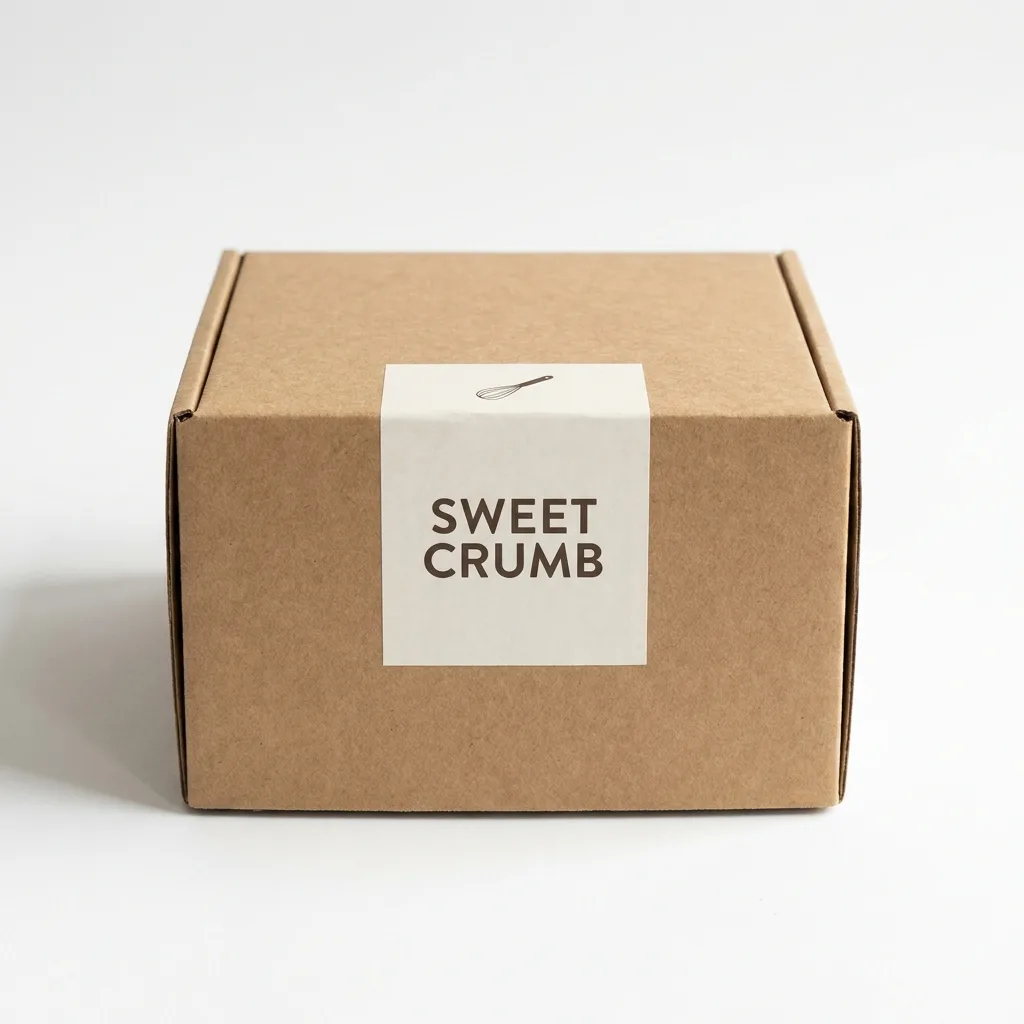




















































What is corrugated board made of?
Corrugated board is made from paper liners with a fluted paper layer between them. The flute is the shaped inner layer that adds thickness, cushioning, and stacking strength. A corrugated box can be a shipping carton, a printed product box, or a mailer, so the product movement has to be clear before the structure is selected.
Flute choice changes the balance between print detail, interior space, and resistance to compression. These are typical industry ranges, and mills can differ.
| Flute | Typical caliper range | Practical direction |
|---|---|---|
| E-flute | About 1.2 to 1.8 mm | Finer print surface and a slimmer profile. |
| B-flute | About 2.5 to 3.2 mm | More thickness for shipping and stacking needs. |
| C-flute | About 3.5 to 4.0 mm | More cushion and interior depth for larger packs. |
The right flute depends on the product, packed dimensions, and route through fulfillment. Ask for the flute and board direction in the quote rather than choosing from the word corrugated alone.
Which flute fits a corrugated mailer?
A corrugated mailer needs a flute that fits the product, the intended handling, and the desired print surface. E-flute can suit a slim mailer with fine artwork. B-flute gives more thickness for a shipping-led package. C-flute gives more cushion and depth for a larger pack. The final choice still belongs to the measured product brief.
Custom corrugated mailer boxes also need a closure conversation. State whether the box should fold and lock, use glue, carry an insert, or open in a particular order. A mailer that looks good flat can still catch at the flap when the packed product is inside.
What should a custom corrugated packaging brief include?
A custom corrugated packaging brief should identify the product, packed dimensions, box role, flute direction, artwork status, quantity, destination, and desired arrival window. The query "corrugated boxes - custom box manufacturer in LA" is still a packaging brief, not a construction specification. A location phrase does not answer how the box will move or what it must hold.
- Describe the product and the shipping or display role.
- Share the packed dimensions, quantity, and destination.
- State the flute direction, closure, insert, or opening preference.
- Provide artwork, copy, bleed, and the intended print direction.
- Ask about food-contact options if the package may touch food.
If the box is part of a larger sequence, explain what comes before and after it. That detail can change whether the package acts as a mailer, an outer carton, or a product box.
Which product examples can clarify a corrugated quote?
Custom corrugated mailer boxes, custom woozy bottle boxes, and custom vial boxes can make the box role concrete before a quote request. Custom corrugated mailer boxes give a fulfillment-led reference. For a bottle pack, use custom woozy bottle boxes. For a smaller product format, custom vial boxes can help separate the item from the outer corrugated job. These pages do not set the final size, flute, or insert for a new project.
How should custom printed corrugated boxes be proofed?
Custom printed corrugated boxes should be proofed against the actual dieline and packout. A dieline is the flat cutting template that shows panels, scores, glue tabs, and cut lines. Check artwork placement, bleed, score positions, closure direction, barcode readability, and any insert before approval.
Large solid ink areas can look different across a textured liner than on a screen. RGB artwork can shift when converted for press. A digital proof catches the file and panel decisions before the production clock begins.
What are the terms for custom corrugated boxes?
Custom Packaging Lane uses a 100-unit MOQ. Pricing is from $0.49 per unit at volume, quoted to spec. Free design support and free US shipping are available. Production typically takes 8 to 10 business days after proof approval, plus delivery.
Free design support can organize the dimensions, dieline, artwork questions, and proof path. The production estimate starts after proof approval, not when the first inquiry arrives.
What should happen before ordering a corrugated box?
Order the $19.99 sample kit when the team needs a physical reference for board, surface, opening, or packout. The sample kit is credited toward the first order. Then use the custom packaging solutions hub to send the product dimensions, box role, flute direction, artwork status, quantity, and destination in one request.
Frequently Asked Questions
Is corrugated board suitable for a branded mailer?
Corrugated board can suit a branded mailer when the product, packed dimensions, closure, flute, and print direction match the delivery job. E-flute gives a slimmer profile and finer print surface, while B-flute and C-flute add thickness. Request a product-specific quote instead of choosing a flute from the mailer name alone.
What does E-flute mean for corrugated packaging?
E-flute is a thinner corrugated profile, typically about 1.2 to 1.8 mm, with a relatively smooth print surface and slimmer interior profile. Mills can differ from that typical range. Compare E-flute with the packed product, closure, artwork detail, and handling route before approving a box direction.
What is the minimum quantity for CPL corrugated boxes?
The minimum quantity for Custom Packaging Lane corrugated boxes is 100 units. A quote should also include the product, packed dimensions, box role, flute direction, artwork status, and destination because corrugated projects with the same quantity can have different structural needs.
How is custom corrugated pricing quoted?
Custom corrugated pricing is from $0.49 per unit at volume, quoted to spec. The price is a qualified starting point tied to the structure, flute, quantity, artwork, product fit, and destination. It is not a flat price for every custom corrugated box.
How long does corrugated production take after proof approval?
Custom corrugated production typically takes 8 to 10 business days after proof approval, plus delivery. The estimate starts after the digital proof is approved, so product measurements, flute direction, artwork, closure, and internal signoff should be settled before that point.












