




























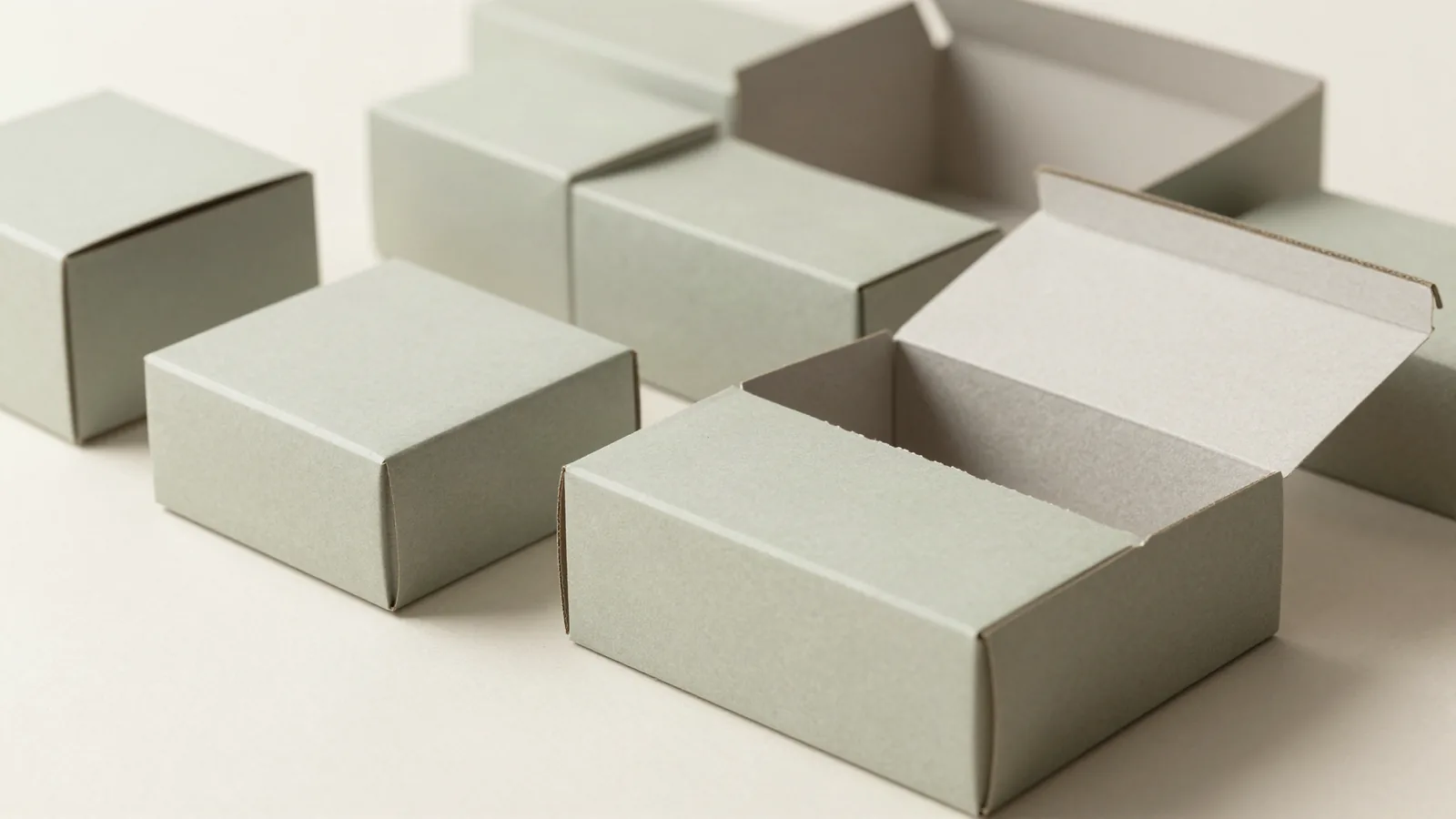




















































Custom packaging glass is the secondary package around a glass product: carton, rigid box, sleeve, insert, or outer shipper. Start with body, neck, closure, base, label, wrap, orientation, and removal path. A vial, candle, or larger glass format needs its own cavity map. See custom glass vials, taper candle packaging, screw packaging, and greeting card packaging. Use custom packaging solutions for broader planning.
What should the glass package protect and present?
First identify the glass as a filled primary container, inner vessel, display object, or part of a gift set. The secondary package may locate it, show it, separate it from other pieces, or place it inside an outer shipping layer. Give the opening sequence and loading order before choosing the box. Ask us about food-contact options for your product when the package relates to food.
| Brief item | Why it matters | What to document |
|---|---|---|
| Glass shape | Sets the cavity and clearance map | Body, neck, closure, base, and orientation |
| Primary container | Separates the product from outer presentation | Whether the glass arrives filled, closed, wrapped, or boxed |
| Insert or partition | Controls movement inside the package | Cavity position, loading order, and removal path |
| Outer package | Sets display and delivery handling | Carton, rigid box, sleeve, mailer, or corrugated layer |
| Artwork surface | Defines the graphic information area | Panels, windows, seams, folds, and finish areas |
Which structure fits a glass product?
A straight tuck end or reverse tuck end carton can suit a compact presentation when the glass has a repeatable orientation. A two-piece rigid box separates lid and base. A magnetic flap changes the hinge and closure area. A drawer or slide uses a sleeve and tray, so pull direction belongs in the cavity plan. A roll end tuck top mailer can suit a parcel route inside an outer shipping layer. FEFCO 0427 is a standard code reference for that mailer. Choose the structure after the insert and loading path are described.
How should I plan the insert and cavity?
The cavity map should draw glass body, neck, cap, base, label, protective wrap, and any companion card or insert. Show finger access and how one piece comes out without disturbing another. For several glass pieces, document spacing and loading order separately. Measure around the assembled insert because board thickness and folded parts take up space. About 1/16 in, or 1.5 mm, is a common packaging planning tolerance, subject to structure and contents.
Which materials work around glass packaging?
SBS, C1S, or C2S paperboard in the 12 to 24 pt range is a common folding-carton reference. Rigid chipboard in the 1.5 to 3 mm range, wrapped in 100 to 157 gsm art paper, is a common presentation-box reference. Corrugated E, B, and C flutes are corrugated wave profiles compared for an outer handling package, with 32 ECT as a recognized board reference. PET windows in the 0.2 to 0.3 mm range can show the glass when the panel has room for a window patch and glue land.
How should the glass package be printed and finished?
Offset CMYK can suit detailed paperboard artwork. Digital printing can support a short run or version test when the selected process supports it. Flexo is commonly considered for corrugated outer packaging. Matte or gloss lamination changes surface reflection. Soft-touch changes hand feel. Spot UV can isolate a logo. Foil stamping, embossing, and debossing add detail to a lid, front panel, or sleeve. Keep important text away from seams, folds, closure magnets, window patches, and insert contact zones; the proof should show the usable panel with the assembled structure.
How do I measure glass packaging for fit?
Write length x width x depth using inside measurements, then list the glass body, closure, wrap, insert, card, and clearance. About 1/16 in, or 1.5 mm, is a common packaging planning tolerance, subject to the structure and contents. Record assembled outside dimensions when the box travels as an outer parcel. US ground carrier dimensional weight commonly uses L x W x H / 139, so unused air belongs in the shipping check.
Measure the glass in its actual orientation. Include the cap, label, protective wrap, and the widest or tallest point. A cavity sized to the bottle body alone can stop the lid from closing or leave the container loose at the neck.
What drives the cost of custom glass packaging?
Cost is scoped from the board or core, insert geometry, board caliper, print coverage, finishing, quantity breaks, tooling, shipping zone, and selected structure. A one-piece carton has a different dieline from a rigid box with an insert. Windows, magnetic flaps, drawers, foil areas, and multiple cavity maps each add a construction decision.
What should I include in a glass packaging brief?
- Glass body, neck, closure, base, label, protective wrap, and orientation.
- Primary, secondary, presentation, or outer shipping role.
- Insert, cavity map, loading order, removal path, and inside dimensions.
- Carton, rigid, sleeve, mailer, or corrugated direction, plus print and finish areas.
- Artwork status, quantity, destination, assembled outside size, and food-contact questions where relevant.
Custom Packaging Lane quotes to spec from a 100-unit minimum, with pricing from $0.49 per unit at volume, quoted to spec. Production is typically 8 to 10 business days after proof approval, plus delivery. Free US shipping, free design support, and a free dieline are available. The $19.99 sample kit is credited to the first order. Send the glass dimensions and cavity map with the quote request.
Frequently Asked Questions
How should I plan packaging for a glass vial?
Glass vial packaging starts with the vial body, neck, closure, base, label, orientation, and removal path. Then choose a carton, rigid box, sleeve, mailer, or outer shipper around the insert. The cavity map should show the vial and any wrap together, using inside measurements for the assembled package.
Which board references work for a glass carton?
Common glass packaging references include SBS, C1S, or C2S paperboard in the 12 to 24 pt range, rigid chipboard in the 1.5 to 3 mm range wrapped in 100 to 157 gsm art paper, and corrugated E, B, or C flutes for an outer handling layer. A 32 ECT board reference may also be discussed for the outer layer.
Can custom glass packaging include a window?
Custom glass packaging can include a PET window when the structure has enough panel area and glue land for the patch. PET film in the 0.2 to 0.3 mm range is a common reference. Show the opening, film, folds, seams, glass view, and copy-safe area separately so the assembled package can be checked.
How do I measure a box for a glass product?
Measure the glass package as length x width x depth using inside measurements, then include the body, closure, wrap, insert, card, and clearance. About 1/16 in, or 1.5 mm, is a common planning tolerance, subject to the structure. Record assembled outside size too when the box travels as an outer parcel.
What should I ask about food-contact packaging for glass?
For glass packaging used with food, describe the glass container, product, inner wrap, closure, insert, and outer box as separate parts of the brief. Ask us about food-contact options for your product. The review should cover seams, coatings, windows, and the package opening without making a certification claim.












