




























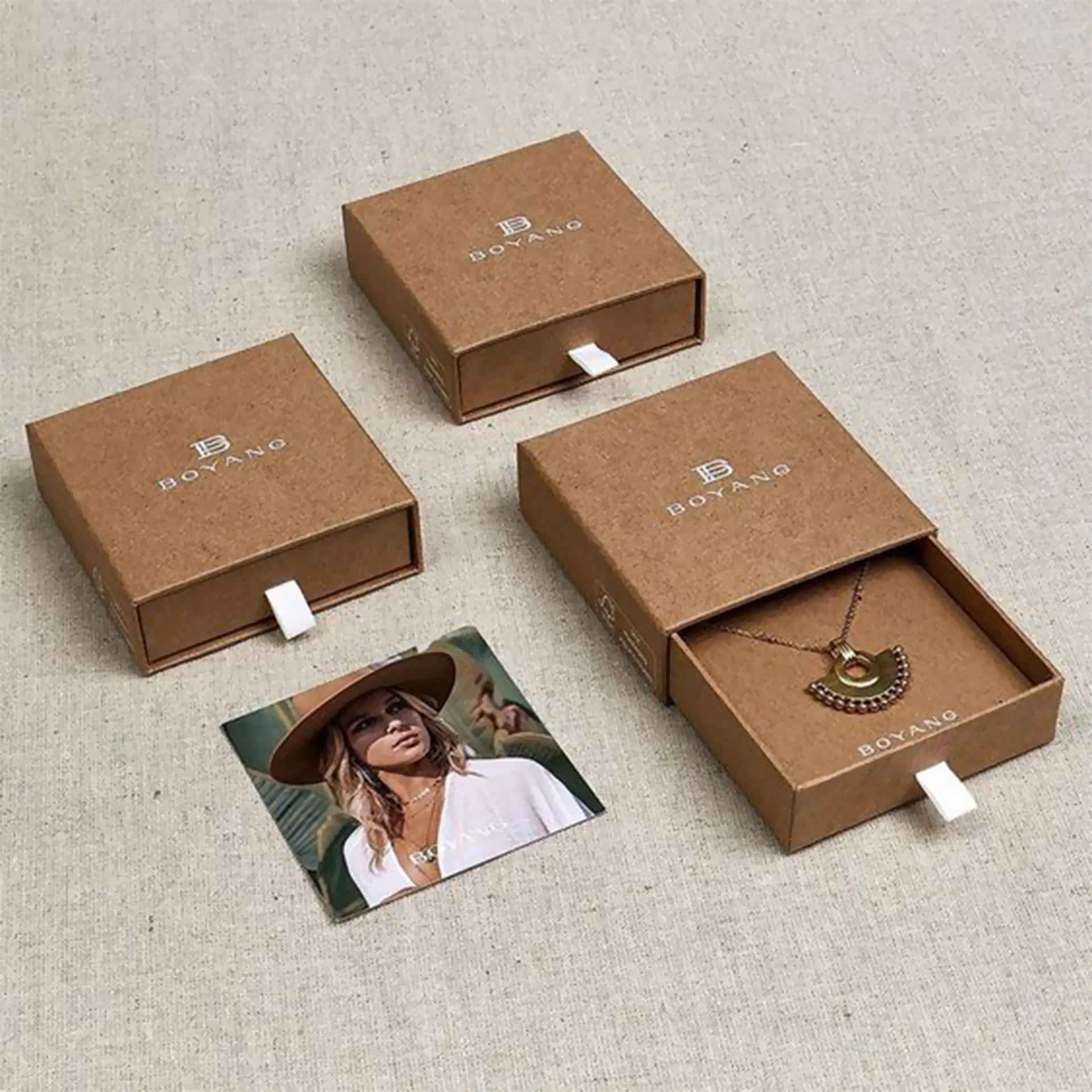




















































Custom jewelry boxes wholesale begins with one question: where should the brand appear when the box is closed, opened, and displayed? A dieline is the flat cutting template that maps the lid, base, tray, insert, scores, and glue areas. Send the jewelry dimensions, preferred structure, logo files, and opening sequence before artwork is approved. The jewelry packaging hub covers the wider category. This page stays on logo placement and wholesale box planning.
How do you customize a jewelry box with a logo?
Put the logo where the buyer meets the package first, then assign the other panels a separate job. The closed lid may carry the main mark, the interior lid may carry a short message, and the tray or insert may hold the product cue. Custom jewelry boxes with logo artwork should read as one opening sequence, with each panel carrying its own job.
Where should a logo go on custom jewelry boxes?
The best logo location depends on whether the box is closed, open, stored, or display-facing. Use this table before adding artwork to the dieline.
| Visible area | Brand job | Proof check |
|---|---|---|
| Closed lid | Recognition before opening | Does the mark read clearly when closed? |
| Outer edge | Identification during storage or display | Can the box be identified from the side? |
| Interior lid | Brand continuation during the reveal | Does the interior support the opening? |
| Tray or insert | Product context and presentation | Does the jewelry remain the visual focus? |
| Display-facing panel | Recognition before handling | Is the hierarchy clear at the point of display? |
Choose one dependable recognition surface for related boxes. If the closed lid carries the logo, keep interior copy shorter. If the tray holds the jewelry in the main view, do not let a large mark pull attention away from the piece. The proof should show the closed, open, and display views.
How does a lid and tray change the jewelry box proof?
A lid and tray add a second visual plane, so the proof must show how the jewelry sits after opening. A tray is the fitted inner platform that supports the piece and keeps its position visible. The insert should follow the product shape and removal motion.
Review jewelry boxes with lid and tray when the interior is part of the presentation. The product should not rattle in a pocket cut to a loose size, and the lid copy should remain readable when the box is fully open. Those checks belong in the physical structure review, before production.
Which jewelry box structure fits the presentation?
Rigid boxes hold their shape because chipboard is wrapped in printed paper. Kraft jewelry boxes use a paperboard surface with a brown paper tone, so light artwork and pale type read differently. Gift boxes can put more weight on the opening and the outside presentation. Pick the structure from the jewelry, the opening, and the display setting.
Use custom jewelry rigid boxes when the firm shape is part of the brief, custom kraft jewelry boxes when the paper tone is part of the look, and custom jewelry gift boxes when the presentation is the main concern. Product pages are references. The jewelry dimensions still control the structure.
What should the logo artwork proof check?
Check the logo file, panel order, cut lines, scores, bleed, type size, and the relationship between the mark and the jewelry. Vector artwork stays cleaner at print size than a low-resolution raster file. RGB artwork can shift when converted for press. Keep type away from scores and glue tabs, then review the closed, open, and display views.
Free design support can draw the dieline from the jewelry dimensions and prepare a digital proof before anything prints. Send the approved logo, collection wording, box reference, quantity, and destination with the brief. The clearer the inputs, the fewer late changes the proof has to absorb.
What wholesale terms apply to custom jewelry packaging boxes?
Custom jewelry packaging boxes start at 100 units. Pricing is from $0.49 per unit at volume, quoted to spec. Production is typically 8 to 10 business days after proof approval, plus delivery. Free US shipping and free design support are available.
If the visible surfaces are still uncertain, a $19.99 sample kit gives the team a physical reference for the lid, tray, opening, and finish direction. Request a quote with the jewelry dimensions, logo files, structure, quantity, and destination.
Frequently Asked Questions
Can a jewelry box carry a logo on more than one panel?
A jewelry box can carry a logo on more than one panel, but each visible surface should have a separate job. Use the closed lid for primary recognition, an interior panel for a short message, or a tray area for product context. Review the complete opening sequence before repeating the mark.
What logo file should I send for a custom jewelry box?
Send the clearest approved logo file available, preferably vector artwork, with the exact collection or product wording that belongs on the box. Include the preferred structure, jewelry dimensions, quantity, and destination. Free design support can organize those inputs into a dieline and digital proof before anything prints.
How should jewelry sit inside a custom box?
Jewelry should sit in a fitted insert or tray that keeps the piece visible and gives it a clear removal motion. Share the jewelry dimensions and presentation preference before the structure is drawn. A proof should show the closed lid, open interior, tray, and product together.
What is the MOQ for wholesale jewelry boxes?
The MOQ for wholesale jewelry boxes is 100 units. Pricing is from $0.49 per unit at volume, quoted to spec. Production is typically 8 to 10 business days after proof approval, plus delivery. Free US shipping and free design support are available for the order.
Can I review logo placement before a wholesale order?
A $19.99 sample kit can help review logo placement, lid structure, tray visibility, and the opening sequence before a wholesale jewelry box order. Use the physical reference with the approved logo files and digital proof. Confirm the preferred visible surfaces before production planning starts.












