





























































What finishing options besides debossing should I compare?
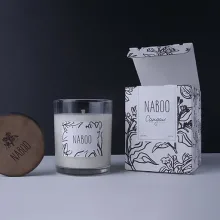
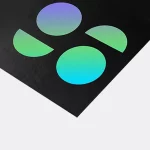
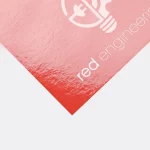
Compare embossing, foil stamping, and spot UV when you want a raised mark, a reflective accent, or a gloss contrast instead of a recessed mark. Debossing is a finish that presses artwork into the board. A finish is a surface treatment that changes how printed artwork looks or feels. The box structure and artwork still control the quote.
Start with the logo size, line weight, and panel location. Fine lines can close up when a tool presses them into board. Foil reads best when the shape is clean. Spot UV is a clear gloss coating applied to selected areas, so its mask needs to show exactly where gloss belongs. A press check looks at registration, ink coverage, folds, and the transition between printed color and finish.
How does embossing work as a debossing alternative?
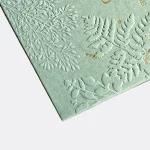
Embossing raises the artwork above the surrounding board, so it is the direct debossing alternative when the mark should be felt above the surface.
Embossing works for a logo, short wordmark, border, or broad pattern. Leave space between fine elements because crowded artwork can turn into a lump after pressure. Keep type away from scores and glue tabs, where a fold can interrupt the raised mark. The proof should show the printed color and the raised area, not only a flat logo file.
How do foil stamping and spot UV compare with debossing?
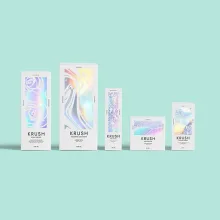
Foil stamping adds a reflective metallic surface, spot UV adds selective gloss, and debossing creates recessed texture. The choice follows the job the logo has to do on the box.
| Finish | Surface result | Useful when | Proof check |
|---|---|---|---|
| Embossing | Raised board detail | The mark should sit above the surface | Check line spacing and distance from scores |
| Foil stamping | Reflective foil accent | The logo needs shine | Check the foil area and color separation |
| Spot UV | Clear gloss on selected art | The panel needs surface contrast | Check mask registration over the print |
| Debossing | Recessed board detail | A quieter tactile mark fits the design | Check impression position and board support |
Digital printing handles shorter runs and changing artwork without plates. Offset printing uses plates and suits stable artwork when the same design will run again. Ask which print path sits behind the finish quote.
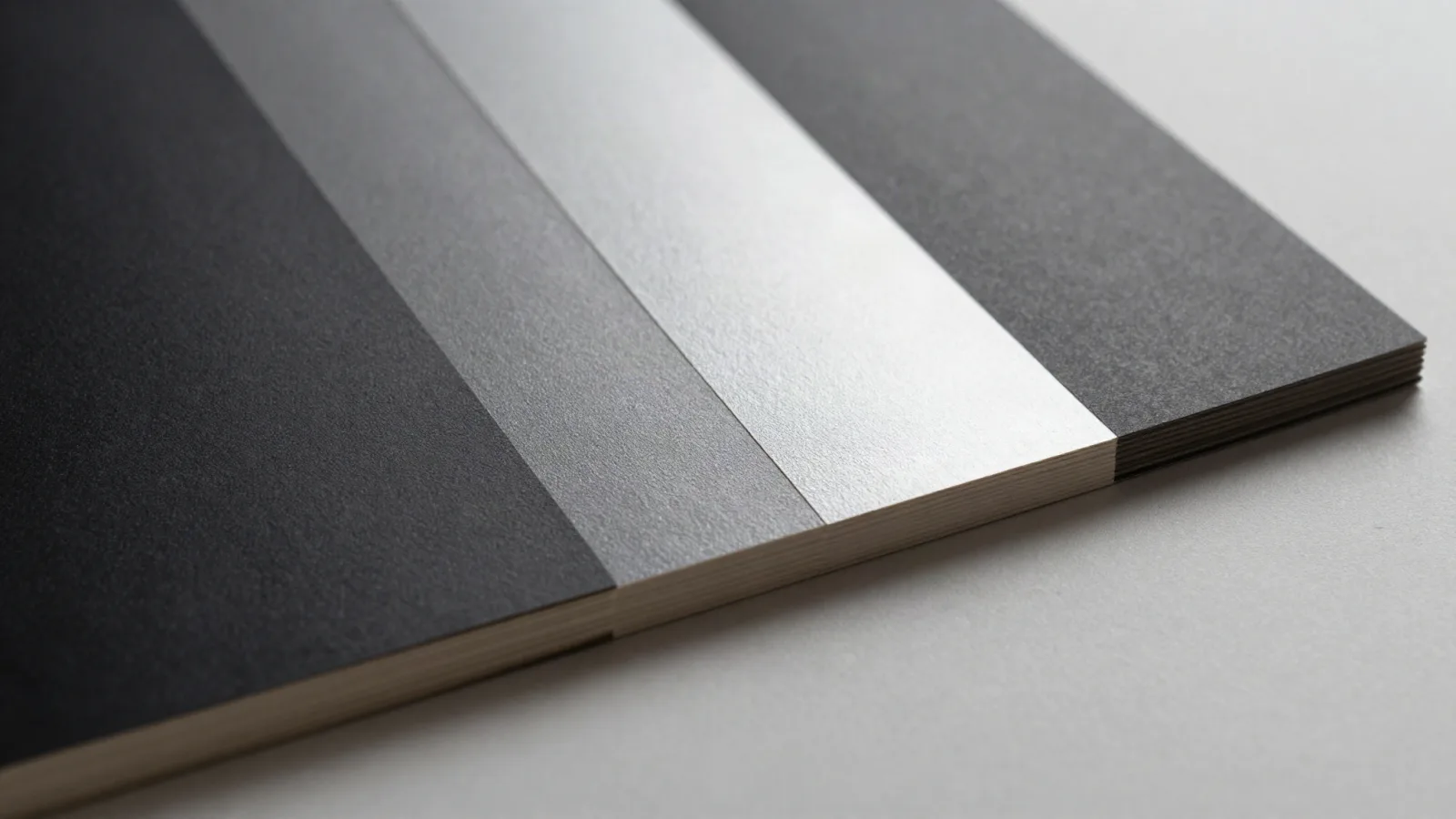
Matte or low-glare surfaces make spot UV easier to see because the gloss has a clearer contrast. Foil depends on the angle of light, while a debossed mark depends on shadow and touch. If the artwork has a large inked panel, check how the chosen finish sits over that coverage before approving.
Which custom boxes can carry these finishes?
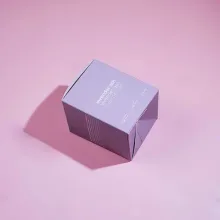
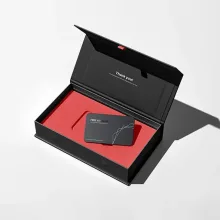
Custom mailer boxes, rigid printed boxes, and custom shipping boxes can each be assessed for a finish against the selected structure and artwork.
Custom mailer boxes put the lid and front panel close to the opening view. Rigid printed boxes give the artwork a firm wrapped surface. Custom shipping boxes need the finish placed where handling and folding will not cut through the visual. The product page is a starting point, not the finished specification.
What should I send for a finish quote?
Send the box style, packed dimensions, artwork, board or material, finish preference, quantity, and delivery destination. If a barcode or small type sits near a score, flag it before the dieline is approved. A dieline is the flat cutting template that shows panels, scores, cuts, glue tabs, and bleed.
Free design support can draw the dieline from product dimensions, then send a digital proof before anything prints. Check low-resolution art. RGB is the screen color model, and it can shift when converted for press. Check bleed, logo placement, and the distance between finish areas and folds. The production clock starts at proof approval.
The MOQ is 100 units. Pricing is from $0.49 per unit at volume, quoted to spec. Production is typically 8 to 10 business days after proof approval, plus delivery. Free US shipping is available. Order the $19.99 sample kit, which is credited toward the first order, then see custom boxes with logo for the broader branding brief.
Frequently Asked Questions
Can embossing replace debossing on a custom box?
Embossing can replace debossing when a custom box needs a raised mark. Embossing pushes the artwork above the board, while debossing presses it inward. The approved artwork should leave space between fine elements and keep type away from scores. Custom Packaging Lane can check the box structure, artwork, and finish in a digital proof.
Does foil stamping create a different effect than debossing?
Foil stamping creates a reflective metallic surface on selected artwork. Debossing creates a recessed impression that reads through shadow and touch. Choose foil when the logo needs shine, or choose debossing when the mark should stay close to the board. The final comparison belongs in the digital proof for the selected box.
Is spot UV a substitute for debossing?
Spot UV is a clear gloss coating placed on selected printed areas, while debossing presses the artwork into the board. Spot UV creates surface contrast. Debossing creates recessed texture. The right choice depends on the artwork, board, and placement, so the proof should show the actual finish area before production.
Which box styles can use these finish options?
Custom mailer boxes, rigid printed boxes, and custom shipping boxes can be checked for embossing, foil stamping, spot UV, or debossing. The selected structure, board, artwork, and finish area affect the quote. Custom Packaging Lane can show the proposed treatment in a digital proof before anything prints.
What are the order terms for finished custom boxes?
The MOQ is 100 units. Pricing is from $0.49 per unit at volume, quoted to spec. Production is typically 8 to 10 business days after proof approval, plus delivery. Free US shipping and free design support are available. The $19.99 sample kit is credited toward the first order.