




























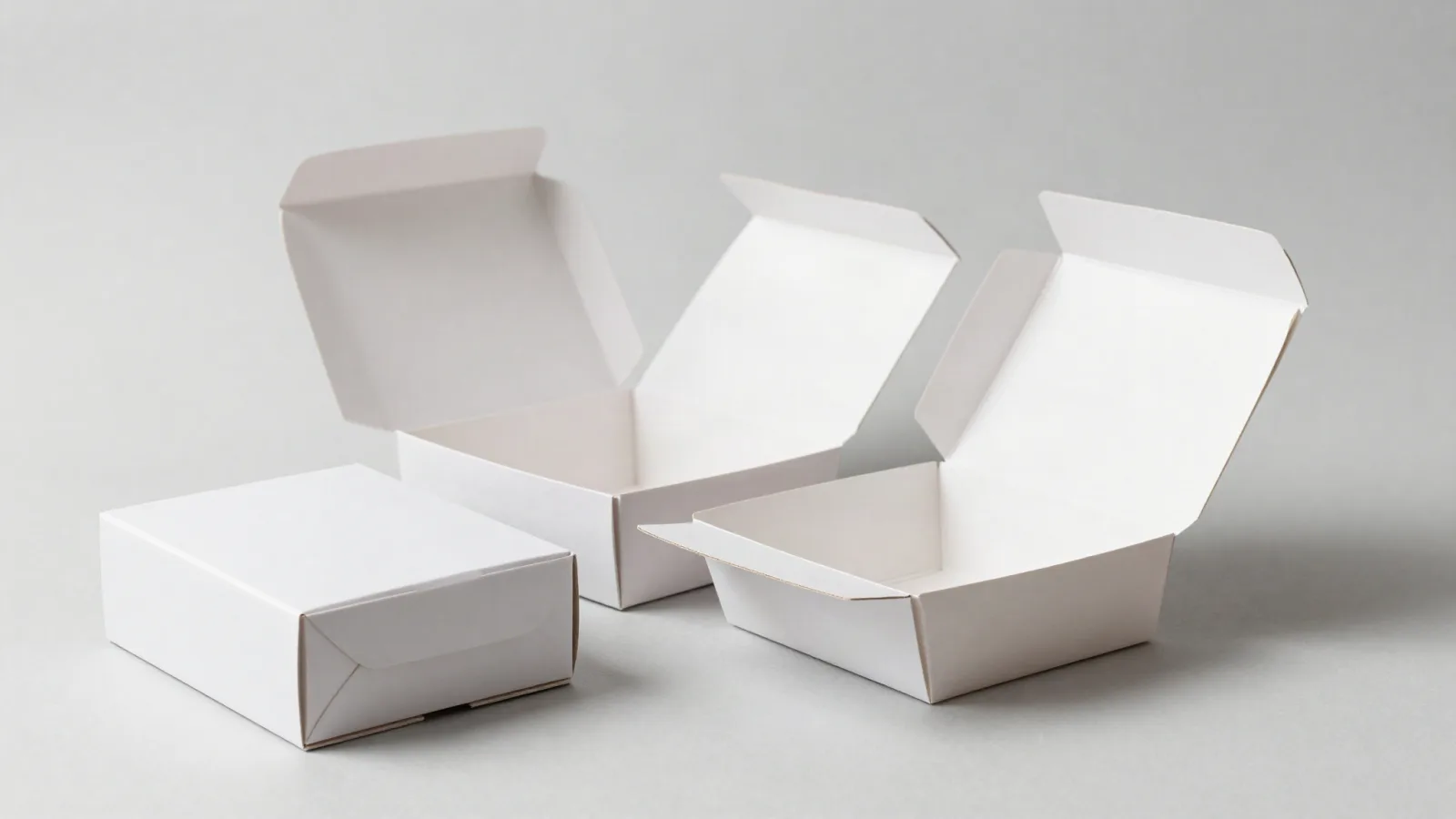




















































Box styles are the physical opening and closure patterns a package uses after it is printed and assembled. A mailer is planned around shipping and opening. A tuck box is planned around folding panels and closure. A rigid box is planned around a structure that holds its shape. A sleeve wraps another component, while a display box is planned around what the buyer can see. Choose the style from the product, pack-out, and handling path.
What are the main custom box styles?
The main custom box styles are mailer, tuck, rigid, sleeve, and display formats. Each one answers a different package question, so the first comparison should be about opening and handling rather than decoration.
| Style direction | Primary question | Material conversation | CPL catalog reference |
|---|---|---|---|
| Mailer | Will the package travel as the branded shipper? | Corrugated or paperboard, based on the pack-out | shoe box packaging |
| Tuck carton | Where should panels fold and how should the package close? | Scored paperboard with tuck flaps | wine box packaging |
| Rigid presentation | Does the package need a structured opening? | Rigid board, wrap paper, or a metal format | embossed tin box |
| Insert-led format | Does the product need an internal position? | Outer box with a shaped insert | custom foam box inserts |
| Specialty product box | Does the product category set the copy and pack-out? | Selected around the product and handling path |
These links are catalog starting points, not claims that every example uses the same structure. Ask for the construction, material, insert, finish, and assembled dimensions that match the actual product.
When should a mailer be the box style?
A mailer is the right starting style when the outer package is expected to travel through fulfillment and arrive as the branded shipper. The brief should name the packed product, closure preference, expected handling path, and whether the inside carries artwork. If a second shipping carton, cushioning, or insert will be used, include it because that changes the mailer's job.
Measure the packed item, state how it opens, and check whether the product can move inside the mailer. The shoe box packaging page is a catalog reference for a shaped product category. Use the same measurement discipline for other products.
What makes a tuck box different from other box styles?
A tuck box uses scored folding panels and tucked flaps to create a compact carton. The fold map controls the front panel, side panels, closure, and artwork direction. Send the assembled orientation with the artwork so the proof shows where each panel lands.
A tuck style can keep one face clear for the product name while moving instructions or handling information to the sides and back. Type set too close to a score can become hard to read after folding. Bleed needs to extend past the trim line so a small cutting shift does not leave an unprinted edge.
When does a rigid box make more sense?
A rigid box makes more sense when the package needs a structured opening, a lid, a tray, a sleeve, or another component that stays firm during presentation. Rigid boxes use board that holds shape, then printed paper or another surface layer carries the artwork. The lid depth, tray height, and product clearance must be checked together.
A metal package changes the production conversation because the substrate, closure, and print surface differ from paperboard. The embossed tin box catalog reference can help frame that choice. An insert-led package needs the outer dimensions and the cavity layout reviewed as one assembled object.
How do sleeves and display boxes work?
A sleeve wraps a tray, carton, or other component and adds an outer branded panel without replacing the inner package. A display box is planned around visibility, shelf orientation, or an opening that shows the product before removal. Identify the viewing panel and whether the filled package will stand, lie flat, or sit inside a larger fixture.
Use the product's shape and information needs to set the structure. The page is one category-specific catalog reference, while the custom foam box inserts page is a reference for internal positioning. A category label does not replace the filled product brief.
How do material and finish choices change the brief?
Choose the material before choosing the finish. Paperboard and kraft support folding structures. Corrugated stock supports shipping-oriented packages. Rigid board supports a structured opening. E-flute corrugated board is thinner than B-flute and is used when a slimmer profile and fine print matter. B-flute is thicker and can provide more cushioning for a shipping package.
White paper gives printed color a neutral base, while kraft shows brown in unprinted areas. Aqueous coating is water-based and works well on folding areas. UV coating cures into a harder, glossier surface, but it can crack across scores and is harder to write on. Matte, gloss, soft-touch, foil, spot UV, embossing, and debossing should each be marked on the artwork.
The $19.99 sample kit lets a buyer compare physical stock, finish, and print direction before approval. It is credited toward the first order.
What should a box style quote include?
A box style quote should include the product dimensions, packed condition, preferred style, opening direction, material, finish, insert or window request, artwork status, requested quantity, master carton notes, and delivery destination. The custom packaging solutions resource is the next step when the package still needs to be narrowed from a style family to one construction.
CPL uses a 100-unit MOQ. Pricing is from $0.49 per unit at volume, quoted to spec. Free US shipping and free design support are available. Production is typically 8 to 10 business days after proof approval, plus delivery. Send the product dimensions and assembled pack-out so the digital proof answers the actual box question.
Frequently Asked Questions
Which box style suits shipping?
A mailer suits a package that may travel as the branded shipper and needs a defined closure and interior fit. Start with the packed product, handling path, cushioning, and whether another carton will be used. A tuck box can ship inside another carton, but its folding panels and closure remain the main design concern.
Which style gives a structured presentation?
A rigid box gives a structured presentation because board construction holds the outer shape and can support a lid, tray, sleeve, or other opening sequence. The product, interior clearance, closure, and artwork should be reviewed together. A metal format uses a different substrate and needs its own quote details.
Can an insert be added to any box style?
An insert can be planned with many box styles when the product needs a fixed position or separated components. The insert must fit the outer interior, product geometry, lid clearance, and removal motion. Quote the outer box and insert together so the assembled package, not only the cavity, is approved.
How do kraft and white board change printed color?
Kraft board has a brown base that remains visible in unprinted areas and changes the appearance of ink. White board gives the artwork a neutral base. The same file can read differently on the two materials, so the proof or sample should show the selected stock before the order is approved.
What are CPL's MOQ and production terms for custom box styles?
Custom box styles use a 100-unit MOQ. Pricing is from $0.49 per unit at volume, quoted to spec. Production is typically 8 to 10 business days after proof approval, plus delivery. Free US shipping and free design support are available, and the $19.99 sample kit is credited toward the first order.












