




























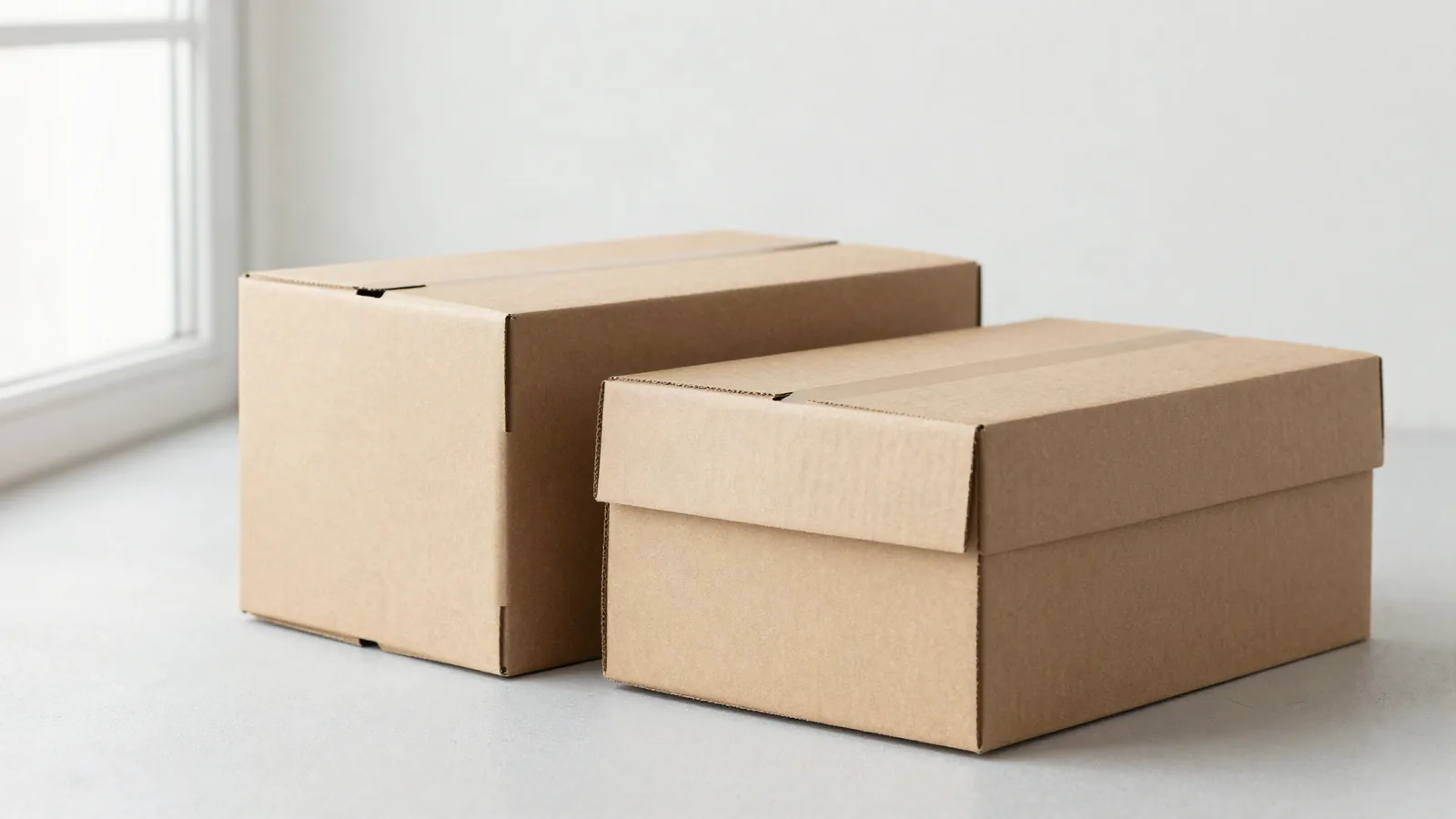




















































Eco friendly packaging starts with a material and construction brief, not a broad label. Kraft, SBS cardstock, and corrugated board are different packaging directions. SBS cardstock is smooth paperboard used for printed folding cartons. Corrugated board has a fluted inner layer between liner sheets. The finished package can also include coatings, windows, liners, inserts, or closures, so the material name alone does not answer the disposal question.
What counts as eco-friendly packaging?
Eco-friendly packaging is packaging selected against a specific material, product, handling, and end-of-use brief. A buyer may care about recycled content, a paper-based structure, reduced added layers, reuse, or a particular disposal route. State the priority first. Then attach it to the product dimensions, package style, artwork, finish, quantity, and delivery location.
How do kraft, SBS, and corrugated differ?
Kraft, SBS, and corrugated differ in surface, structure, print behavior, and packaging role. Kraft has a natural paper direction that changes how ink reads. SBS gives a smooth paperboard surface for detailed printed artwork. Corrugated adds a fluted layer that brings thickness and cushioning to mailers and shipping formats.
| Material | Construction and behavior | Typical packaging use | Tradeoff to check |
|---|---|---|---|
| Kraft board | Paperboard with a natural brown or paper-led surface direction | Printed boxes and retail formats with a natural presentation | Ink color and logo contrast can change on the base stock |
| SBS cardstock | Smooth paperboard with a clean printed surface | Folding cartons that need detailed artwork | Specify board, folds, finish, and product fit |
| Corrugated board | Fluted inner layer between liner sheets | Mailers, shipping packages, and protective structures | Choose the structure and flute around handling needs |
| Mixed-material package | Paperboard combined with other parts or surface layers | Packages with windows, liners, wraps, inserts, or closures | Review separation and disposal wording for the complete package |
There is no universal ranking among these materials. The right comparison holds the product, structure, artwork, finish, quantity, and delivery details steady, then checks which material solves the package job.
Where should recycled content be verified?
Recycled content should be verified for the exact substrate quoted for the package. Do not infer a percentage from the word kraft, a brown surface, a product category, or a board family. Ask for the material declaration in the quote or specification, then keep the board, coating, print, insert, window, and closure in the same record.
This approach keeps a material fact separate from a broad claim. If the package will touch food, ask us about food-contact options for your product. Food-contact use and recycled content are separate questions, and both belong in the package brief.
Do coatings and inserts change the disposal discussion?
Coatings and inserts can change the disposal discussion because they add layers or separate parts to the finished package. Aqueous coating is water-based and generally works well with glue and ink on flaps. UV coating cures hard and glossy, resists scuffing better than aqueous, can crack along score lines, and is harder to write on. Lamination, foil, spot UV, windows, and liners should be named in the quote.
If a simple paperboard structure is the priority, ask whether the artwork can work with an uncoated or lightly treated surface. If a coating or insert is needed, describe its job and include it in the material review instead of treating the box as board alone.
Which CPL product pages show material choices?
Custom eco-friendly boxes are the broadest starting point for comparing kraft, SBS, corrugated, and finish directions. Private label packaging is useful when one artwork system has to work across several package structures. Seed packaging provides another compact printed-format reference. Use these pages to frame the discussion, then request the exact substrate for the package you need.
What should I send for a material-specific quote?
Send the product, packed dimensions, box or bag style, preferred material direction, artwork status, finish, insert or liner needs, quantity, delivery location, and any environmental wording under consideration. If recycled content matters, say so directly and request the declaration for the quoted substrate.
- Identify whether kraft means actual stock, a visible surface direction, or both.
- List every window, liner, insert, closure, coating, foil, or laminate.
- Mark artwork that must stay clear of scores, folds, and glue tabs.
- Request the digital proof before anything prints.
CPL provides free design support and free US shipping. The $19.99 sample kit gives you a physical comparison of material feel and print surfaces. Start with custom packaging solutions when one material plan needs to cover several package formats.
What are the order terms for eco-friendly packaging?
Custom orders use a 100-unit MOQ. Pricing is from $0.49 per unit at volume, quoted to spec. Production is typically 8 to 10 business days after proof approval, plus delivery. Free US shipping and free design support are available. Settle the material direction with the package format before approving the proof, then use the approved specification for the run.
Frequently Asked Questions
Is kraft packaging recycled packaging?
Kraft packaging is not automatically recycled packaging. Kraft describes a paper or paperboard direction and can also describe a visual surface treatment. Recycled content is a separate material declaration. If recycled content matters, ask Custom Packaging Lane for the exact substrate information for the quoted package instead of inferring it from color or the word kraft.
What does SBS mean in packaging?
SBS means solid bleached sulfate, a smooth paperboard used for printed folding cartons. SBS cardstock can support detailed artwork, but the complete package still includes the selected board, print, finish, folds, inserts, and closures. Ask Custom Packaging Lane to quote the exact construction rather than treating SBS as a complete environmental statement.
Does corrugated board work for shipping?
Corrugated board works for mailers and shipping packages because a fluted inner layer sits between liner sheets and adds thickness to the structure. The package still needs a suitable design, flute, closure, print treatment, and product fit. Ask Custom Packaging Lane to connect the corrugated direction to the package's handling role.
Can a coating change how packaging is handled after use?
A coating can change the finished package by adding a surface layer. Aqueous coating is water-based and generally works well with glue and ink. UV coating cures hard and glossy, resists scuffing better than aqueous, can crack at scores, and is harder to write on. Include the coating in the complete material review.
How do I request an eco-friendly packaging quote?
To request an eco-friendly packaging quote, send the product, packed dimensions, package style, material direction, artwork, finish, inserts or liners, quantity, delivery location, and environmental wording. Custom Packaging Lane uses a 100-unit MOQ, offers free design support, and provides a digital proof before printing.












