




























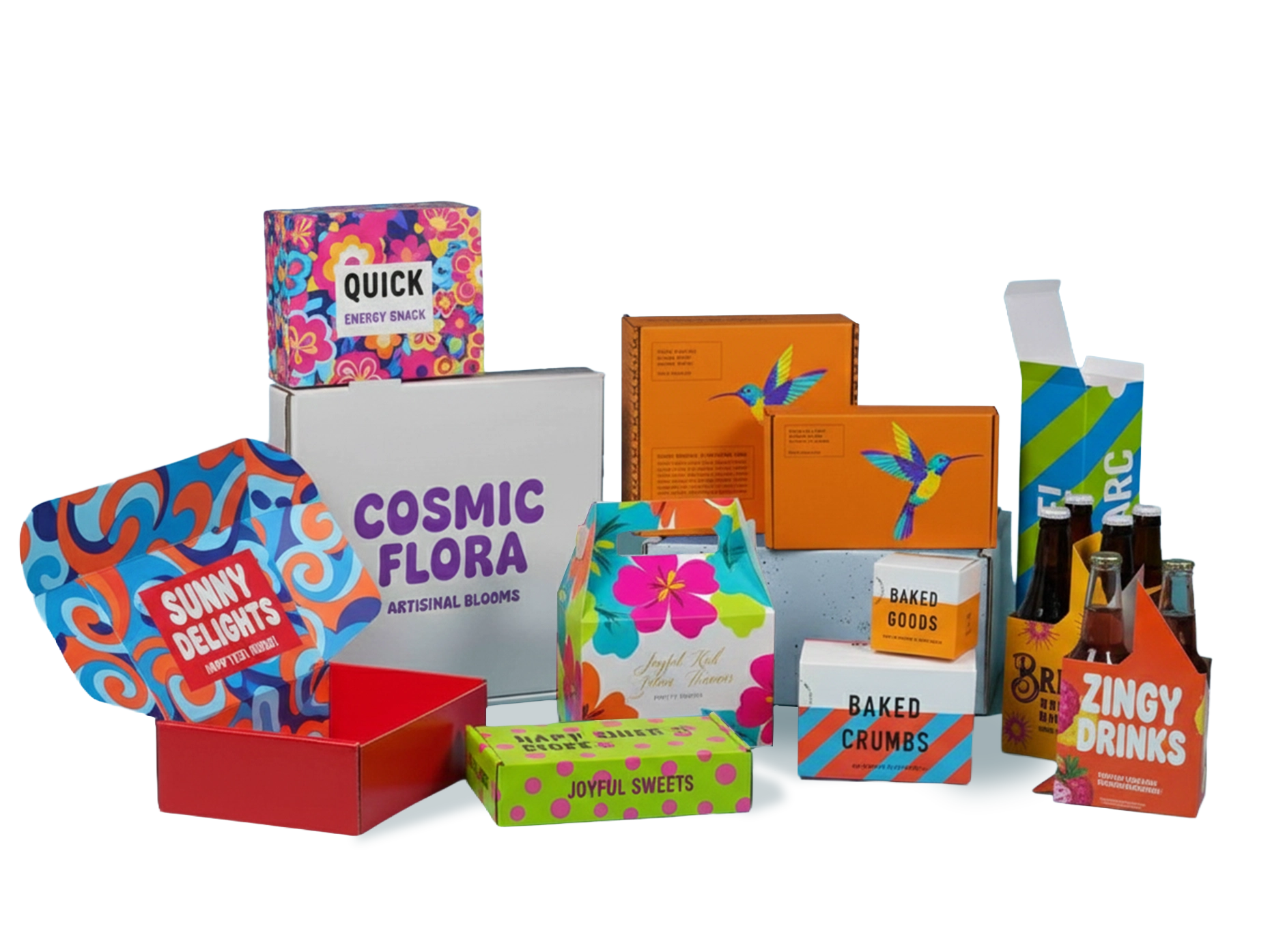




















































What does home business packaging need to solve?
Home business packaging needs to fit the product, the workspace, and the customer handoff. A dieline is the flat cutting template used to print, cut, and fold the package. Start with the product you actually sell, then describe the package role, opening, closing action, and storage space. A box that looks good on screen can still be awkward when it blocks the packing table or arrives too tall for the shelf.
For a first run, keep the brief narrow. List the product, quantity, artwork status, and what the customer should see first. If an insert holds the product, include the product in its arranged position. A sample kit can answer physical questions that a screen cannot.
Is 100 units enough for a home business packaging order?
Yes, 100 units is the MOQ for a home business packaging order. MOQ means minimum order quantity. Choose one product or one closely related group, then decide how the boxes will be stored and packed. That gives the quote and proof a defined job instead of mixing several unrelated products.
| Planning stage | Decision to make | Information to provide |
|---|---|---|
| Product brief | What must the package hold? | Product type, dimensions, and arrangement |
| Artwork | What should the customer see? | Logo, copy, colors, and existing files |
| Storage | Where will empty packages sit? | Available shelf or workspace |
| Packout | How will the package be closed? | Opening action and packing sequence |
| First run | What quantity is realistic? | 100 units or more |
How should a home business choose a package?
Choose a package by the product it must hold and the way you pack it at home. Private label packaging can frame a branded product line. Sock packaging gives a compact soft-goods reference. Towel packaging points to a larger folded product. These references give the quote conversation a starting structure, but the actual product dimensions still control the dieline.
Look at the package after it is folded. Check whether glue tabs sit clear of the product, whether scores cross important type, and whether the opening action makes sense with one person packing orders. If a barcode is in the artwork, leave clear space around it for scanning. A small prepress correction is cheaper before approval than after printing.
What does free design support include?
Free design support includes drawing the dieline and organizing the brief before proof approval. Send product dimensions, a logo, rough artwork, or a written description. The dieline should come from the product footprint, not from a guessed box size. The digital proof is the checkpoint before anything prints.
Review bleed, type near a score, image resolution, and color mode. RGB art can shift when converted for press. Missing bleed can leave a white edge after cutting. A press check, when used for a print job, looks at registration, ink coverage, and the way fine type sits near folds. Approve the proof only after the outside and inside panels make sense in the folded package.
What should a home business budget and schedule first?
A home business should budget around the 100-unit MOQ and schedule from proof approval. Pricing is from $0.49 per unit at volume, quoted to spec. That figure is a starting point, not a flat price for every package. The quote should reflect the structure, material, artwork, quantity, and delivery details. Free US shipping is available.
Production is typically 8 to 10 business days after proof approval, plus delivery. The clock starts at proof approval, not when the first idea is sent. Leave time to assemble the brief, review the digital proof, and confirm product fit. A $19.99 sample kit can be used before proof approval and is credited toward the first order.
What should you send for a home business packaging quote?
Send product dimensions, quantity, artwork, package role, and delivery details for a home business packaging quote. Include the storage space, packout sequence, opening preference, and any insert question. If the package may touch food, ask us about food-contact options for your product. If a child-resistant feature matters, ask what can be built into the package.
- One product or closely related product group
- Finished dimensions and the way the product will sit
- Logo, copy, colors, or artwork files
- Quantity beginning at 100 units
- Storage, delivery, food-contact, or child-resistant questions
Start with the custom packaging solutions page if you need a broader route. When a physical reference would settle the first decision, order the $19.99 sample kit. The next useful step is a brief that describes one product clearly.
Frequently Asked Questions
What is the minimum order for home business packaging?
The minimum order for home business packaging from Custom Packaging Lane is 100 units. Pick one product or a closely related product group for the first run, then explain how the boxes will be stored, packed, and handed to customers. A focused brief gives the quote and proof a clear job.
Does Custom Packaging Lane provide design help for small runs?
Home businesses can use free design support for a small packaging run. Send product dimensions, artwork, a logo, or a rough idea, and the packaging team can draw the dieline and organize the brief before the digital proof. The proof approval step comes before anything prints.
How much does home business packaging cost?
Home business packaging is priced from $0.49 per unit at volume, quoted to spec. The figure is a starting point, not a flat price for every package. The quote reflects the structure, material, artwork, quantity, and delivery details. Free US shipping is available.
How long does home business packaging production take?
Home business packaging production is typically 8 to 10 business days after proof approval, plus delivery. The production clock starts when the proof is approved, so leave time for the brief, artwork review, product fit, and final signoff before that window begins.
Can packaging include food-contact or child-resistant features?
Ask Custom Packaging Lane about food-contact options for a product that may touch food. Child-resistant packaging is a feature that can be built into a package, not a certification claim. Describe the product and intended use in the brief before the structure and proof are approved.












