






























































How do you choose the size of custom jewellery boxes?
Custom jewellery boxes should be sized around the packed piece, the insert-liner, and the way the box opens. An insert-liner is the internal support or soft facing that positions the jewellery and shapes what the customer sees first. CPL's jewellery catalog uses small, big, round, and square fit directions, but the packed item still sets the required dimensions and clearance.
For custom jewelry box packaging, send the dimensions of the ring, necklace, bracelet, earrings, or set as it will sit inside the package. Include a pouch, card, tray, or other layer that remains with the piece. A small luxury jewelry box can need more interior planning than its outside footprint suggests when the liner, clasp, or presentation angle takes up space.
| Fit direction | Dimension basis | Insert or liner route |
|---|---|---|
| Small | Packed piece dimensions and clearance around the item | Velvet, satin, suede, or foam |
| Big | Piece or set dimensions, opening, and storage clearance | Foam, velvet, satin, or divided support |
| Round | Round item outline and tray relationship | Suede, velvet, or shaped foam |
| Square | Item footprint, orientation, and box interior | Velvet, satin, suede, or foam |
Which jewelry box insert options fit different pieces?
Jewelry box insert options follow the item and the presentation goal. Velvet, satin, and suede create a soft lined surface for jewellery presentation. Foam can support a shaped hold when movement needs to be limited. A tray, divider, or compartment can separate a set or organize more than one piece.
For one ring or pair of earrings, state the visible face, the support point, and the removal motion. For a necklace or set, provide the arrangement of each piece, the preferred spacing, and the order in which the customer should see the contents. The liner should hold the piece without hiding the part the package is meant to show.
Which material works for a small luxury jewelry box?
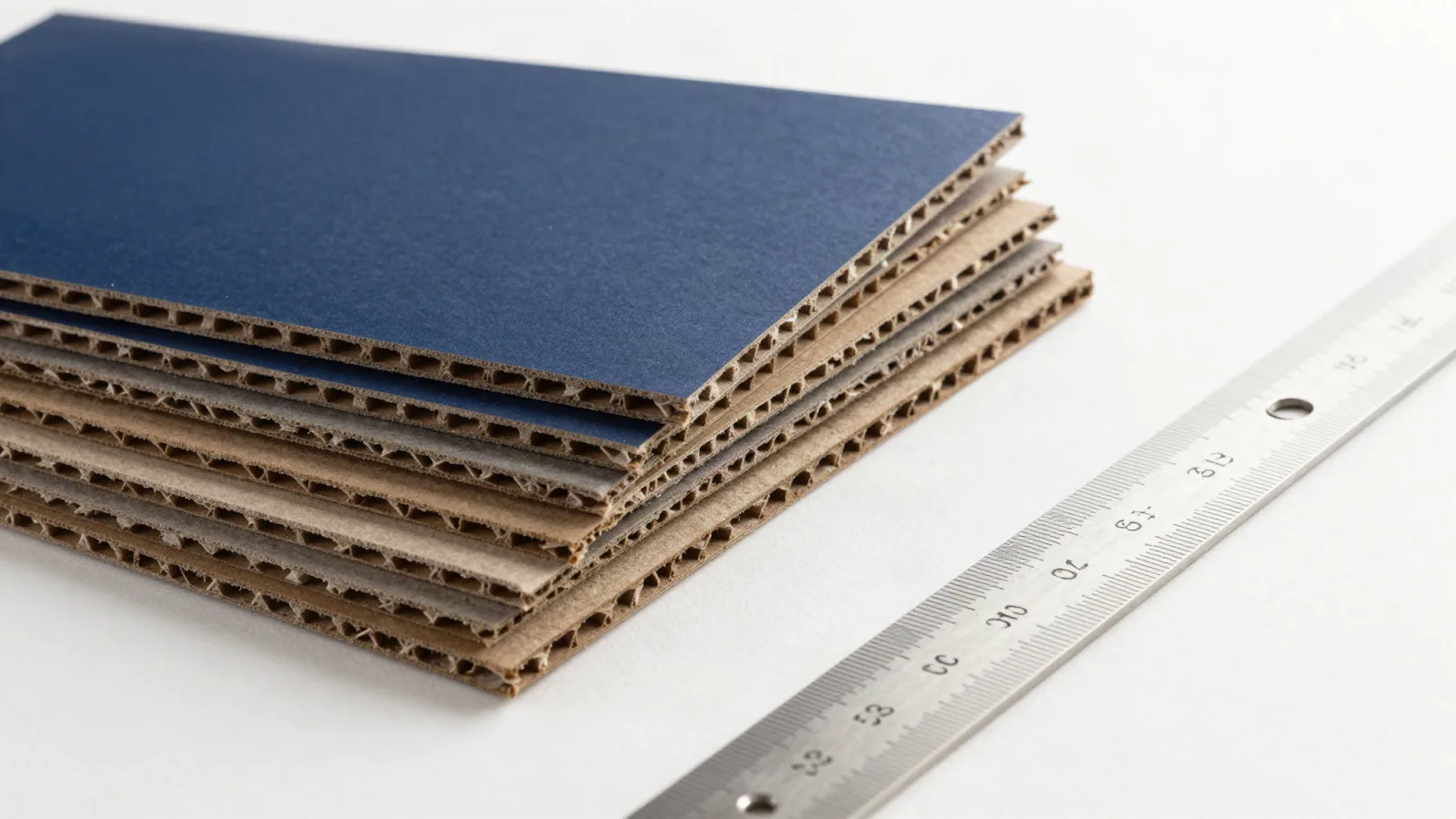
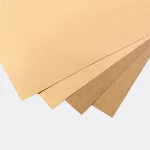
Cardboard and paperboard suit folding structures, while a rigid box uses thicker board to hold its shape without a fold. Corrugated material adds a fluted inner layer when the package needs a shipping-oriented structure. Kraft gives the exterior a natural paper appearance. The material should follow the item, insert, opening, handling route, and artwork.
A rigid structure can change the lid, tray, and insert relationship. A folding structure can change the score positions and usable interior. Ask for the material direction in the proof, then check the closed box, open box, liner, and packed piece together.
Which jewellery box opening should you compare?
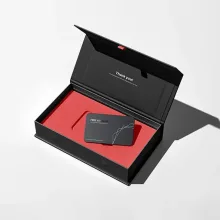
Compare the opening with the way the customer should reach the piece. A drawer-style box uses a pull-out tray. A magnetic closure box opens from a hinged or flap direction. A lid-and-tray format separates the cover from the base, while a book-style structure opens like a cover.
The opening affects the insert, the visible face of the jewellery, the space needed for a ribbon or pull-tab, and the position of the logo. If a bow, handle, or other access feature belongs in the request, place it on the brief before the dieline is drawn. The feature should not disturb the liner or the packed piece.
Which product pages can you compare for jewelry packaging?
Window display boxes are a reference when the piece should be visible before opening. Window boxes are useful when a cutout or viewing area belongs in the brief. Wallet boxes provide a compact package reference for footprint and closure discussions. These are adjacent catalog routes, while the jewellery quote still needs the packed piece, dimensions, insert-liner choice, and opening direction.
What should a jewellery box proof show?
A jewellery box proof should show the packed piece, box dimensions, insert or liner, opening direction, artwork, and finish together. A dieline is the flat template that shows panels, folds, scores, trim, and closure areas. Review that template with the assembled box because an exterior panel can land differently after folding.
- Confirm the packed piece dimensions and the required interior clearance.
- Check the liner, foam, tray, divider, or compartment position.
- Review the logo, product name, finish areas, and interior treatment.
- Check the closed box, open box, lid, tray, sleeve, and closure.
- State the quantity, destination, and set or assortment arrangement.
Use custom packaging solutions to bring the item, material, insert, opening, artwork, quantity, and destination into one request. Free design support can organize the exterior and interior plan before the digital proof is approved.
What are the MOQ, price, and production terms?
The MOQ is 100 units. Pricing is from $0.49 per unit at volume, quoted to spec. Production is typically 8 to 10 business days after proof approval, plus delivery. Free US shipping and free design support are available. A $19.99 sample kit can help compare surface and liner directions before approval.
Send the packed piece details, fit direction, insert-liner choice, material, opening, artwork, quantity, and destination with the quote request. Approve the proof after the liner, box structure, and presentation agree with the package you intend to order.
Frequently Asked Questions
How do I choose the size of custom jewellery boxes?
Custom jewellery boxes should follow the packed piece, required clearance, opening direction, and insert-liner choice. CPL's catalog uses small, big, round, and square fit directions, but the final dimensions should follow the actual ring, necklace, bracelet, earrings, or set. Include any pouch, card, tray, or layer that remains inside the box.
What jewelry box insert options are available?
Jewelry box insert options include velvet, satin, suede, and foam, with trays, dividers, or compartments when the arrangement calls for them. Velvet, satin, and suede create a soft lined presentation, while foam can support a shaped hold. Choose the insert around the packed piece, visible face, removal motion, and box opening.
Which material works for a small luxury jewelry box?
A small luxury jewelry box can use cardboard, paperboard, rigid, corrugated, or kraft material, depending on the piece, insert, opening, handling route, and artwork. Rigid construction holds its shape without a fold, while folding structures use scored board. Review the selected material with the packed piece and liner in the proof.
Can a jewellery box include a window or viewing area?
A jewellery box can be discussed with a window or viewing area when the piece should be visible before opening. The request should show the window position, item clearance, liner, logo placement, opening, and artwork together. Window boxes and window display boxes are adjacent catalog references, not a fixed specification for every jewellery box.
Can I review jewelry box materials before production?
A $19.99 sample kit can help compare packaging surface and liner directions before production. Free design support can organize the fit, insert, dimensions, opening, artwork, and finish request. Production is typically 8 to 10 business days after proof approval, plus delivery, and the proof should confirm the complete package.