







































































What are sleeve and tray boxes?
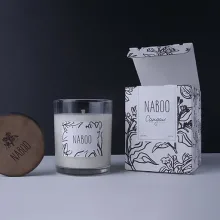
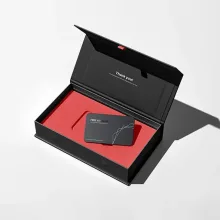
Sleeve and tray boxes use two pieces: an inner tray that holds the product and an outer sleeve that slides over it. The tray controls product position, while the sleeve carries the outside artwork and controls the reveal. A buyer gets a different opening from a hinged lid or a plain folding carton. Start with custom sleeve and tray boxes if the handoff from sleeve to tray is part of the product presentation.
A dieline is the flat cutting template that shows panels, folds, scores, glue tabs, and cut edges before the printer produces the package. Measure the product first. Add the wrap, insert, or clearance that will sit inside the tray, then draw the dieline from that finished fit. Bleed is extra artwork beyond the cut line. Missing bleed can leave a thin unprinted edge, and type too close to a score can fold into the wrong place.
How does a sleeve and tray box open?
The sleeve and tray box opens by pulling the tray through the sleeve, so the design must show what appears first, halfway, and at full extension. A shallow pull can keep the product partly covered. A full pull can expose the tray and any interior message. Put the pull direction in the proof. Do not judge the structure from a flat artwork file alone.
A press check is a review of the printed sheet before the full run. It looks at ink coverage, small type, image sharpness, and registration between artwork and cut lines. RGB artwork can shift when it is converted for press. Low-resolution art stays soft. Artwork set too close to a score can fold into the wrong place. Those are proof-stage issues, not shipping-stage surprises.
Which material should the tray and sleeve use?
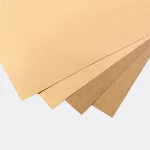
Rigid board, corrugated board, and folding carton board suit different handling and presentation needs. Rigid board is chipboard wrapped in printed paper. It holds its shape and has firm edges, but it folds differently from corrugated board. Corrugated board has liners around a fluted center, so it adds cushion and stacking support but uses a thicker profile. Folding carton board is a single printed sheet that scores and folds flat.
| Format | How it opens | Material behavior | Buyer question |
|---|---|---|---|
| Sleeve and tray box | Tray slides through sleeve | Two-piece guided reveal | Should the product emerge from an outer branded sleeve? |
| Lid and tray box | Lid lifts from the base | Organized top opening | Would a lifted lid suit the product moment? |
| Folding carton | Panels fold open | Packs flat before filling | Is direct access the main need? |
| Coffee cup sleeve | Wraps around a cup | Accessory format, not a box | Is the package a beverage accessory? |
Use the package job to choose the construction. A structured gift or jewelry presentation may warrant comparing rigid boxes with sleeve and tray. A lighter package may need a different board direction. Ask for the stock and construction in the proof, because the word sleeve does not tell you whether the piece is rigid, folding, or corrugated.
Are branded coffee sleeves the same as tray and sleeve boxes?
No. Branded coffee sleeves and branded coffee cup sleeves are wraps that fit around beverage cups. A tray and sleeve box encloses a product with an inner tray and outer sleeve. The names share the word sleeve, but the dimensions, material, and use are different. Specify the cup format for a coffee sleeve. Specify product dimensions and tray movement for a box.
Custom branded corrugated sleeves can mean a corrugated outer wrap around another package, not necessarily a tray and sleeve box. Ask the supplier to name each piece in the proof: sleeve, tray, insert, closure, and any window. That simple label prevents a quote for the wrong construction.
Which products suit a sleeve and tray box?
Sleeve and tray boxes suit products that need a guided reveal or a stable arrangement inside the package. Jewelry, soaps, small accessories, gift sets, and grouped products can all be discussed in this format when the tray dimensions match the actual contents. For a top-opening structure, compare jewelry boxes with lid and tray. The opening choice should follow the product, not the search phrase.
Decide if the tray should hold one item, several items, or an insert. An insert is a separate piece cut to locate the product inside the box. Cut it to the product's actual footprint, then check that the product does not rattle after the box is closed. For sets, note the order of the pieces and the amount of tray that should remain visible.
What should go into a sleeve and tray box brief?
A useful brief includes the product's finished dimensions, wrap or insert, quantity, opening direction, artwork status, display or shipping route, and any food-contact question. If the product may touch food, ask us about food-contact options for your product. Child-resistant packaging is a feature we can build when the intended use calls for it.
Free design support starts with the package plan. Send the product dimensions and artwork, and we draw the dieline and send a digital proof before anything prints. Review the sleeve movement, tray fit, folds, score lines, glue tabs, and visible panels in that proof. The $19.99 sample kit can give you a physical reference before you approve the structure, and it is credited toward your first order.
Use custom packaging solutions if you are still sorting out whether the job needs a sleeve, lid, carton, or tray-led format. Keep the request specific so the quote and proof refer to the same package.
What do sleeve and tray boxes cost and how long do they take?
The MOQ is 100 units. Pricing is from $0.49 per unit at volume, quoted to spec. Production is typically 8 to 10 business days after proof approval, plus delivery. Free US shipping and free design support are available. The clock starts at proof approval, so allow time before that milestone for dimensions, artwork, revisions, and the final opening check.
Send the product dimensions, order quantity, artwork, destination, and intended use. If free design support is needed, say whether the dieline must be drawn from scratch or an existing file needs review. That gives the proof a job to do, instead of leaving the structure to guesswork.
Frequently Asked Questions
How is a sleeve and tray box built?
A sleeve and tray box has an inner tray and an outer sleeve. The tray holds the product, while the sleeve slides over it and carries the outside artwork. The opening sequence is part of the structure, so the proof should show the tray partway out and fully removed. The format is different from a branded coffee cup sleeve, which wraps around a beverage cup.
Can this format use rigid or corrugated board?
A tray and sleeve box can use rigid board, folding carton board, or corrugated board, depending on the required structure and handling. Rigid board is chipboard wrapped in printed paper, corrugated board has fluted material between liners, and folding carton board scores and folds flat. Ask for the material and construction in the proof.
Are branded coffee sleeves boxes?
Branded coffee sleeves are wraps designed to fit around beverage cups, not boxes with an inner tray. A tray and sleeve box encloses a product and uses the sleeve to control the opening. Give the supplier the cup format for a coffee sleeve or the product dimensions and tray movement for a boxed package.
What is the smallest custom sleeve and tray order?
The smallest custom sleeve and tray order is 100 units because Custom Packaging Lane uses a 100-unit MOQ for custom projects. Pricing is from $0.49 per unit at volume, quoted to spec. Free design support is available, and the $19.99 sample kit can be credited toward the first order.
What should I expect after proof approval?
After proof approval, production is typically 10 to 14 business days, plus delivery. The production clock starts after the sleeve, tray, artwork, quantity, and structure have been approved. Free US shipping is available, but delivery still belongs in the project schedule.