




























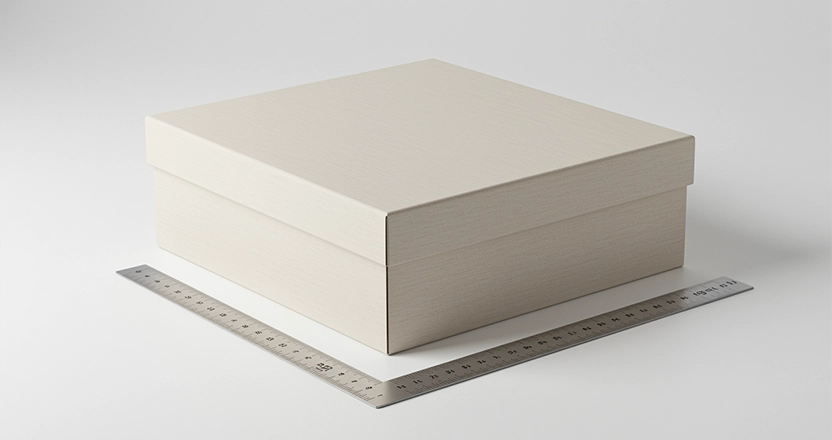




















































What subscription box dimensions should I measure first?
Subscription box dimensions should begin with the complete packed assortment, not one item in isolation. Lay out the products, inserts, cards, tissue, and any protective components that will ship together. Measure the combined length, width, and height, then identify the order in which the customer should see each item. The right box must support both the product arrangement and the recurring unboxing experience.
Custom subscription boxes often need to accommodate a changing assortment. If the contents vary from one release to another, identify the largest planned arrangement and the smallest arrangement that still needs a polished presentation. A custom printed subscription box may also need a consistent exterior while the interior uses a flexible insert or a simple layout.
Which subscription box sizes are useful for early planning?
| Planning format | Size in inches | Approx. size in mm | Useful starting use case |
|---|---|---|---|
| Compact subscription carton | 6 x 4 x 2 | 152 x 102 x 51 | Small recurring item set with limited insert space |
| Candy subscription box | 8 x 6 x 3 | 203 x 152 x 76 | Packaged candy assortment with a printed unboxing exterior |
| Mixed-item mailer | 10 x 8 x 4 | 254 x 203 x 102 | Several products, cards, and a structured presentation layer |
| Premium assortment box | 12 x 10 x 5 | 305 x 254 x 127 | Larger recurring set with more room for layout and inserts |
These are planning examples, not universal subscription standards. Measure the complete packed arrangement and confirm whether the dimensions are internal or external. Metric conversions are rounded to the nearest millimeter. Leave the final clearance decision to the packaging discussion, especially when inserts, tissue, or monthly assortment changes are involved.
How should a subscription box handle changing contents?
Start by separating fixed elements from variable elements. The exterior footprint, brand panels, and opening sequence may stay consistent, while the interior arrangement changes. If the monthly assortment changes substantially, describe the range of layouts in the brief. This helps the design conversation focus on usable space rather than a single launch configuration.
For a candy subscription box, list the individual packages, outer wrappers, cards, and any cushioning or separation needed in the arrangement. If products are displayed in layers, state the order of presentation. If the box is a mailer that moves directly to the customer, also describe the way the lid opens and how the printed exterior should appear at unboxing.
What should a custom subscription box brief include?
- The full product assortment for the smallest and largest planned release.
- Measured product dimensions, cards, tissue, and insert components.
- Opening sequence, unboxing order, and the preferred exterior presentation.
- Monthly variation, replenishment method, and any layout that must remain fixed.
- Quantity, artwork status, delivery destination, and proof approval needs.
Review custom subscription mailer boxes when the package is part of direct fulfillment. Compare custom subscription boxes for a broader recurring assortment, and consider custom jewelry subscription boxes when the contents are small and presentation-led. Custom foam box inserts can support a more structured layout. Visit the custom packaging solutions hub for wider planning.
When should I test a subscription box sample?
The sample kit is $19.99 and can help your team discuss insert space, opening sequence, and the relationship between the exterior and interior presentation. Use it before finalizing the assortment layout if stakeholders need a physical reference. Then test the actual product arrangement against the project-specific proof.
CPL's MOQ is 100 units, pricing is from $0.49 per unit at volume, and free US shipping plus free design support are included. Production typically takes 8 to 10 business days after proof approval, plus delivery. Build artwork decisions and assortment checks into the schedule before the proof is approved.
What should subscription packaging confirm before approval?
Confirm the packed dimensions, insert position, lid or mailer opening, artwork version, monthly variation, and delivery destination. If candy or another food product may touch the package, ask us about food-contact options. If a child-resistant feature is relevant to the product use, describe the intended use and ask what can be built into the package. Keep those questions distinct from the ordinary box size.
Frequently Asked Questions
How do I choose dimensions for a subscription box?
Measure the complete assortment as it will be packed, including inserts, cards, tissue, and protective components. Then identify the smallest and largest planned monthly layouts. The box should support the actual unboxing sequence and the exterior presentation, rather than being sized around only one item from the subscription.
What size works for a candy subscription box?
A candy subscription box should be sized around the packaged assortment, not an assumed candy format. Start with the length, width, and height of the full set, then include cards, dividers, and the desired presentation order. Ask us about food-contact options when the package may touch food.
Can subscription packaging support changing monthly assortments?
Yes, the brief can describe fixed exterior elements and variable interior arrangements. Share the range of planned products and the layouts that must fit. A flexible interior or insert approach may help, but the final dimensions should be checked against the actual assortment before proof approval.
What is the MOQ for custom subscription boxes?
The MOQ is 100 units. Include the subscription format, product assortment, artwork status, insert plan, and destination in the request. Free design support can help organize the exterior and interior direction before the project-specific proof is reviewed.
Should I use a sample kit before ordering subscription packaging?
The $19.99 sample kit can help stakeholders discuss opening sequence, structure, and presentation before the final assortment is approved. Use it alongside the actual products and proposed inserts. The project-specific proof should still confirm the final dimensions, artwork, and interior arrangement.












