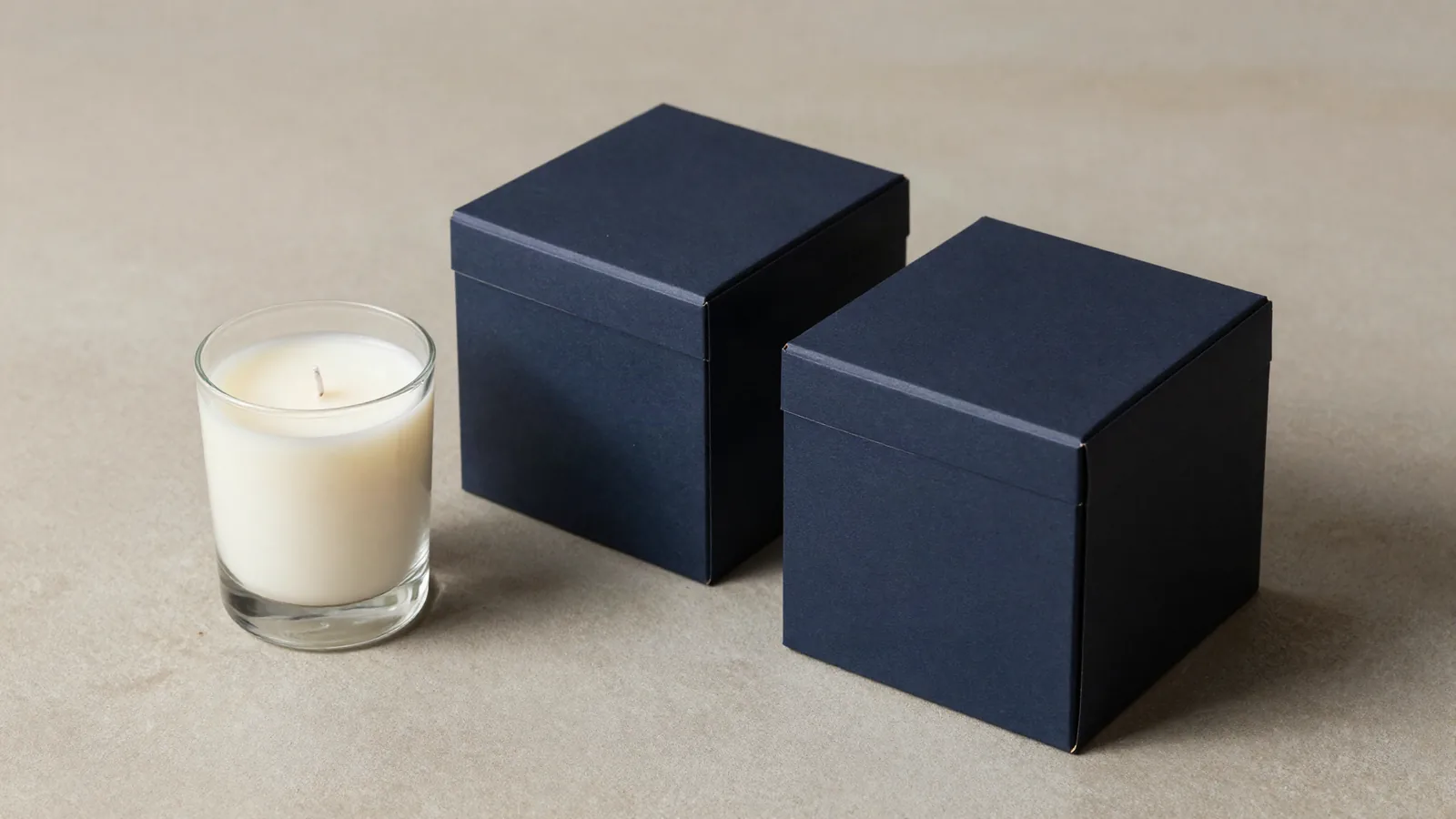



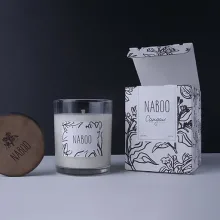
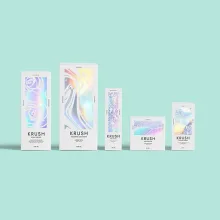
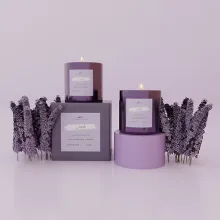
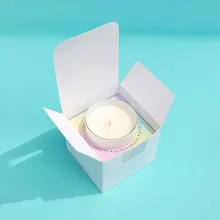




























Tealight boxes are small-format boxes for compact candle assortments, but the box still has to account for the filled layout. A single scent, a mixed color set, and a gift grouping can occupy the same footprint differently. Start with the actual candles, any inner wrap, and the way the customer should see and remove them.
Small candle boxes should be judged with the product inside. A universal width or depth is not a fit specification. The cut size, opening path, and any window are confirmed from the packed arrangement during proofing. A window is a cutout covered with clear film, so it gives visibility while using some of the printable front area.
What are tealight boxes designed to hold?
Tealight boxes are designed around compact candle groups that need a fixed presentation inside the package. The group may be a single collection, a scent or color range, or a giftable set. The box should keep that arrangement readable on the outside and stable when the package is opened.
Write the filled arrangement into the brief. State the count, orientation, any inner wrap, and whether the candles sit as one group or in separated positions. The outside artwork can stay consistent across variants while the product name, scent, or color does the separating work.
How do small candle boxes fit a real tealight arrangement?
Fit a small candle box from the actual filled arrangement, not from a generic small-box measurement. A dieline is the flat cutting template that marks the cut, fold, score, and glue areas, so it needs the packed product before the structure is approved.
Place the candles in their intended orientation and check the opening sequence. If an insert or inner wrap changes the footprint, include it in the record. A package cut too close to the product can pinch the presentation, while excess space can let a small candle move inside the box. The proof should show both the empty structure and the filled view.
Should tealight candle packaging use a window?
Use a window when seeing the candle arrangement supports the purchase decision. Use a closed front when the artwork, scent name, or collection story needs the full panel. The choice belongs to the filled product and the selling position.
| Presentation job | Structure direction | Proof check |
|---|---|---|
| Show candle appearance | Window front | Clear area aligns with the packed candles |
| Carry collection artwork | Closed front | Name, scent, and artwork have full panel space |
| Compare variants | Repeatable box layout | Scent or color field stays in one position |
| Open a grouped set | Defined opening path | Product remains organized during access |
Review the window at the intended shelf angle. Confirm that the clear area shows the candles rather than an empty gap, and keep the opening away from folds, glue tabs, and essential copy. A closed box still needs an opening path that reads clearly in the filled view.
How can tealight packaging keep scent and color variants clear?
Keep the box layout, logo position, and type order consistent across related variants, then reserve a repeatable location for scent or color information. That makes the difference between boxes visible without asking the shopper to hunt across every panel.
Review one proof per variant. Check the name, scent, color, artwork version, and window position where used. A low-resolution file, an RGB color shift, or type placed across a score can make a small box harder to read. Catch those issues while the proof is open.
Which catalog pages fit tealight box packaging?
Tealight candle boxes are the direct catalog reference for the product. Window boxes and window display boxes help compare a visible front with a closed structure. Use the product arrangement to choose the direction rather than borrowing a dimension from another page.
For small-brand packaging planning, visit custom packaging for small business. The hub can frame the project, but the tealight proof still needs the actual filled layout.
What should you confirm before ordering tealight boxes?
Confirm the filled layout, product orientation, inner wrap, scent or color fields, window choice, artwork version, material, finish, quantity, and delivery destination before approval. CPL provides free design support and a digital proof before anything prints. Projects use an MOQ of 100 units.
Pricing is from $0.49 per unit at volume, quoted to spec. Production is typically 8 to 10 business days after proof approval, plus delivery. Free US shipping is available. Order the $19.99 sample kit, credited toward the first order, to compare physical box directions before approving the tealight packaging proof.
Frequently Asked Questions
How should tealights be arranged inside a box?
Tealights should be arranged according to the actual sellable presentation, such as one collection, a scent or color range, or a gift set. Record the orientation, inner wrap, and opening path before the structure is drawn. The filled arrangement is the fit reference for small candle boxes.
What does choosing a window change on a tealight box?
Choosing a window removes some printable front area and adds a clear viewing area over the candle arrangement. A closed tealight box leaves the whole front for the collection name, scent, color, and artwork. The proof should show whether the window reveals the packed candles or an empty section.
Why are small candle box dimensions not universal?
Small candle box dimensions are not universal because the count, orientation, inner wrap, and grouping change the filled footprint. Share the actual tealights and arrangement so the dieline and proof reflect the product. A generic width or depth should not be treated as a confirmed fit.
Can one tealight box design serve several scent variants?
One tealight box design can carry several scent or color variants when the outer layout stays consistent and the variant field has a fixed location. Create a proof for each name and artwork version. Check the filled arrangement, window position, and readability at the final box orientation before approval.
What are the order terms for tealight boxes?
Tealight box projects use an MOQ of 100 units. Pricing is from $0.49 per unit at volume, quoted to spec. Production is typically 8 to 10 business days after proof approval, plus delivery. Free US shipping and free design support are available, and the $19.99 sample kit is credited toward the first order.