




























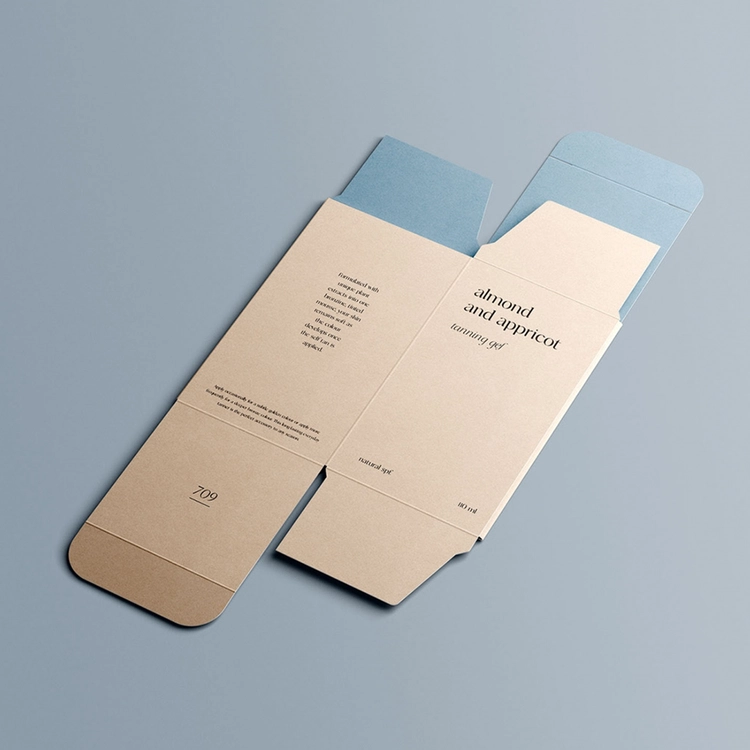




















































Which tuck end box style matches your opening preference?
Tuck end box styles use folding panels and tuck flaps to create a carton that opens without a separate lid. The naming can feel technical, but the buyer's decision is practical: how should the box open, where should the main artwork face, and how much assembly or closure support does the product need? Custom tuck end boxes can be adapted to the product's dimensions and retail presentation.
Start with the panel that should remain visually dominant. Then consider whether the top and bottom should tuck in the same direction, opposite directions, or into a roll end structure. A custom tuck end box is useful when you want to assess those choices with the product, artwork, and handling context in view.
What is the difference between straight tuck and reverse tuck?
| Style | Flap direction | What to evaluate |
|---|---|---|
| Straight tuck end | Top and bottom tuck in the same direction | Which panel should face the customer at opening? |
| Reverse tuck end | Top and bottom tuck in opposite directions | How should the carton open and close in use? |
| Seal end tuck | Tuck closure paired with a sealed end | Where should added closure support be placed? |
| Roll end tuck front | Rolled end construction with a tuck front | Would a more structured front suit the product? |
The labels describe a structural family, not a universal performance ranking. Straight tuck end boxes may create a familiar retail opening, while reverse tuck can change how the package is loaded and accessed. A custom seal end tuck box may be worth comparing when the closure behavior is central to the project.
When should you choose straight tuck end boxes?
Straight tuck end boxes are often considered when a consistent front panel, efficient folding format, and straightforward access matter. They can work for many retail products, especially when the carton needs to carry branding, product information, and a clear opening direction. The design should account for the product's orientation so the front panel and tuck flap do not compete with the main message.
For custom straight tuck end boxes, clarify which end is loaded first, whether the customer will reopen the carton, and how the package will sit on a shelf or in a shipping carton. These details help the structure support the real use instead of simply matching a familiar name.
What makes a roll end tuck front box different?
A roll end tuck front box uses a roll end structure with a front tuck closure. That combination can create a more defined front opening and a different visual relationship between the main face, side panels, and closure. It is worth considering when the front presentation deserves emphasis or when the product benefits from a stronger-feeling carton format.
Assess the roll end tuck front box option with the actual contents and display orientation. Ask how the product will be positioned, what support is needed inside, and which exterior panels need artwork. The right structure is the one that balances access, presentation, and the practical handling of the finished package.
What should you confirm before ordering custom tuck end boxes?
- Which tuck direction supports loading and repeated opening?
- Which panel is the front, and where should the main brand message sit?
- Does the product need an insert, divider, or other positioning support?
- Will the carton be displayed upright, flat, or inside another package?
- Do you need to ask about food-contact options for the intended use?
Custom Packaging Lane offers free design support for the proofing process. The minimum order quantity is 100 units, and pricing is from $0.49 per unit at volume, always as a starting point rather than a flat price. A $19.99 sample kit can help you compare structural directions before approval.
How can you compare tuck end styles commercially?
Prepare the product dimensions, quantity, opening preference, artwork, and display context. Then ask for a proof that makes the tuck direction easy to understand. For gift or retail projects, you can also compare the custom packaging solutions hub to assess adjacent structures without losing sight of the product's needs.
After proof approval, production is typically 10 to 14 business days, plus delivery. Free US shipping is available. Confirm the project-specific timing and order details after the structure is selected, because production planning follows the approved package.
Frequently Asked Questions
What are tuck end box styles?
Tuck end box styles are folding carton structures that close with tuck flaps rather than a separate lid. Common directions include straight tuck, reverse tuck, seal end tuck, and roll end tuck front. The choice affects how the carton is loaded, opened, displayed, and branded, so the product context should guide the selection.
What are straight tuck end boxes used for?
Straight tuck end boxes can suit retail products that need a familiar folding-carton opening and a clear front presentation. Before choosing them, assess the product orientation, loading direction, artwork placement, and how often the carton will be reopened. A proof should show those relationships instead of relying only on the style name.
How are custom tuck end boxes ordered?
Provide the product dimensions, desired quantity, artwork, opening preference, and display context. The supplier can use those details to recommend a structure and prepare a proof. The minimum order quantity is 100 units, and free design support is available during the planning and proofing process.
What is a roll end tuck front box?
It is a carton structure that combines a rolled end construction with a front tuck closure. The format can be considered when the front face and opening deserve a more defined presentation. Assess the product position, interior support, artwork panels, and handling conditions before selecting the structure.
How long does production take for tuck end boxes?
Production is typically 8 to 10 business days after proof approval, plus delivery. The window is a planning guide, not a guarantee for every order. Confirm timing after the project structure, artwork, quantity, and shipping details are reviewed. Pricing is from $0.49 per unit at volume.












