




























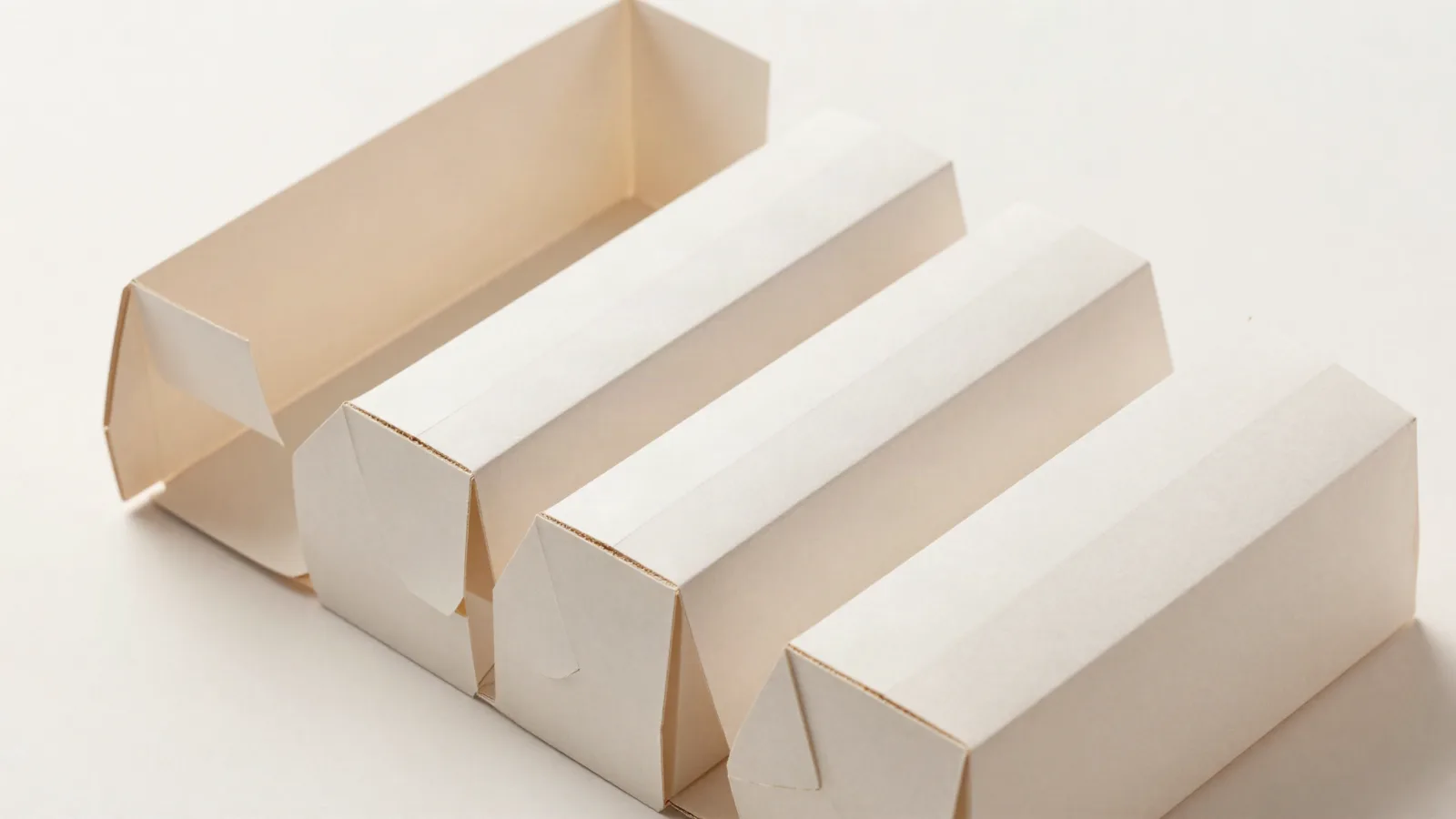




















































Types of pillow boxes are easiest to compare when you start with the package itself, not the occasion. A pillow box is a die-cut carton with curved end panels that fold toward the center. That fold creates the pillow shape. The same basic form can be listed as a general, large, kraft, gift, or candy style, and each label gives the brief a different starting point. Custom Packaging Lane's pillow boxes page is the broad reference.
What are the main types of pillow boxes?
The main types are general pillow boxes, large pillow boxes, kraft pillow boxes, gift pillow boxes, and candy pillow boxes. Those names organize the catalog, but they do not set a universal size or interior component. A large format needs the product dimensions before anyone can judge fit. A gift format describes the presentation direction. A candy format starts a confectionery discussion, where you should ask about food-contact options for your product.
| Catalog style | What the label tells you | Custom Packaging Lane reference |
|---|---|---|
| General | Start with the core pillow shape. | custom pillow boxes |
| Large | Begin with a roomier format and the product dimensions. | large pillow boxes |
| Kraft | Use a kraft paper direction for the printed surface. | custom kraft pillow boxes |
| Gift | Start with a presentation-led package brief. | custom gift pillow boxes |
| Candy | Keep the contents and food-contact question in the brief. | candy pillow boxes |
Use the table to choose a route, then inspect the construction details. A dieline is the flat cutting template a printer uses to place artwork, cut the carton, and mark scores and glue tabs. The curves, scores, flap depth, and bleed all need to agree with the product fit. A product name cannot tell you whether an insert fits or whether type sits safely away from a score.
How do kraft and white pillow boxes differ?
Kraft and white paper create different starting surfaces. Kraft paper shows its brown fiber tone and can mute bright ink colors, while white board gives the artwork a cleaner color field. Neither label alone tells you the board thickness, coating, or final finish. Custom Packaging Lane's custom kraft pillow boxes page is the right place to begin a kraft-led brief, then the proof can settle the artwork and structure.
Finish changes the printed surface after the shape is settled. Matte lamination cuts glare and gives the panel a softer look, while gloss lamination reflects more light and makes color appear harder. Spot UV adds a small gloss area over selected artwork. Keep those choices in the same proof as the dieline, because a finish boundary that crosses a score can crack or look uneven.
When is a window pillow box the better starting point?
A window pillow box makes sense when the item should be visible before the package opens. A window changes the front panel: part of the printed area becomes a viewing area, and the product position matters as much as the artwork. Use Custom Packaging Lane's window boxes reference when visibility belongs in the first conversation. Confirm the window location, product orientation, and opening path before approving the dieline.
How should you choose a pillow box for candy or gifts?
Choose a candy pillow box when the contents are confectionery and a gift pillow box when the presentation brief leads the decision. The names help you start with the right catalog page; they do not establish an interior treatment or a food-contact status. For direct product contact, ask us about food-contact options for your product. Check candy pillow boxes and custom gift pillow boxes against the actual item.
What should happen before a pillow box goes into production?
Send the product dimensions and artwork first. We draw the dieline with free design support and send a digital proof before anything prints. Check bleed, small type near scores, barcode placement, and the way the end panels close. If the package needs a window or an insert, those elements belong in the same proof check.
Custom pillow box projects use a MOQ of 100 units. Pricing is from $0.49 per unit at volume, quoted to spec. Production is typically 8 to 10 business days after proof approval, plus delivery. Free US shipping is available. Order the $19.99 sample kit when you want to handle a physical reference before approving the run. For the broader packaging brief, see custom packaging solutions.
Frequently Asked Questions
What types of pillow boxes does Custom Packaging Lane list?
Custom Packaging Lane lists general pillow boxes, large pillow boxes, custom kraft pillow boxes, custom gift pillow boxes, and candy pillow boxes. The labels identify the starting style, not a universal size or interior. The product dimensions, artwork, opening, material direction, and approved proof still determine the final package.
What is the difference between kraft and white pillow boxes?
Kraft pillow boxes show a brown paper tone that can soften printed colors, while white pillow boxes give artwork a cleaner surface. The paper direction does not set board thickness, coating, or finish. A buyer should compare the selected material direction with the actual artwork and check it in the digital proof.
Are window pillow boxes available?
Window pillow boxes are available as a catalog direction through Custom Packaging Lane's window boxes reference. A window makes the product visible before opening and uses part of the front panel for viewing. Confirm the window position, product orientation, and dieline before approval because the name alone does not set those details.
Can pillow boxes hold candy?
Candy pillow boxes can start a confectionery packaging brief, but the product name does not establish food-contact status. If the package will touch candy directly, ask Custom Packaging Lane about food-contact options for your product. Confirm the product fit, opening, material direction, artwork, and proof before production.
What are the commercial terms for custom pillow boxes?
Custom pillow boxes use a MOQ of 100 units, with pricing from $0.49 per unit at volume, quoted to spec. Production is typically 8 to 10 business days after proof approval, plus delivery. Free US shipping and free design support are available, and the sample kit is $19.99.












