




























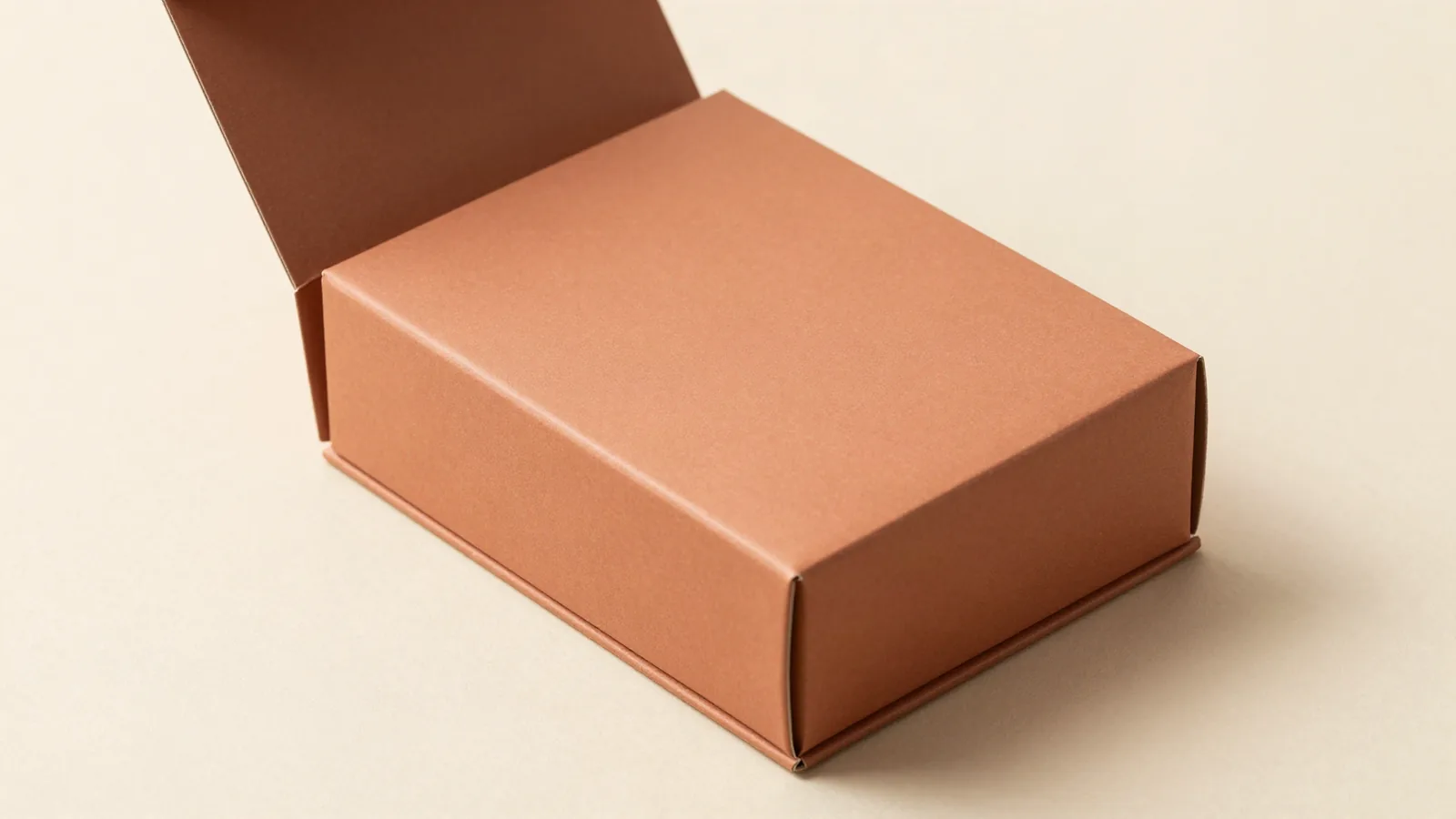




















































Types of rigid boxes make more sense once the structure is clear. A rigid box is a pre-formed paperboard package built from a stiff chipboard core wrapped in printed paper, so it holds its shape instead of folding flat like a folding carton. The opening, lid, tray, insert, and closure then determine how the product is presented. Custom Packaging Lane's custom packaging solutions page gives the wider context, while the product references below narrow the rigid box brief.
What makes a rigid box different from a folding carton?
A rigid box keeps its shape because chipboard forms the core and the printed wrap covers it. That construction gives the package a fixed body, so the product fit and opening need attention before decoration. A folding carton relies on scored paperboard that ships flat and takes its shape during assembly. The two formats call for different dielines, interior plans, and proof checks.
Which rigid box opening should you compare first?
Compare the opening motion first, then choose the rigid box family that matches it. The catalog includes direct printed boxes, pull-out sleeve-and-tray formats, magnetic closures, set-up boxes, lids, inserts, and product-specific versions.
| Rigid box type | Construction question | Custom Packaging Lane reference |
|---|---|---|
| Printed rigid box | Should the rigid body carry the main printed presentation? | rigid printed boxes |
| Sleeve and tray | Should a tray pull through an outer sleeve? | rigid boxes with sleeve and tray |
| Magnetic closure | Should a flap or lid close with a magnet? | rigid boxes with magnetic closure |
| Set-up box | Should the box arrive in a pre-formed presentation shape? | custom rigid set-up boxes |
| Lid or insert | Does the package need a cover, organized cavity, or both? | rigid boxes with lids, rigid boxes with inserts |
| Product-specific or luxury | Should the product category or presentation direction lead the brief? | custom rigid candle boxes, custom luxury rigid boxes |
The table names the first decision, not the whole specification. A box can have a lid and an insert, or a sleeve and a tray, but the cavity must still match the actual product. If the insert is cut too close, the product binds. If it is too loose, the product rattles. Put the item dimensions and the opening path into the same proof check.
Surface treatment comes after the structure, but it still belongs on the proof. Matte lamination cuts glare on a broad wrap, gloss lamination reflects more light, and spot UV places a localized gloss area on selected artwork. Foil needs clear placement on the wrap panels. Keep finishes away from folds, lid edges, and glue areas unless the proof shows the boundary clearly.
When does a rigid box need an insert?
A rigid box needs an insert when the product must sit in a defined cavity instead of moving inside the box. An insert can be paperboard, foam, or another material chosen for the brief, but the exact option belongs in the quote and proof. Check custom rigid boxes with inserts when position, separation, or an organized reveal matters. The insert should leave enough clearance for packing and removal.
How do sleeve-and-tray and magnetic rigid boxes open?
A sleeve-and-tray box opens by pulling the tray through the outer sleeve. A magnetic rigid box opens around a flap or lid that closes with a magnet. Those are different hand motions, and each changes the outside panels, closure area, and interior access. Compare rigid boxes with sleeve and tray with rigid boxes with magnetic closure before choosing finishes.
What should the rigid box proof show before production?
The digital proof should show the rigid box size, wrap panels, lid or sleeve relationship, insert location, closure position, and artwork before anything prints. We provide free design support and draw the dieline from the product dimensions. Check type near folds, foil or spot UV boundaries, and the artwork on every panel. A sample can expose an opening problem that a flat screen hides.
Custom rigid box projects use a MOQ of 100 units. Pricing is from $0.49 per unit at volume, quoted to spec. Production is typically 8 to 10 business days after proof approval, plus delivery. Free US shipping is available. The $19.99 sample kit can give the team a physical reference before approval. Choose the product direction, then request the project-specific proof.
Frequently Asked Questions
What are the main types of rigid boxes?
The main rigid box types include printed rigid boxes, sleeve-and-tray boxes, magnetic-closure boxes, set-up boxes, lid formats, insert formats, candle boxes, and luxury rigid boxes. Each name points to a construction or presentation route. Product dimensions, opening motion, interior support, artwork, and the approved proof set the final specification.
What is a rigid box made from?
A rigid box typically uses a stiff chipboard core wrapped in printed paper. The chipboard holds the body in shape, while the wrap carries the visible artwork. The exact board, wrap, finish, lid, tray, insert, and closure belong in the project brief and digital proof rather than being assumed from the category name.
Do rigid boxes with inserts help hold a product in place?
Rigid boxes with inserts can position a product in a defined cavity and reduce movement inside the box. The insert must match the actual product dimensions and the way the item is packed and removed. Check the insert with the box structure in the proof before production.
How does a magnetic rigid box differ from a rigid box with a lid?
A magnetic rigid box uses a magnet in the flap or lid to hold the package closed, while a standard lid format uses a different cover relationship. The opening motion, closure area, product access, and insert fit should be checked together because they change the construction and quote.
How long does rigid box production take?
Rigid box production is typically 8 to 10 business days after proof approval, plus delivery. Custom projects use a MOQ of 100 units, pricing from $0.49 per unit at volume, quoted to spec, free US shipping, and free design support. A $19.99 sample kit is available for physical check.












