






























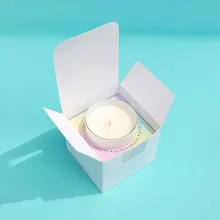










































Boot box dimensions describe the usable cavity and finished footprint of the assembled package. A boot box is usually longer and taller than a shoe box because the sole, toe, and shaft occupy different planes. A rigid box is built from chipboard wrapped in printed paper, so the wrap and board sit between the outside footprint and the product space. Start with the boot in the position it will occupy when the customer opens the package.
What measurements belong in a boot box brief?
A boot box brief needs interior length, interior width, interior height, closure clearance, and insert allowance. These measurements describe the product space first, then the room needed for the lid, sleeve, divider, or shaped support.
| Measurement | Why it matters |
|---|---|
| Interior length | Follows the longest sole dimension and keeps the toe from contacting the end wall |
| Interior width | Accounts for the boot profile, pair orientation, and side-to-side movement |
| Interior height | Captures the shaft, ankle area, lid clearance, and any presentation layer |
| Closure clearance | Shows whether the lid, sleeve, or tuck panel can close without pressing on the boot |
| Insert allowance | Identifies the space needed for a shaped support, divider, or removable cradle |
How does boot shape change the box size?
Boot shape changes the box size through the sole, toe, shaft, and packed orientation. A pointed toe uses the length differently from a rounded toe. A tall shaft may stand upright, fold naturally, or need support so it does not collapse inside the box.
- Measure the longest point of the sole, not only the footbed.
- Measure the widest part of the boot when the pair is positioned for packing.
- Record the shaft position that the customer will see when opening the box.
- Note whether tissue, a divider, a card, or a shaped insert is part of the pack-out.
If the package holds a pair, document the exact orientation. If it holds one boot, do not copy a pair format and assume the cavity will work. The brief should also state whether the box is meant for shelf presentation, direct shipment, or both.
Should boot box measurements describe the inside or the outside?
Boot box measurements should state whether they describe the inside cavity or the outside footprint. A measurement basis is the surface the numbers refer to. Interior measurements control product fit. Exterior measurements control shelf space, storage, and the finished shipping footprint. Keep both records separate, because board, wraps, lids, and inserts change the relationship between them.
How do you check a boot box before production?
A boot box is checked by matching the measured product to the dieline, insert position, and closure before production. A dieline is the flat cutting and fold template used to set the box panels and wrap. Free design support can turn the product dimensions into that template, then CPL sends a digital proof before anything prints. Check the toe, shaft, lid, and insert separately. A tidy outside footprint does not prove that the boot fits inside.
Which CPL products can support a boot project?
For the main footwear format, review custom shoe box packaging. When the boot needs a shaped interior or controlled position, custom foam box inserts can be part of the brief. A tall-format reference is wine box packaging, while embossed tin box packaging can help frame a separate accessory container. These pages provide format context, not a substitute for measuring the boot.
What should you send with a custom boot box request?
Send the boot measurements, pair or single-unit pack-out, closure direction, insert plan, artwork status, quantity, and shipping destination. The MOQ is 100 units. Pricing is from $0.49 per unit at volume, quoted to spec. Production is typically 8 to 10 business days after proof approval, plus delivery. Free US shipping and free design support are available. A $19.99 sample kit is credited toward the first order. For a wider route into custom packaging solutions, send the measured product profile with the request.
Frequently Asked Questions
What dimensions should a boot box worksheet include?
A boot box worksheet should include interior length, interior width, interior height, closure clearance, and insert allowance. Add the boot shape, pair or single-unit pack-out, and standing position. Those details connect the measurements to the actual cavity, lid, sleeve, divider, or support the finished package needs.
Should boot box measurements describe the inside or outside?
Boot box measurements should identify the inside cavity or outside footprint. Interior dimensions control whether the boot and insert fit. Exterior dimensions control shelf, storage, and shipping space. A measurement basis names the surface behind the numbers, so inside and outside values should never share one unlabeled dimension string.
Can a boot box include a foam insert?
A custom boot box can include a foam insert when the package brief allows space for a shaped support. The buyer should provide the boot position, insert thickness, and closure clearance for the fit check. Custom Packaging Lane also offers custom foam box inserts as a product reference for this type of interior organization.
What is the MOQ and starting price for custom boot boxes?
The MOQ for custom boot boxes is 100 units. Pricing is from $0.49 per unit at volume, quoted to spec, with the final quote based on dimensions, construction, closure, inserts, finish, and quantity. Free US shipping and free design support are available for the project brief.
When does boot box production time begin?
Boot box production is typically 8 to 10 business days after proof approval, plus delivery. The production clock starts after the buyer approves the digital proof, so the product fit, insert position, closure clearance, artwork, and outside footprint should be checked first.