



















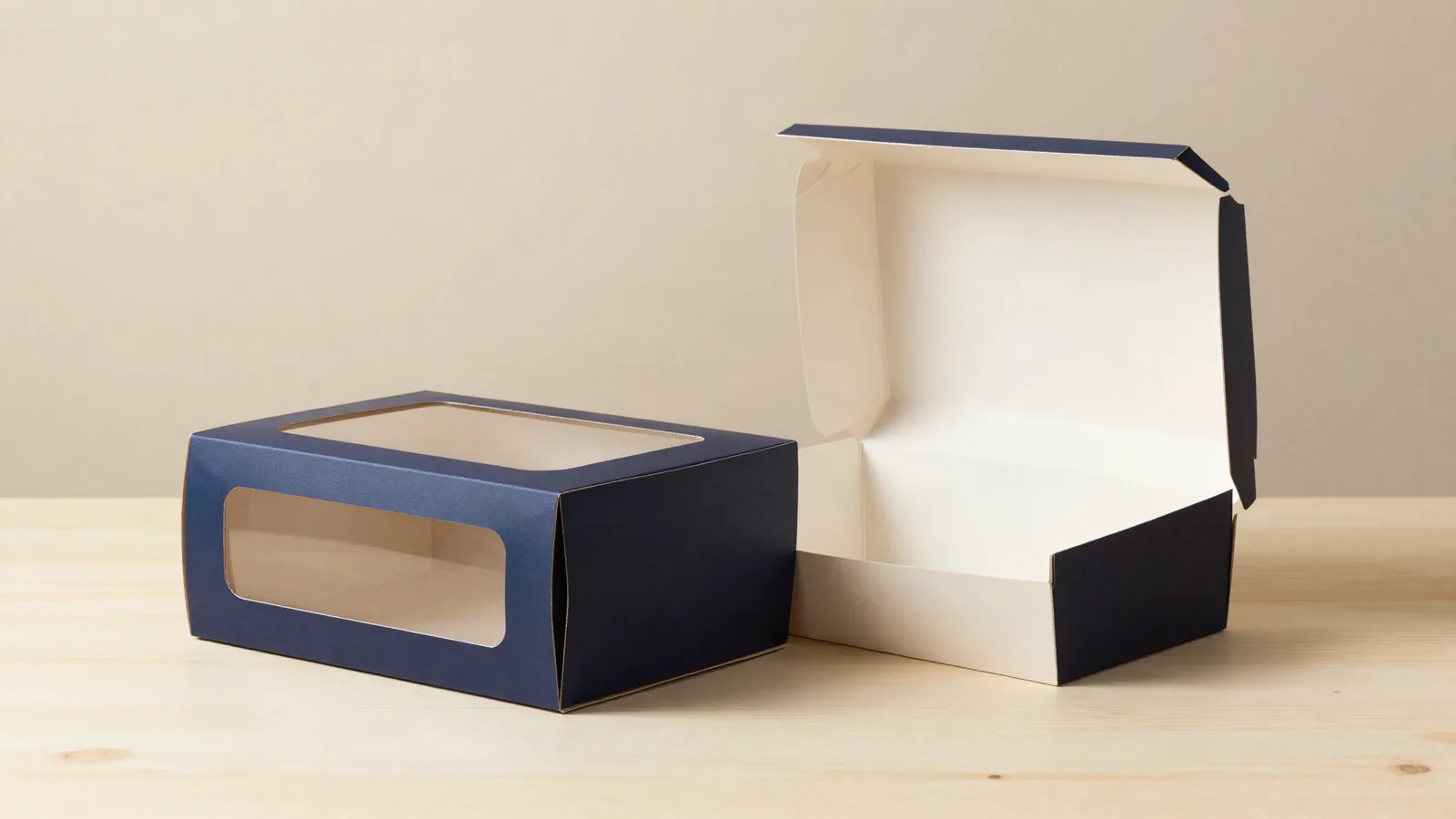




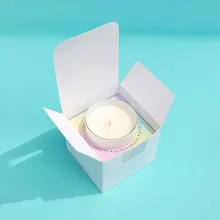



































Chocolate bar packaging is sized from the finished bar and its wrapper or inner layer, not from a generic product label. A folding carton is a printed paperboard package that ships flat and folds on scored lines. A size record needs the bar dimensions, loading direction, clearance, shelf face, and closure. The chocolate bar boxes catalog page is the closest reference for this folding-carton line.
How do you record chocolate bar packaging sizes?
Record the finished bar and every layer that stays inside the carton before drawing the carton blank. A carton blank is the flat cut piece that becomes the folded box, so its panels and scores must be tied to the packed product.
| Record field | Blank consequence | Folded check |
|---|---|---|
| Finished bar footprint | Sets the usable cavity and face scale | Load and remove the bar without forcing it |
| Wrapper or inner layer | Changes clearance and fold depth | Check top and bottom closure space |
| Access direction | Sets score order and panel sequence | Open from the intended face |
| Shelf orientation | Sets the face that carries recognition | Inspect from the display angle |
This record keeps the printed blank separate from the usable space inside the folded carton. Both views belong in the project file.
How does board weight change a folding carton?
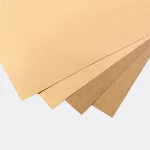
Board weight is the paperboard mass per area, often discussed in GSM, or grams per square metre. It affects stiffness, crease behavior, closure hold, edge feel, and resistance to bending.
A heavier sheet can hold a firmer wall, but it needs a score and fold pattern that suit the material. A lighter sheet folds with less resistance, but the carton can feel less rigid. Caliper, which is sheet thickness, also affects how panels stack at a fold. Discuss board weight with the bar dimensions, print coverage, glue flap, and display position.
Inspect the folded carton instead of judging the sheet alone. Look at fold memory, closure, edge alignment, and support around the bar. The selected board direction belongs to the actual blank, not to a generic size label.
Which measurements keep chocolate bar variants consistent?
A shared carton architecture works when the variants use the same outer profile and inner pack. Record which dimensions stay fixed, which change, and whether one blank leaves a loose or crowded fit for any version.
Give each variant its own name, image, face copy, wrapper, and record. A shelf-led display can use a different face and arrangement from a single retail carton. The custom chocolate bar display boxes page frames that shelf discussion, while mushroom chocolate bar packaging is an adjacent compact chocolate reference.
How should artwork follow the carton blank?
Place the bar name, brand mark, variant wording, and supplied information on faces that remain readable after folding. Keep type away from scores, glue flaps, seams, closures, and areas that disappear around the blank.
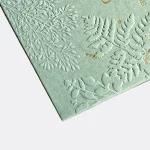
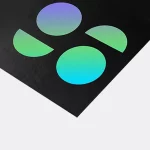
A dieline is the flat cutting and scoring template for the package. Extend background color beyond the cut line as bleed, convert RGB art before press, and inspect low-resolution logos before approval. Matte, gloss, soft touch, foil, embossing, debossing, aqueous coating, and spot UV should be mapped after the score pattern is clear.
Free design support can align the dieline with the supplied file. For another compact bar reference, see candy bar packaging.
When should you compare a sample and a proof?
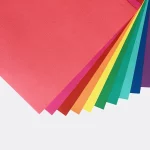
Use a physical sample to judge board feel, fold resistance, closure, and surface treatment, then use the digital proof to judge artwork placement before printing. The two checks answer different questions.
CPL sends a digital proof before anything prints. Check the assembled panel order, score positions, glue flap, barcode placement if supplied, and product fit. The $19.99 sample kit can help compare stocks and finishes before proof approval, and it is credited toward the first order.
What terms should go on a chocolate bar packaging quote?
Send the finished bar dimensions, wrapper or inner layer, carton orientation, board direction, artwork status, finish, quantity, and destination with the request. The custom packaging design page can organize the file discussion.
The MOQ is 100 units. Pricing is from $0.49 per unit at volume, quoted to spec. Production is typically 8 to 10 business days after proof approval, plus delivery. Free US shipping and free design support are available. Keep any product-contact question with the material record and ask us about food-contact options for your product.
Frequently Asked Questions
How are chocolate bar packaging sizes established?
Chocolate bar packaging sizes are established from the finished bar, wrapper or inner layer, orientation, and required clearance. Add the opening direction and shelf position so the outer proportions match the way the carton will be handled. A generic bar label does not establish the folded carton.
What does board weight affect in a chocolate bar box?
Board weight affects a chocolate bar box through stiffness, crease behavior, closure hold, edge feel, and support around the bar. Caliper is the sheet thickness, while GSM describes paperboard mass per area. Discuss both with the actual blank, fold pattern, glue flap, and product fit.
Why does a chocolate carton need a blank record?
A chocolate carton needs a blank record because the blank is the flat cut piece that becomes the folded package. The record connects the bar dimensions, wrapper clearance, scores, panels, glue flap, closure, and loading direction. Without that connection, a flat artwork file can fit the screen and fail at assembly.
What if chocolate touches a packaging layer?
If chocolate touches a wrapper, liner, carton, or insert, identify that component and ask Custom Packaging Lane about food-contact options for the product. Keep the question separate from decorative stock descriptions. The buyer should confirm the final application for the finished product and intended market.
What commercial terms apply to chocolate bar packaging?
Custom Packaging Lane uses a 100-unit MOQ. Pricing is from $0.49 per unit at volume, quoted to spec. Production is typically 8 to 10 business days after proof approval, plus delivery. Free US shipping and free design support are available. The $19.99 sample kit is credited toward the first order.