















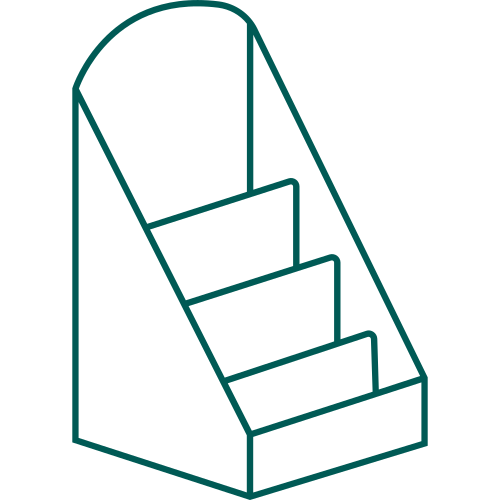

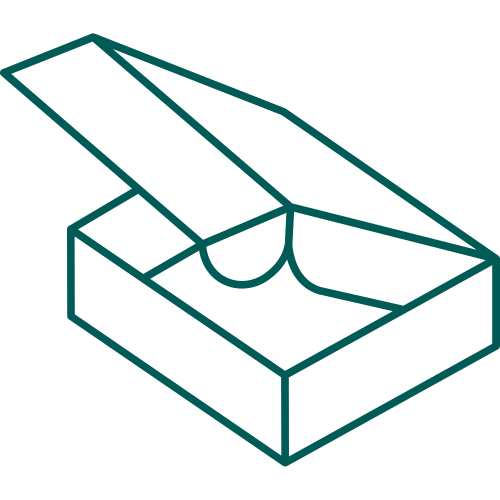
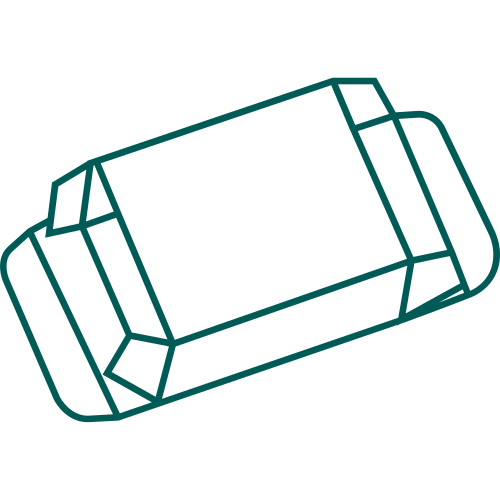




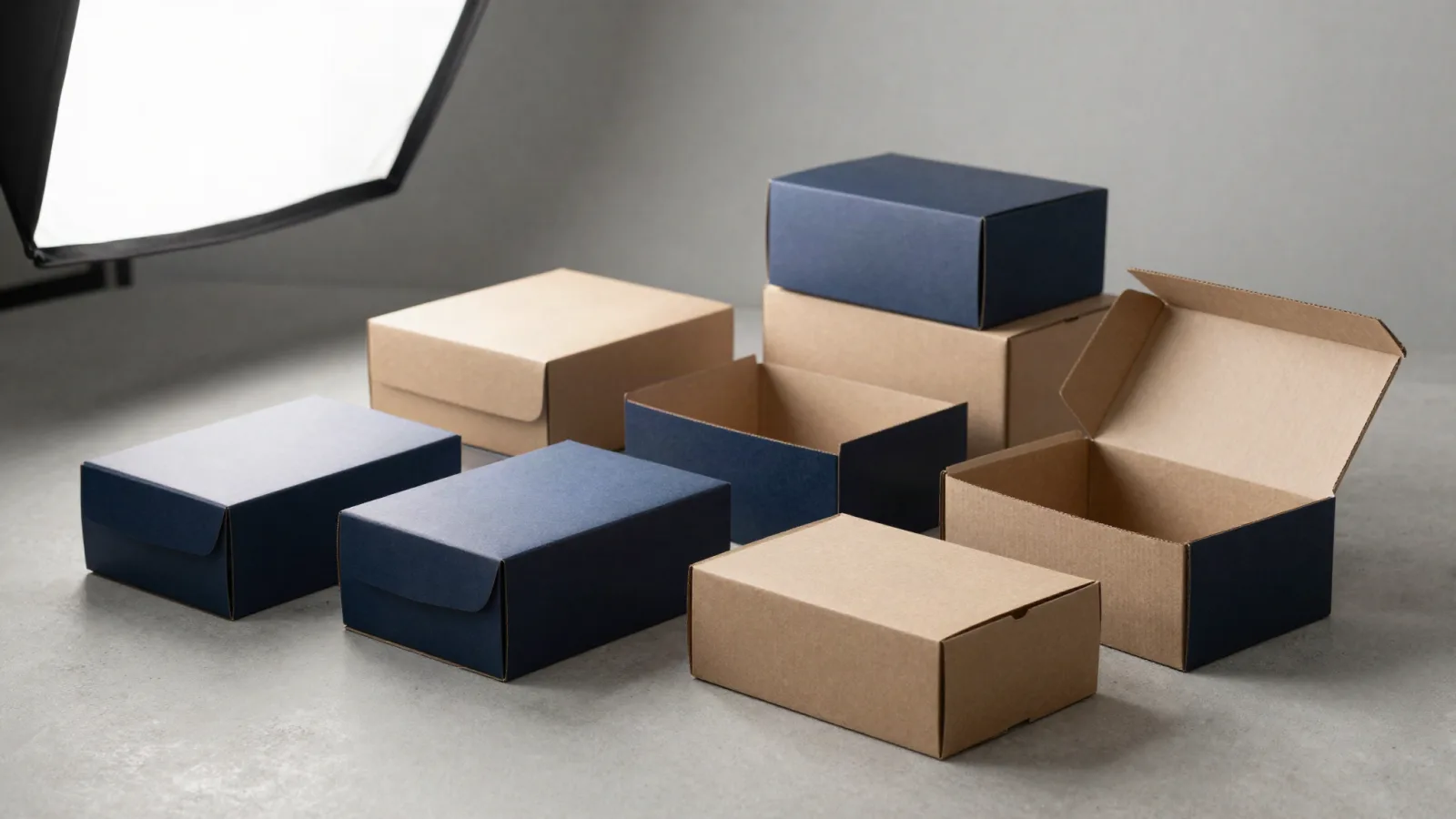



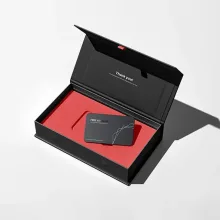
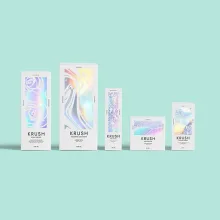
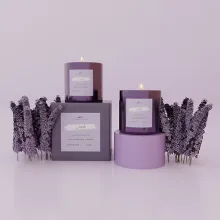
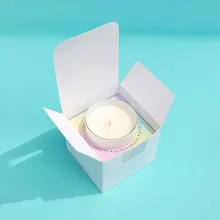




































A clamshell box is a package with a lid and base joined by a hinge. A dieline is the flat cutting template that shows the panels, scores, cuts, glue tabs, and fold path before production. CPL's dieline library can show the dimensions and hinge specs used in its clamshell references. The hinge, cavity, closure, and artwork need to agree before a clamshell proof is approved.
Why does a clamshell box need a hinge plan?
A clamshell box needs a hinge plan because the hinge controls how the lid moves, where the artwork sits, and how the product is revealed. A long-edge hinge creates a different opening from a short-edge hinge. It also changes the stable panel, closing edge, insert location, and hand position. State the opening direction before the dieline is drawn.
Show both closed and open views in the proof. A package can look balanced when closed, then pull the insert out of position when the lid opens. That problem belongs in the structure file, not in the final packing line.
Which measurements belong on a clamshell dieline?
The clamshell dieline should record the packed product outline, thickness, contact points, removal clearance, base panel, lid panel, hinge line, and closure area. The exact dimensions are project-specific. A flat product, a shaped product, and a kit with compartments need different cavity and access plans.
| Dieline area | What to define | Proof check |
|---|---|---|
| Base panel | Product footprint, cavity, insert, and support points | Does the product stay in position? |
| Hinge line | Fold location, opening direction, and lid movement | Does the lid open without pulling the product loose? |
| Closing edge | Tuck, adhesive, magnet, or other planned closure | Does the package close without blocking access? |
| Lid panel | Front artwork, window, instructions, and reveal | What is visible before and after opening? |
Send the product dimensions with the intended insert or cavity. An insert cut to the exact product size can stop movement, but a tight fit can make removal difficult. Leave enough access for the hand that opens the package.
Where should the hinge sit?
The hinge should sit on the edge that matches how the clamshell box will be held, opened, displayed, and packed. A long-edge hinge often gives a different reveal from a short-edge hinge, but the choice is tied to the product and the front panel. Mark the desired stopping point and the panel that should remain stable.
Keep the logo, window, instructions, and closure away from the movement path. A score through a logo or small type can split the artwork after folding. The flat proof and assembled proof need to be checked together.
How should the closure and insert be chosen?
The closure and insert should be chosen together because the closure affects access and the insert affects removal. A tuck or adhesive closure can suit a straightforward opening. A magnetic closure can suit a gift presentation when the structure allows it. A foam or paperboard insert can hold a shaped product, but it must leave room for the hinge and closing edge. A window or cutout can expose the product, but it must preserve the intended viewing area and artwork hierarchy.
Use custom foam box inserts to frame the cavity, contact-point, pull-tab, and product-removal discussion. Put the insert material, cavity shape, and closure on the same quote request.
Which catalog references help compare a clamshell box?
Custom clamshell boxes are the direct reference for a hinged structure, custom shape, print, and closure. Custom DNA test kit boxes can help compare compartments, instructions, and a deliberate opening sequence. Wine box packaging adds a presentation-box reference for board, print, finish, and product reveal.
What should a clamshell box proof show?
A clamshell box proof should show the closed package, open position, hinge line, cavity, insert, closure, artwork panels, and product access. Request a digital proof before anything prints. CPL offers free design support, and we can draw the dieline from the product dimensions and opening brief.
Check the assembled view for a lid that pulls on the product, a closure that blocks the hand, type too close to a score, or an insert that hides the front panel. Those are simple file changes before approval and expensive rework after production starts.
What should go into the quote request?
Send the product dimensions, shape, weight, cavity or insert request, hinge direction, opening motion, closure preference, artwork, finish, quantity, destination, and intended use. State whether the clamshell box is for retail, gifting, shipping, a kit, or repeated access. The custom packaging solutions team can organize the structure and artwork details.
Custom clamshell projects use an MOQ of 100 units. Pricing is from $0.49 per unit at volume, quoted to spec. Production is typically 8 to 10 business days after proof approval, plus delivery. Free US shipping and free design support are available. The $19.99 sample kit is credited toward the first order.
Frequently Asked Questions
What does a custom clamshell box do?
A custom clamshell box connects a lid and base with a planned hinge, then uses the cavity, insert, and closure to control product access. The structure can suit a retail item, gift, kit, or shaped product. The product dimensions and opening motion determine the dieline, not the clamshell name alone.
Can a clamshell box hold a shaped product?
A clamshell box can hold a shaped product when the cavity or insert follows the product outline and leaves enough clearance for removal. Foam or paperboard inserts can support contact points, while the hinge and closure must stay clear. Check the closed and open assembly before approving the structure.
What changes when a clamshell hinge moves to another edge?
Moving a clamshell hinge from a long edge to a short edge changes the reveal, artwork area, stable panel, closure position, and hand position. State how the package will be held, opened, displayed, and packed. The desired opening direction and stopping point should be part of the dieline brief.
Can a clamshell box use an insert or window?
A clamshell box can use an insert or window when both support the intended product reveal and opening path. The insert should hold the product without blocking the hinge or closure. The window should preserve the viewing area. Put the cavity, cutout, material, and panel layout on the same proof.
What commercial terms apply to custom clamshell boxes?
Custom clamshell boxes use an MOQ of 100 units. Pricing is from $0.49 per unit at volume, quoted to spec. Production is typically 8 to 10 business days after proof approval, plus delivery. Free US shipping and free design support are available. The sample kit is $19.99 and is credited toward the first order.