




























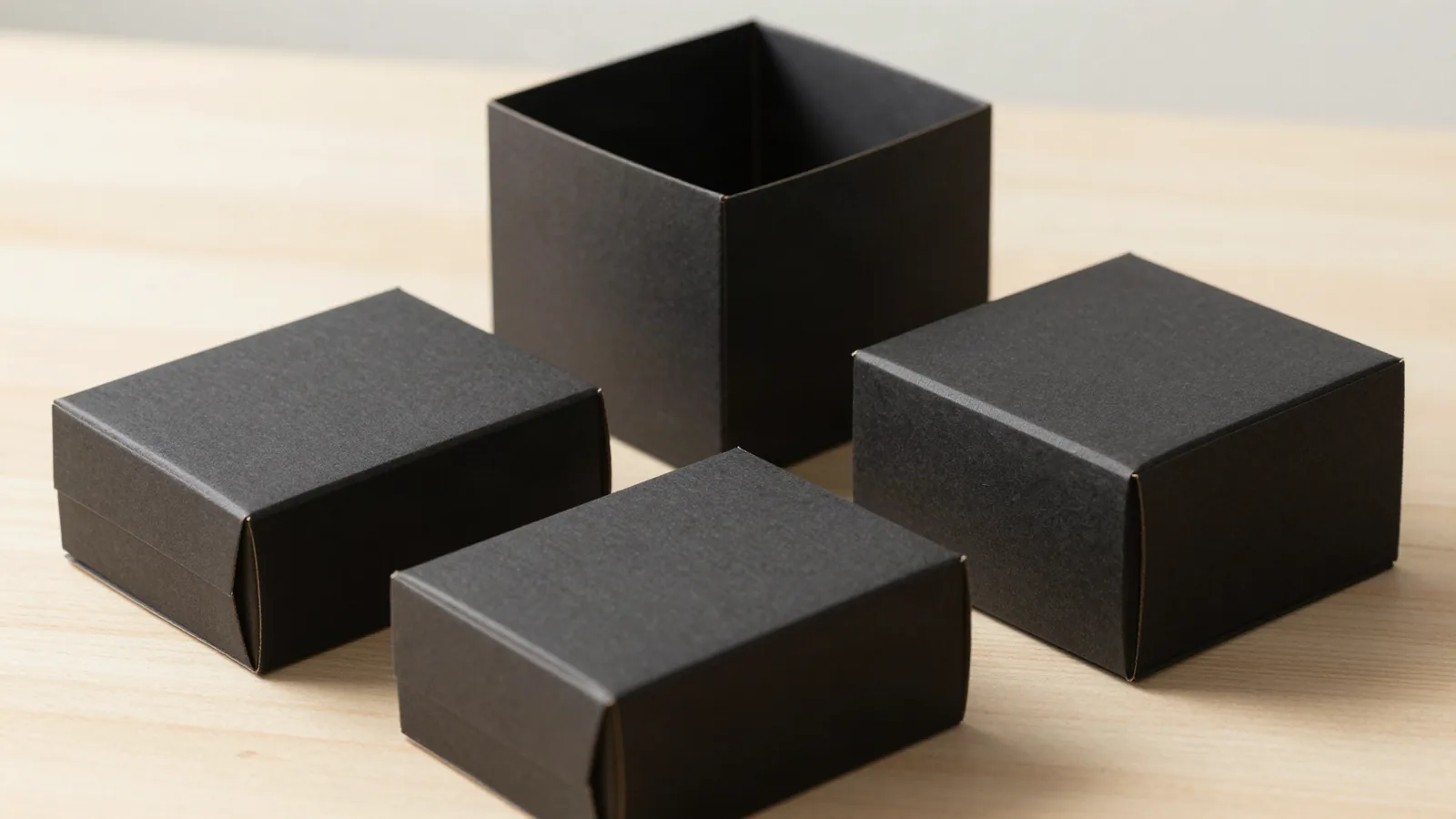




















































Crash lock boxes are defined by the bottom sequence, not by a generic promise that the whole carton assembles itself. A crash-lock bottom uses pre-glued panels that move into a closed base as the collapsed box opens. The dieline is the flat cutting template that maps those panels, scores, glue points, and the top closure. Start with the product and the packout motion.
What is a crash lock box?
A crash lock box is a folding box with a pre-glued bottom that forms as the collapsed box is opened. The bottom can reduce manual bottom-fold steps during packout. The top may use a tuck, tab, or another closure, so crash lock describes the bottom construction rather than the entire box.
Ask which panels are pre-glued, how the box is supplied for storage, and what motion forms the base. Those details affect the storage footprint, work surface, loading order, and product fit. The construction label is a starting point. The panel sequence is the specification.
How does a crash-lock bottom form?
The bottom forms as the collapsed box opens, then the product is loaded before the top closure is checked.
| Packout stage | What happens | What to verify |
|---|---|---|
| Collapsed form | Panels stay in the specified storage position | Storage footprint and assembly state |
| Opening motion | Side and bottom panels move into box shape | Direction and work-surface clearance |
| Bottom engagement | Pre-glued panels form the base | Glue points and a flat bottom |
| Product load | The product enters the formed box | Orientation and wall clearance |
| Top closure | A tuck, tab, or other approved top closes | Top action and printed panel fit |
Test the complete packout with the actual product. Open the box, form the bottom, load the product, close the top, and check how the finished box sits. A proof that shows only the flat outline misses the hand motion that the packing team has to repeat.
What is the difference between crash lock, snap lock, and auto lock?
Crash lock, snap lock, and auto lock describe related box construction language, but the panel sequence decides what the box does. A crash-lock bottom uses pre-glued panels that engage during opening. A snap-lock bottom uses interlocking panels or tabs. Auto lock can describe a self-forming construction, so the exact dieline and glue points still need review.
Compare custom snap lock bottom boxes for an interlocking bottom direction. Custom auto lock boxes provide another self-forming reference. Custom ear lock mailer boxes help separate a mailer closure question from the crash-lock bottom.
When does a crash-lock box fit a packout workflow?
A crash-lock box fits a packout workflow when the team wants a defined bottom-forming motion before the product is loaded. The collapsed box can be stored before packout, then opened, formed, loaded, and closed in a repeatable order.
Check the product footprint, box height, top closure, storage space, and work surface together. A bottom that forms quickly still needs a flat base and enough clearance for the product. Run the sequence with the real product before proof approval.
What should a crash-lock box proof show?
A crash-lock box proof should show the flat dieline, collapsed form, assembled box, and product position. Free design support can organize the structure before approval. Mark the pre-glued panels, glue points, scores, bleed, top closure, printed panels, and any insert or window.
- Show the finished inside dimensions and product orientation.
- Mark every bottom panel, glue point, score, tab, and top closure.
- Show the box in its storage form and assembled form.
- Check artwork near scores, bleed at cut edges, and color on the selected board.
- Record the artwork version, quantity, destination, and proof approval.
What should a crash-lock quote include?
A crash-lock quote should name the finished inside dimensions, bottom construction, top closure, board, artwork, print coverage, finish, storage form, packout method, and intended shipping use. Include any insert or window requirement. The quote should describe the actual motion from collapsed box to formed bottom, because that motion is the operating part of the style.
What are the order terms for custom crash lock boxes?
The MOQ is 100 units. Pricing is from $0.49 per unit at volume, quoted to spec. Production is typically 8 to 10 business days after proof approval, plus delivery. Free US shipping and free design support are available. The $19.99 sample kit can help compare construction and finish directions. For volume packaging planning, see wholesale custom packaging.
How do you order a custom crash lock box?
Send product dimensions, orientation, desired top closure, target quantity, artwork, and any reference dieline. Describe how the box should arrive, open, form at the bottom, and close at the top. Review the flat dieline, collapsed form, and assembled proof, then check the glue points, bottom formation, top closure, printed panels, and product fit before approval.
Frequently Asked Questions
Does crash lock describe the top or bottom of the box?
Crash lock describes the bottom of the box. Pre-glued bottom panels engage as the collapsed box opens, while the top can use a tuck, tab, or another closure. A crash-lock specification should name the bottom panels, glue points, top closure, product orientation, and packout motion instead of relying on the style name alone.
Can crash lock boxes be stored collapsed?
Crash lock boxes can be supplied in a collapsed form for storage when the selected construction supports that arrangement. Confirm the storage footprint and assembly state in the quote. The packout test should then cover opening the box, forming the bottom, loading the product, and closing the top.
How does a snap lock bottom differ from a crash lock bottom?
A snap lock bottom uses interlocking panels or tabs, while a crash lock bottom uses pre-glued panels that engage as the box opens. The two styles can have different glue points, folding motions, and packout steps. Compare the actual dieline and assembled proof before choosing the bottom construction.
Can a crash lock box use a tuck top?
A crash lock box can use a tuck top when the selected dieline supports that combination. The crash-lock bottom and tuck top are separate construction decisions. Specify the opening direction, tuck panel, product orientation, artwork, and finished inside dimensions, then check the assembled proof before approval.
What are the order terms for custom crash lock boxes?
Custom crash lock boxes have a 100-unit MOQ. Pricing is from $0.49 per unit at volume, quoted to spec. Production is typically 8 to 10 business days after proof approval, plus delivery. Free US shipping and free design support are available, and the sample kit is $19.99.












