




























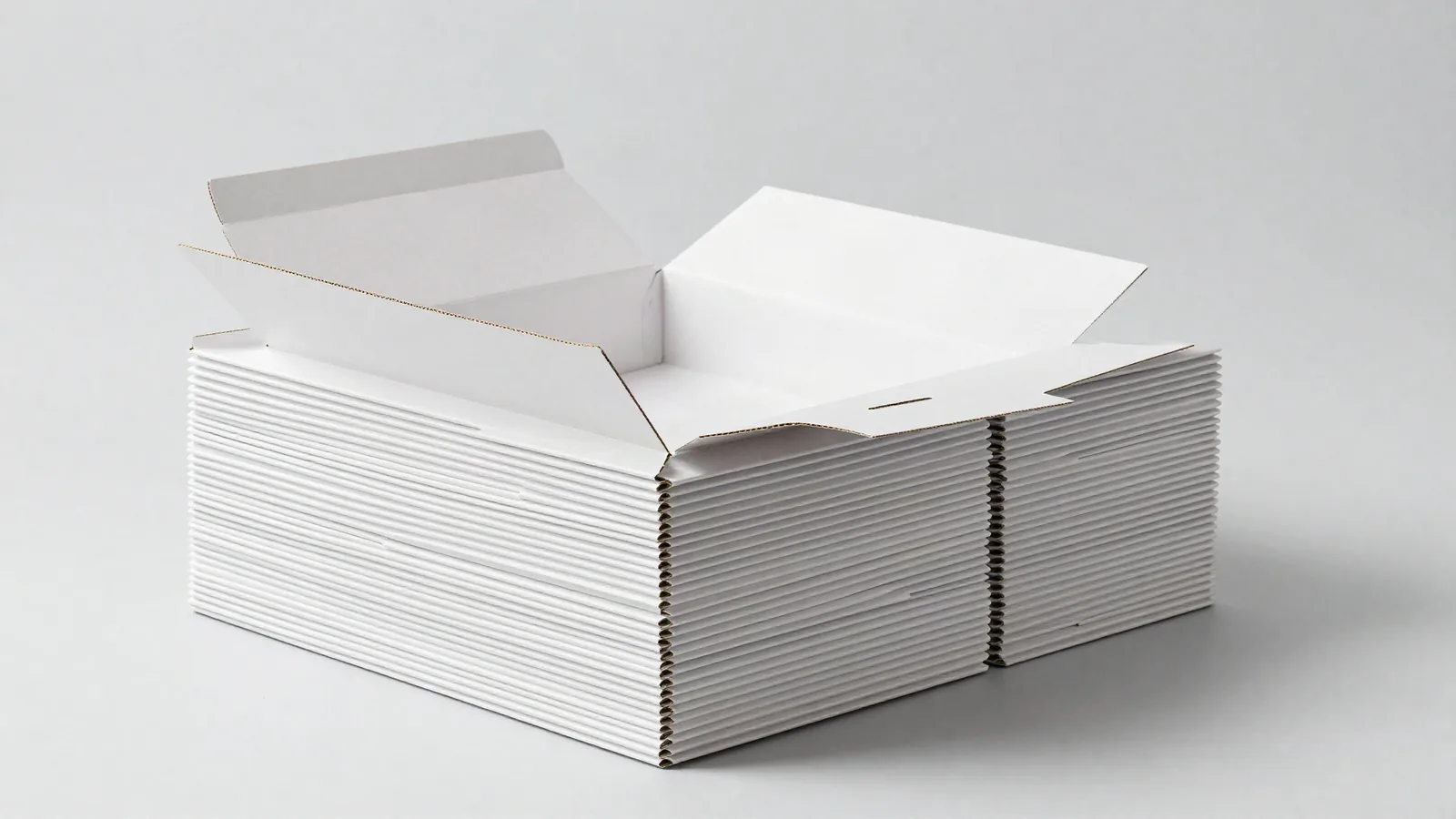




















































What is an ear lock mailer?
An ear lock mailer is a self-locking mailer box with folded ear panels that engage the closing structure. A dieline is the flat cutting template that shows the ears, scores, cuts, glue tabs, and printed panels before the board is folded. The ear lock is defined by that closing action, so the box should be identified by its structure rather than by the word mailer alone.
The package arrives flat, then folds into shape during packing. The ear panels change how the top closes and how the customer opens it. Start with the product dimensions, packed arrangement, and desired opening before placing artwork on the panels.
How does an ear lock mailer lock closed?
An ear lock mailer closes when folded ears engage the receiving panels in the mailer structure. The exact movement comes from the dieline, so the proof should show the fold direction and closing sequence with the box assembled. If the ears are placed too close to artwork, scores, or a glue tab, the closing action and printed layout can compete for the same space.
A score is a pressed line that tells the board where to fold. A glue tab is the flap where adhesive joins the package. Both belong in the structural proof, along with the panel that faces the customer first.
How does an ear lock compare with other mailer styles?
| Mailer style | Closing construction | Question to answer |
|---|---|---|
| Ear lock mailer | Folded ears engage the mailer structure | Does the self-locking sequence fit the product? |
| Tuck top mailer | A tuck panel folds into a receiving panel | Would a simpler tuck action suit packing? |
| Takeout mailer | A mailer format built around its takeout structure | Does the handling pattern fit the package? |
| Mailer with insert | An outer mailer paired with internal support | Does the product need controlled placement? |
Compare custom ear lock mailer boxes with custom tuck top mailer boxes and custom takeout mailer boxes. The decision follows the product, pack-out, access path, and closing motion.
When should an ear lock mailer use an insert?
An ear lock mailer should use an insert when the product needs a fixed position, separate cavities, or a deliberate opening order. Compare custom mailer boxes with insert when the outer mailer and interior need to be planned together.
Draw the insert around the actual packed product. A cavity cut for the empty product can become loose after wrapping, caps, cards, or other components are added. The insert controls movement, while interior print controls the visual surface. They solve different jobs.
What should the ear lock proof show?
The proof should show every ear, score, cut line, glue area, panel boundary, inside surface, outside surface, and opening cue. Keep type and logos clear of the folds unless the artwork deliberately crosses them. Check the closed box and the first opening, not just the flat dieline.
- Send the product dimensions in the packed arrangement.
- Identify the panel that carries the main brand message.
- Keep small type clear of scores, cuts, and locking details.
- Show every insert, card, tissue, or interior component.
- Approve the complete closing and opening sequence.
Free design support can organize the dieline and artwork. The buyer still supplies the final product information and gives approval.
What can go wrong during ear lock mailer packing?
An ear lock mailer can close poorly when the product is packed too high, an insert shifts the intended clearance, or the fold sequence is misunderstood. A mailer that is too tight can spring open during assembly. A mailer that is too loose can let the contents move. Put the product, insert, and packed height on the same structural brief.
Inspect the glue tabs and scores before approving the print file. A logo placed over a glue area may disappear during assembly, while type placed across a score can become hard to read after folding.
What do ear lock mailers cost and how long do they take?
The MOQ is 100 units. Pricing is from $0.49 per unit at volume, quoted to spec. Production is typically 8 to 10 business days after proof approval, plus delivery. Free US shipping and free design support are available. The $19.99 sample kit gives you a physical reference for board feel and fold behavior. For a broader request, use custom packaging solutions and include the packed product dimensions.
Frequently Asked Questions
How is an ear lock mailer different from a tuck top mailer?
An ear lock mailer closes with folded ear panels that engage the mailer structure. A tuck top mailer closes with a tuck panel that folds into a receiving panel. The two styles use different dielines and closing motions, so compare the product dimensions, pack-out, artwork placement, and opening sequence before choosing one.
Can an ear lock mailer hold an insert?
An ear lock mailer can hold an insert when the product needs controlled placement or separate cavities. The insert should be drawn around the actual packed product, including any wrap, cap, card, or companion item. The digital proof should show the insert, ear panels, closure, and opening direction together before approval.
What information is needed for an ear lock mailer quote?
An ear lock mailer quote needs the product dimensions, packed arrangement, quantity, artwork status, preferred opening, insert request, and finish direction. Explain which panel faces the customer first and whether the package will be packed by hand or through another workflow. Free design support is available for the dieline.
What is the MOQ for custom ear lock mailers?
Custom ear lock mailers use a 100-unit MOQ. Pricing is from $0.49 per unit at volume, quoted to spec, with the final quote tied to the structure, dimensions, artwork, quantity, and finish. Free US shipping and free design support are available for the project.
How long does ear lock mailer production take?
Production for ear lock mailers is typically 8 to 10 business days after proof approval, plus delivery. That window starts after the proof is approved, not when the first product conversation begins. Allow time for product measurements, dieline preparation, artwork changes, insert decisions, and approval before production starts.












