




























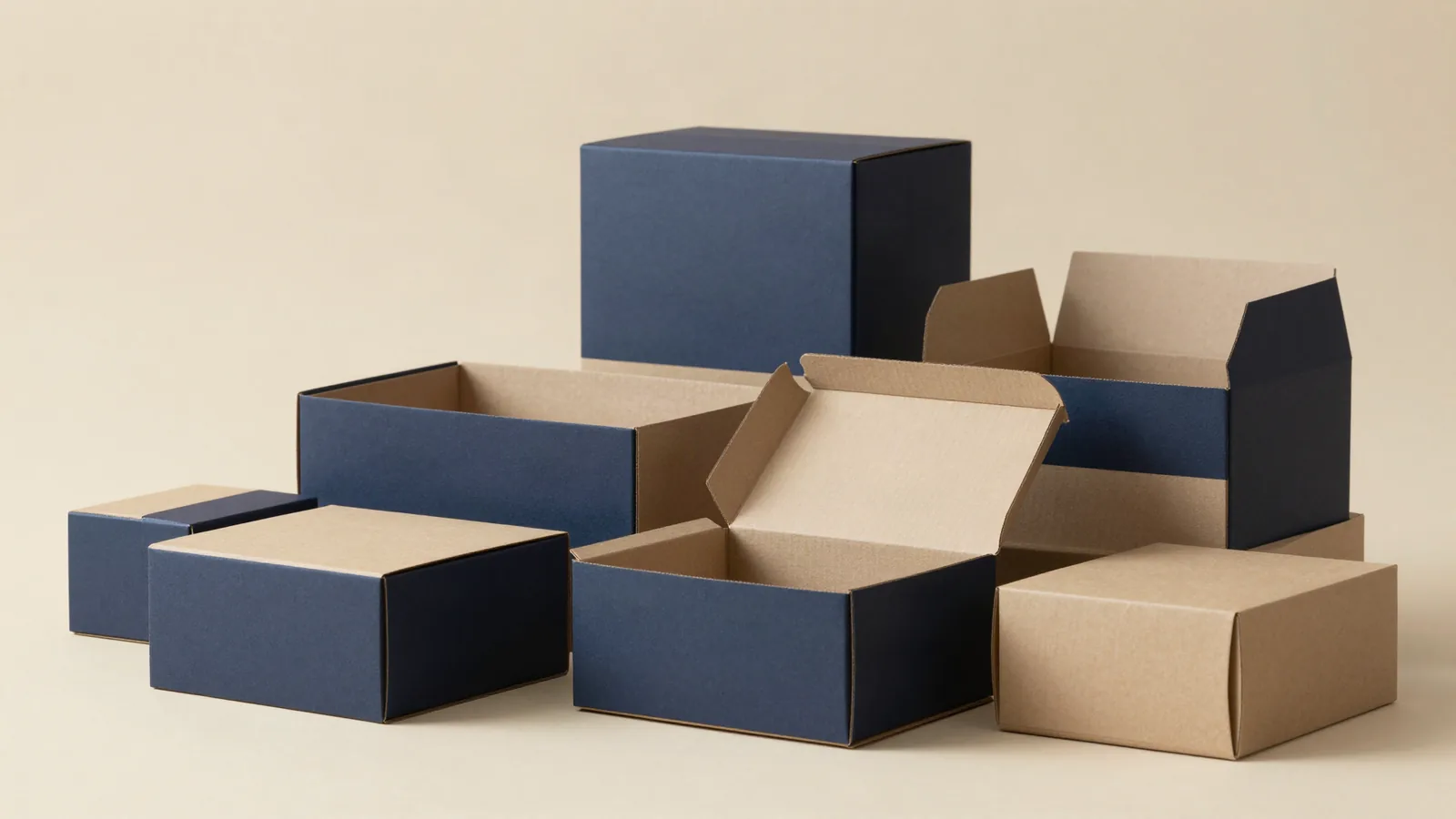




















































Custom packaging for a small business starts with the product, not a box shape. Write down what the package must hold, where it will be packed, and whether it will sit on a shelf, travel in a parcel, or do both jobs. A dieline is the flat cutting template used to print, cut, and crease the package. Its panels, scores, glue tabs, and bleed need to match the actual packed product.
What should custom packaging solve for a small business?
The first decision is the package's job: retail display, parcel protection, set organization, or a printed wrap around an existing container. Record the package's inside length x width x depth from the product in its real orientation. About 1/16 in (1.5 mm) tolerance is a common fit-checking convention, but the assembled product still needs a physical fit check.
- Choose the product or set the package must hold.
- Separate the retail carton from any outer shipping box.
- List the information that must remain readable before opening.
- Decide whether future artwork versions will share the same structure.
Which structure should a small business compare first?
A sleeve changes the outside of an existing container, while a carton creates the product cavity and opening. Straight tuck end and reverse tuck end cartons suit many regular retail shapes. Auto-lock bottom and crash-lock bases reduce the number of hand-folding steps. A mailer combines presentation and parcel closure when its dimensions and closure match the product.
Keep the first comparison narrow. Put product, structure, board, print process, finish, insert, and destination in one matrix. If several products have a similar footprint, compare one outer format with separate artwork against several unrelated structures. That is a planning comparison, not a promise of savings.
Which cost drivers should be in the quote?
Board, ink coverage, finishing, quantity, tooling, and delivery destination are the six inputs that need to be discussed together before a quote can be useful.
| Quote input | What it changes | Question to answer |
|---|---|---|
| Board caliper | Thickness affects stiffness, creasing, folds, and material use | Would SBS or kraft suit the product and opening? |
| Print coverage | Large solid panels require deliberate ink planning | Which panels need full coverage? |
| Finishing | Lamination, soft-touch, spot UV, foil, embossing, and debossing add process steps | Which finish has a job? |
| Quantity breaks | Setup work is spread differently across run sizes | Which quantity options should be quoted? |
| Tooling | A new die or custom insert changes setup and assembly | Does the structure need a new die? |
| Shipping zone | Destination and outside carton size affect delivery planning | US ground dimensional weight uses L x W x H / 139 |
State the product, board, artwork coverage, finish, tooling, quantity plan, and destination together. A photograph cannot supply those inputs. The approved specification can.
What material works for a first branded package?
SBS, C1S, and C2S paperboard in the 12 to 24 pt range are common folding-carton references. Kraft board in the 18 to 24 pt range has a different surface and print direction. Rigid chipboard in the 1.5 to 3 mm range, wrapped in 100 to 157 gsm art paper, creates a more structured presentation. For an outer shipping layer, E, B, and C corrugated flutes, commonly compared with 32 ECT, are separate choices.
How should artwork and proofing be checked?
Digital printing suits short runs or artwork that may change, while offset CMYK suits detailed paperboard graphics and flexo is common on corrugated surfaces. Send print-ready artwork with bleed, and keep type, barcodes, glue tabs, windows, and tear features away from scores and seams. RGB art can shift during press conversion, so check color on the proof. Matte or gloss lamination, soft-touch, spot UV, foil stamping, embossing, and debossing belong on the dieline with clear placement.
Before production approval, check the package open and closed with the actual product. A barcode that is too close to a fold, or an insert cut to the product's exact size, can create trouble after the run is packed.
Which catalog products can guide the brief?
Use the catalog to compare real packaging jobs. Custom tin packaging frames a reusable metal format. Custom greeting card packaging raises questions about flat products, stack height, and presentation. Custom stevia packaging gives a compact carton reference. The custom packaging for small business hub keeps those choices in one planning path.
Custom Packaging Lane quotes from a 100-unit minimum, with pricing from $0.49 per unit at volume, quoted to spec. Production is typically 8 to 10 business days after proof approval, plus delivery. Free US shipping, free design support, and a free dieline are available. Order the $19.99 sample kit, which is credited to the first order.
Frequently Asked Questions
What should a small business measure before choosing a package?
A small business should measure the product in its packed orientation, then record inside length, width, and depth, the opening direction, and any insert or accessory. About 1/16 in (1.5 mm) is a common box tolerance reference. The assembled product still needs a fit check because a nominal dimension cannot show closure pressure, rattling, or removal problems.
When does a sleeve make sense for a small packaging run?
A sleeve makes sense when an existing container already holds the product and the main need is a printed outer surface. Measure the sleeve length, overlap, sliding clearance, seam position, and safe artwork area. A sleeve does not replace the inner container, so confirm how it stays in place during packing and handling.
Which details affect a small business packaging quote?
Board caliper, print coverage, finish, quantity options, tooling, and shipping destination affect a small business packaging quote. Thicker board changes folds and material use. Solid printed panels affect ink planning, while lamination, foil, embossing, and inserts add process decisions. US ground dimensional weight uses L x W x H / 139, so outside carton dimensions belong in the brief.
Which paperboard is common for a compact branded carton?
SBS, C1S, and C2S paperboard in the 12 to 24 pt range are common references for a compact branded carton. Kraft board in the 18 to 24 pt range has a different surface. Rigid chipboard in the 1.5 to 3 mm range, wrapped in 100 to 157 gsm art paper, creates a firmer presentation.
How can a small team reduce artwork revisions?
A small team can reduce artwork revisions by putting product dimensions, orientation, structure, board, print coverage, finish, insert, and destination in one brief. Mark scores, glue areas, windows, seams, and barcodes on the dieline. Check the digital proof and the open and closed package with the actual product before approving production.












