




























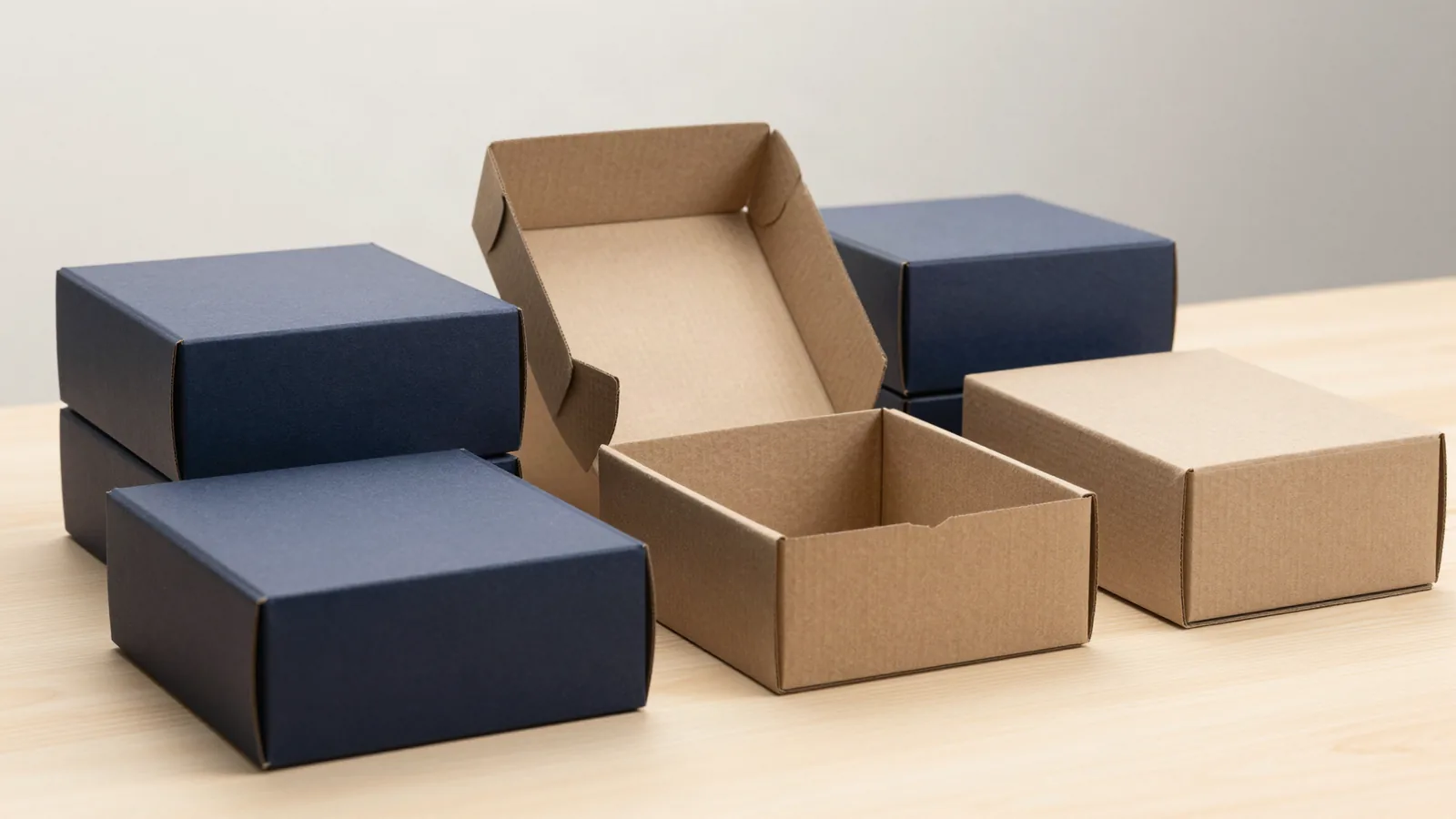




















































Choose the package around the product before choosing the artwork. Popped popcorn, kernels, coated popcorn, and a gift assortment do not load, settle, or occupy space in the same way. Primary packaging is the package that directly holds the product. Secondary packaging is the outer carton, sleeve, or gift box around it.
Write down the fill method, packed dimensions, storage position, opening, closure, and display position. A package that looks right on a screen can slump, rattle, or leave too much empty space once the actual product is loaded.
For a wider packaging brief, use custom packaging for small business as the planning hub.
What should custom popcorn packaging hold?
The first split is product form: popped popcorn, kernels, coated popcorn, or a gift assortment. A loose popped product needs a different fill path from a measured kernel pack, and a coated product may need a different interior discussion.
A retail carton creates a defined shelf-facing panel. It may use a straight tuck end, reverse tuck end, auto-lock bottom, or crash-lock construction. A stand-up pouch creates a flexible front panel and can include a gusset. A sleeve can wrap an inner bag or tray. A two-piece rigid box, drawer or slide structure, or magnetic flap can suit a gift presentation when the contents and handling method support it.
Which package format fits the fill method?
A straight tuck end, reverse tuck end, auto-lock bottom, or crash-lock carton changes how the package closes and how the product enters the cavity.
Use a carton when the package needs a fixed printed panel and repeatable shelf orientation. Use a stand-up pouch when the filled package needs a flexible front and bottom gusset. A sleeve works around an inner bag or tray, while a two-piece rigid box, drawer or slide structure, or magnetic flap changes the gift-opening motion. Write the loading sequence beside the structure name so the quote describes a real job.
Which materials are common for popcorn packaging?
Printed cartons and sleeves commonly use SBS, C1S, or C2S paperboard from 12 to 24 pt. SBS means solid bleached sulfate paperboard. C1S has one coated side, while C2S has two coated sides. Kraft board commonly falls around 18 to 24 pt and gives the package a different paper appearance and surface texture.
| Packaging goal | Common format or material | What to evaluate |
|---|---|---|
| Printed shelf presentation | 12 to 24 pt SBS, C1S, or C2S carton | Board stiffness, folds, and panel readability |
| Natural retail appearance | 18 to 24 pt kraft board | Ink contrast and surface texture |
| Flexible barrier pack | PET / AL / PE laminate | Seals, barrier needs, and filling method |
| Product visibility | PET window around 0.2 to 0.3 mm | Window placement, patching, and copy area |
Mylar or foil laminates may use PET, AL, and PE layers. The layer stack affects the printable face, opacity, barrier direction, and heat-seal surface. Ask us about food-contact options for your product and describe the intended use before the material and finish are selected.
A PET window can show color, shape, or coating while the rest of the package carries the brand. PET window material is commonly around 0.2 to 0.3 mm. Window patching adds a converting step and uses panel area, so keep essential copy away from the opening.
How large should a popcorn pouch be?
Stand-up pouches commonly range from 3 to 7.5 in wide, but width alone does not determine capacity. Pouch height, gusset, product density, headspace, seal area, and fill method all affect the finished result.
Measure the product in its packed state. State the inside length x width x depth for a carton, or the flat width, finished front width, height, and gusset for a pouch. Include closure parts, inserts, and the space needed above the product before the dieline is drawn.
What does a 1/16 inch box tolerance change?
A common box tolerance is about 1/16 in, or 1.5 mm. That small difference matters when an insert, inner bag, or gift component must sit in a fixed position.
Use a physical sample to check fit and fill presentation. A pouch can slump if the gusset is underspecified. A carton may need an inner bag or liner when the product needs a different barrier. Test the actual filling sequence, then check the filled package in its storage and display position.
Which print method and finish fit the package?
Offset CMYK is common for detailed carton graphics, digital printing can suit short runs, and flexo is common for corrugated secondary packaging. The right comparison depends on the substrate, artwork coverage, panel count, and formed package.
Matte or gloss lamination changes surface appearance and handling. Soft-touch, spot UV, foil stamping, embossing, and debossing create different surface effects and registration checks. Keep flavor, count, storage, and handling information legible. Use the proof to inspect fine type, folds, seals, window edges, and finish placement.
Which catalog products are useful references?
Custom tin packaging gives a durable gift-oriented reference. Custom stevia packaging shows a compact food product direction. Custom printed macaron packaging boxes provide a printed food presentation reference. Compare the product shape, fill method, opening, and artwork area on each page, then request a construction based on the actual popcorn package.
What belongs in a popcorn packaging quote?
A useful quote includes the product form, packed dimensions, fill method, material direction, opening, closure, window, barrier question, print coverage, finish, quantity, artwork status, and delivery destination.
Custom Packaging Lane quotes from a 100-unit minimum, with pricing from $0.49 per unit at volume, quoted to spec. Production is typically 8 to 10 business days after proof approval, plus delivery. Free US shipping, free design support, and a free dieline are available. The $19.99 sample kit is credited to the first order.
Frequently Asked Questions
Can the same package hold kernels and popped popcorn?
Kernels and popped popcorn can require different package dimensions because their packed volume and density differ. Describe the actual product form, fill quantity, headspace, closure, and storage position. A carton, pouch, or bag should be checked with the product loaded, since an empty package does not show how the contents settle or support the walls.
Why add a window to popcorn packaging?
A PET window lets the buyer see the popcorn's color, shape, or coating while the remaining panels carry the brand and product information. PET window material is commonly around 0.2 to 0.3 mm. Mark the window on the dieline and keep essential copy away from the opening, patch area, seals, and folds.
Is a rigid box practical for a popcorn gift set?
A two-piece rigid box, drawer or slide structure, or magnetic flap can suit a gift presentation when the contents and handling method support it. Rigid construction holds its shape through chipboard wrapped in printed paper. Check the inner bag, tray, insert, opening motion, and filled dimensions before selecting the outer structure.
How do I use the 1/16 inch tolerance?
A common box tolerance is about 1/16 in, or 1.5 mm, so leave room for the actual product, insert, inner bag, and folding behavior. Measure the filled package rather than relying on the empty dieline. A physical sample shows whether the product fits, rattles, presses against a panel, or changes the intended display.
What should a filled package sample reveal?
A filled popcorn packaging sample should show the real fill line, headspace, seals, gusset, window, panel alignment, and opening action. Check the package in storage and display positions, then inspect the artwork after the product settles. The sample should follow the actual filling sequence, not a flat mockup alone.












