






























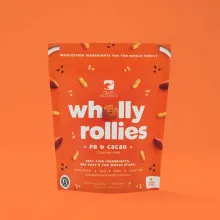
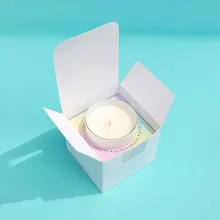
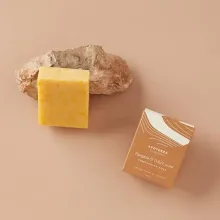





































Fish packaging is the set of boxes, pouches, and labels used to identify and present a fish or seafood product. A pouch is a flexible package made from film or laminated layers; a label is a printed identifier fixed to a package surface. The product, material, closure, printed fields, and contact surface belong in the same brief. Ask us about food-contact options for your product before approving a package surface.
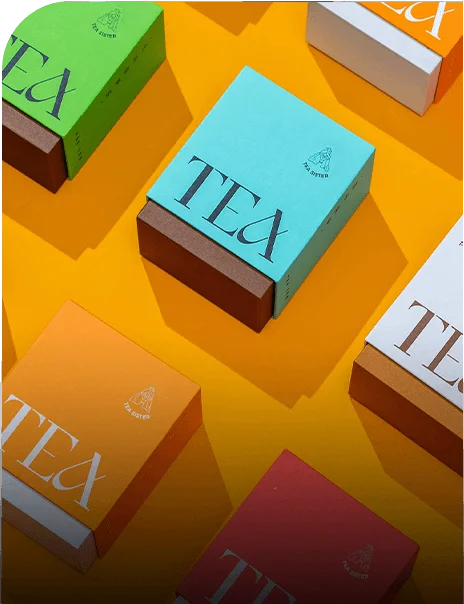
Fish packaging has two separate jobs: tell the shopper what the product is and give the packer a workable surface. A box gives flat panels for product naming and brand artwork. A pouch follows a flexible packout. A label carries focused information where the package surface can accept it. The right combination depends on the actual pack arrangement, not the word seafood alone.
What information should fish packaging show first?
Fish packaging should show the brand, product identity, and variant in a stable reading order before secondary copy. Keep the first panel easy to scan, then assign supporting information to the back, side, pouch, or label surface that can carry it clearly.
| Package component | Primary job | What to define |
|---|---|---|
| Printed box | Carry brand and product presentation | Product name, variant, panels, opening, and artwork |
| Pouch | Present a flexible package direction | Product form, printed fields, closure, and label placement |
| Label | Identify a package or variant | Logo, product wording, variable information, and surface |
| Combined system | Make the package line read consistently | Shared naming, colors, artwork rules, and contact questions |
A fish product line can use one component or a combined set. Define which message stays fixed and which message changes before artwork is laid out. That prevents a label from carrying information that belongs on every box, or a box from becoming crowded with variant text.
How should a seafood box, pouch, and label divide information?
Fish packaging should keep fixed brand information on the surface that stays with every variant, while a label can carry wording that changes by product. Private-label packaging is packaging printed for a brand that sells a product under its own name. Use the private-label packaging reference when the brand system and product identity need to be planned together.
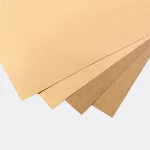
Perforated packaging is packaging with a line of small cuts that creates a defined opening path. The perforated packaging reference can frame questions about access, opening direction, and the amount of board that remains around the cut. Wax packaging can start a material conversation because a waxed paper surface is less absorbent than uncoated paper, but contact and handling still need to be discussed for the actual product.
What changes when fish packaging includes a pouch and label?
A pouch and label need one naming order and one placement plan. Keep the product name in the same position across variants, then decide which wording changes on the label. Leave the opening area, seam, and any closure clear so the label does not interfere with packing or access.
Check the pouch and label as one package when they are displayed together. Logo size, product wording, variant markers, and color logic should match across both surfaces. If fish touches either surface, ask us about food-contact options for your product instead of assigning a material choice from the package name alone.
What should I ask about food-contact options?
Ask us about food-contact options for your product before selecting the box, pouch, label stock, ink, or finish. State what touches the fish, whether an inner package separates the product from the exterior, and which component carries the printed information.
The question belongs beside the material and finish discussion because the actual contact situation depends on the selected package surface and pack arrangement. A catalog category does not answer that question by itself. Put the contact question in the quote request and carry the selected direction into the proof.
How can a fish product line keep variants distinct?
Fish packaging keeps variants distinct when every component uses the same product-name position and a written variant field. A color block can support the wording, but color should not be the only identifier when a short product descriptor can remove doubt.
Build one panel map for the line, then separate fixed artwork from variable product text. RGB artwork can shift when converted for press, so check the converted file and small type before approval. Place the box, pouch, and label beside each other during the final check, because a variant system has to work as a group.
What are the order terms for custom fish packaging?
The minimum order quantity for fish packaging is 100 units. Pricing is from $0.49 per unit at volume, quoted to spec. Production is typically 8 to 10 business days after proof approval, plus delivery.
Free US shipping and free design support are available. Send the product description, package components, pack arrangement, artwork status, quantity, destination, preferred material direction, and any opening requirement. The $19.99 sample kit can help compare physical package directions and is credited toward the first order. For broader planning, use custom packaging solutions.
Frequently Asked Questions
What information belongs on fish packaging?
Fish packaging should identify the brand, product, variant, and other printed information the product line needs to carry. A box, pouch, and label can divide those messages when they work as one system. Set the reading order first, then assign each message to the surface that can display it clearly.
Can fish products use a box, pouch, and label together?
Fish products can use a box, pouch, and label together when the components share the same product naming, variant wording, and visual rules. Define what stays fixed and what changes before artwork is prepared. If fish touches a package surface, ask us about food-contact options for your product.
What does food-contact planning mean for seafood packaging?
Food-contact planning for seafood packaging means identifying what touches the fish, what inner package separates it from the exterior, and which component carries printed information. Ask us about food-contact options for your product before choosing the material, label stock, ink, or finish for the defined pack arrangement.
How should I separate fish variants on the package?
Fish variants should use a stable product-name location and a written variant field across the box, pouch, or label. A controlled color block can support the wording, but color should not stand alone when a short descriptor can identify the product. Check all components side by side before approval.
What MOQ and timing should I expect for fish packaging?
The minimum order quantity for fish packaging is 100 units. Pricing is from $0.49 per unit at volume, quoted to spec. Production is typically 8 to 10 business days after proof approval, plus delivery. Free US shipping, free design support, and a $19.99 sample kit are available.