




























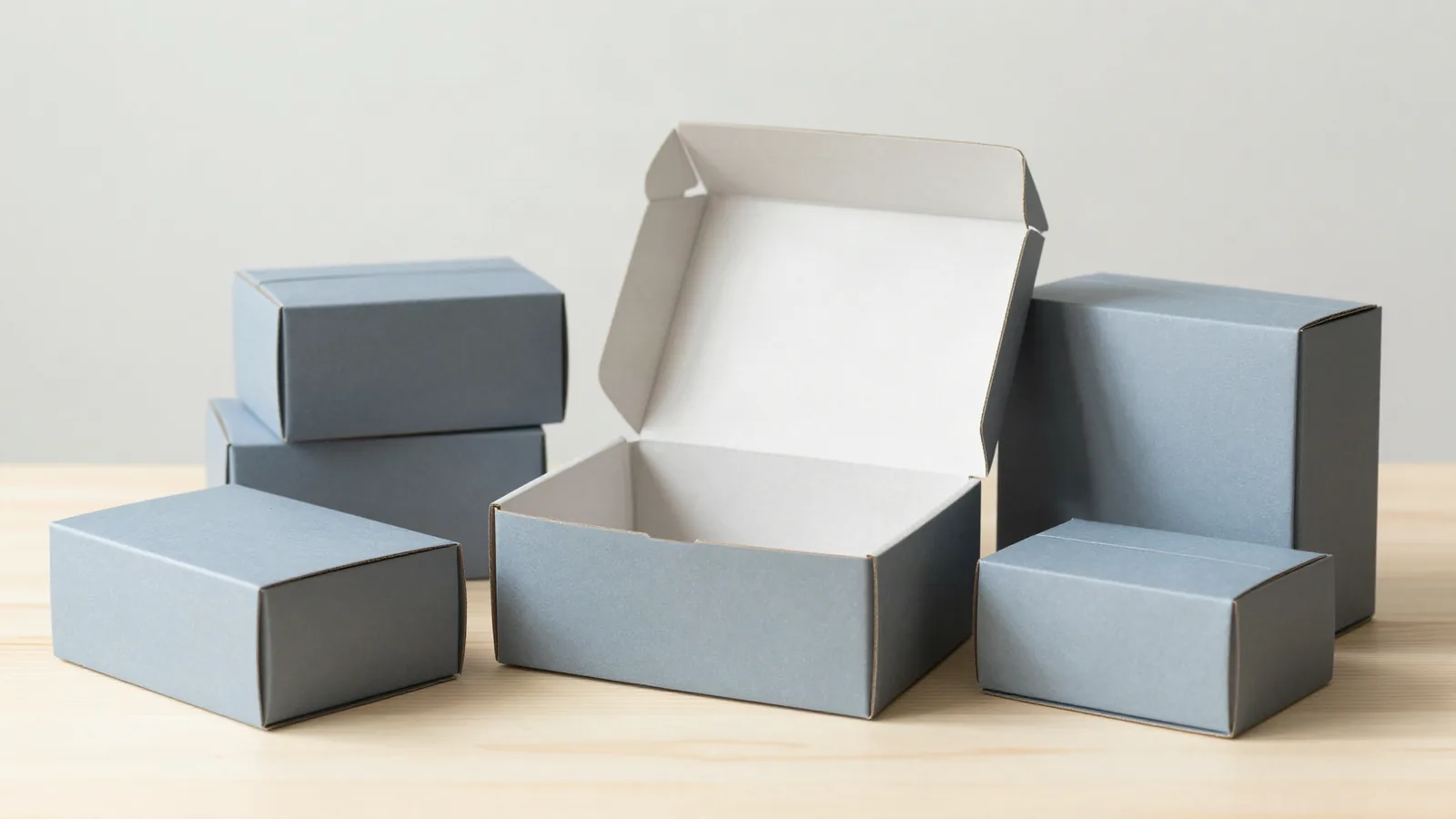




















































A liquid sample box is secondary packaging, the box around a bottle, vial, tube, or other filled container. The insert should control movement, keep the closure clear, and leave the logo visible when the box is closed. A loose container can rub the printed surface and arrive turned away from the intended face. Start with the container count, orientation, and removal path. Ask us about food-contact options when the sample touches food or beverages. The outer box cannot replace a sound container closure.
What should a liquid sample box protect?
The insert should keep each container seated, upright, and separated through normal handling. Record the container count, cap clearance, insert contact points, and whether neighboring samples need their own cavities. A paperboard carton can suit a light presentation format. A rigid box can create a defined lid-and-base, sleeve, tray, or insert arrangement. Plan the package around the container, not around a generic empty cavity.
Which box structure fits a liquid sample presentation?
Sleeve and tray arrangements give the inner tray a fixed position and leave the sleeve open for logo placement. A two-piece rigid box creates a lid-and-base presentation. A magnetic flap changes the opening action, while a drawer or slide structure presents the sample through a pull-out motion. Straight tuck end and reverse tuck end cartons can suit simpler folding formats. The final choice follows container geometry, sample count, insert needs, and the way the recipient opens the package.
| Format | Useful starting point | Questions to settle |
|---|---|---|
| Rigid box with sleeve and tray | Organized sample presentation | Tray fit, sleeve opening, logo panel, container orientation |
| Rigid box with magnetic closure | Structured opening sequence | Flap position, closure clearance, inner support, outer finish |
| Medicine packaging box | Compact folding presentation | Panel copy, tuck direction, container movement, print area |
| Rigid box with inserts | Separated samples or components | Insert material, cutout layout, spacing, and removal path |
| Flip-top magnetic box | Front-opening presentation | Hinge line, lid travel, insert height, and artwork alignment |
What materials fit the box and insert?
Folding cartons commonly use SBS, C1S, or C2S paperboard in the 12 to 24 pt range. SBS is solid bleached sulfate paperboard. C1S means coated one side, and C2S means coated two sides. Rigid chipboard commonly measures 1.5 to 3 mm and can be wrapped in 100 to 157 gsm art paper. A PET window is a polyethylene terephthalate film patch; packaging windows commonly fall around 0.2 to 0.3 mm. Select the material around the insert, container weight, opening style, and presentation format.
How should a logo be placed on the box?
The closed package should show the mark after the tray, lid, or sleeve is assembled. Offset CMYK is a common route for detailed artwork on paperboard and wrapped rigid components. Digital printing can suit short runs or versions that need separate artwork. Matte or gloss lamination changes surface response. Soft-touch changes hand feel. Foil stamping, spot UV, embossing, and debossing can draw attention to a logo, provided the finish map keeps them clear of folds, openings, and small copy.
What should the artwork template show?
The artwork file should label every visible panel and every area hidden after assembly. Mark the front panel, back panel, lid, flap, tray, insert, and any closure or window boundary. Place the logo where it remains visible when the package is closed and when the sample is removed. Show container orientation, cap clearance, window location, and required copy. If the box holds several samples, label each cavity in the working file so the physical pack-out matches the intended presentation.
Which product formats should you compare?
The catalog provides structure references, but the container dimensions decide the final layout. Start with rigid boxes with sleeve and tray when the insert and sleeve relationship is central. Compare rigid boxes with magnetic closure when opening action matters. Medicine packaging boxes frame a compact folding direction. Custom rigid boxes with inserts help plan separated samples. Use flip-top boxes with magnetic closure as another front-opening reference. The formats are references, not interchangeable liquid sample specifications.
What should a quote request include?
A useful request names the container, count, orientation, closure, insert, and opening sequence. Send:
- the bottle, vial, tube, or other liquid container, with the number of samples per box;
- inside measurements, upright direction, cap clearance, and label visibility;
- the insert, sleeve, tray, window, magnetic flap, drawer, or other component;
- logo artwork, required copy, print process, finish, and visible panel;
- the shipping path and handling context for the presentation box.
Send those details to Custom Packaging Lane. A 100-unit minimum applies, with pricing from $0.49 per unit at volume, quoted to spec. Production is typically 8 to 10 business days after proof approval, plus delivery. Free US shipping, free design support, and a free dieline are included. The $19.99 sample kit is credited to the first order. For branded box planning, see custom boxes with logo and request the sample kit.
Frequently Asked Questions
How do inserts keep liquid samples in place?
An insert creates defined contact points around each container so the bottle, vial, or tube does not move freely inside the box. The layout should account for the cap, label visibility, upright direction, and removal path. Share the actual container shape and orientation so the insert follows the pack-out instead of a generic cavity.
Should a liquid sample use a rigid box or a folding carton?
A folding carton can suit a compact presentation when the container and pack-out are straightforward. A rigid box can provide a defined lid-and-base, sleeve, tray, or insert arrangement. Compare the opening sequence, container count, insert need, logo area, and handling path before choosing the outer format.
Can a box prevent leakage?
Packaging cannot replace a sound container closure, but it can limit movement and separate adjacent samples. Plan the insert around the bottle, cap, orientation, and removal path, then consider the outer structure and shipping context. Share known handling concerns before the artwork and structure are finalized.
What print and finish options fit logo packaging?
Offset CMYK can support detailed artwork on paperboard and wrapped rigid components, while digital printing can suit short runs or separate versions. Matte or gloss lamination changes surface response. Soft-touch, foil stamping, spot UV, embossing, and debossing can add contrast when the logo and copy leave clear space.
What details should I send for a quote?
Send the container type, count, inside measurements, orientation, closure, insert idea, window preference, artwork, and shipping path. Explain how the recipient should open and remove the sample. Those details align the box structure, insert position, logo panel, and outer packing with the actual use case.












