




































































How do I make a custom logo work on a product bag?
The bag construction sets the usable face before the logo is placed. A logo system is a repeatable rule for mark size, placement, color, and finish across bag formats, so it has to account for seams, gussets, closures, handles, and the filled shape.
For a coordinated product line, use the custom packaging solutions hub. Compare real formats such as custom white paper bags, custom tin-tie kraft bags, custom printed Mylar bags, and custom shopping bags. Keep the core mark consistent, then adapt scale and safe area to each bag's usable face.
Which bag surface gives a logo the clearest ground?
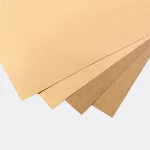
White paper gives ink a clean ground. Kraft paper keeps a natural brown tone, so light inks lose contrast and dark inks read differently from the same art on white. Mylar or foil laminates can use PET, AL, and PE layers. PET is often the outer film, AL is an aluminum layer, and PE is often the inner seal layer, depending on the construction. These layers create transparent, metallic, or opaque surfaces depending on the build.
| Bag surface | Common use | Logo check |
|---|---|---|
| White paper | Clean retail presentation | Full-color contrast and ink coverage |
| Kraft paper | Natural visual direction | Dark mark contrast against the paper tone |
| Layered film | Resealable or barrier-oriented pouch | Opaque ground if transparency changes the mark |
| Shopping-bag paper | Customer carry and retail handoff | Front-face placement and repeat on both faces |
Where should the logo sit on a gusseted or closed bag?
The stable display panel sets the logo position. A gusset is the folded side or bottom panel that gives a bag extra capacity, and it does not present the same width as the front face. A flat pouch loses artwork space to the seal zone and bottom fold. A tin-tie closure creates a fold area, so small type should stay below it.
Mark the display face, safe area, logo scale, repeat pattern, closure, seams, and creases in the artwork brief. If the bag stands upright, define the panel that faces forward. If the bag is stored flat, check the folded view too. The dieline makes these boundaries visible before the logo file is finalized.
Which print treatment keeps a product-bag line consistent?
Offset CMYK is a common reference for detailed print on paper surfaces. Digital printing suits short runs, tests, or versions that change often. Flexo is common for corrugated applications. Film bags use printed laminate construction, so the ink and layer arrangement need to be discussed with the substrate.
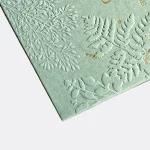
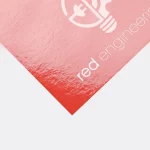
Matte or gloss lamination changes reflectivity. Soft-touch changes hand feel. Spot UV isolates a selected logo detail, foil stamping adds reflective contrast, and embossing or debossing creates relief where the material supports it. A repeatable line is easier to manage when the same finish rule follows the logo across sizes, rather than every bag receiving a different effect.
How should a business organize product-bag SKUs?
Each SKU needs a product group, finished size, closure, logo placement, material, and artwork version. A stand-up pouch commonly uses a width reference of about 3 to 7.5 in, but the filled product, height, gusset, seal zone, and closure determine the usable package. Label every measurement as finished or inside, and tie names such as small, medium, and large to documented dimensions.
For applicable constructions, a PET window is commonly about 0.2 to 0.3 mm. Treat a window, gusset, or resealable closure as a structural requirement, because each one changes the available logo area. If the package touches food, ask us about food-contact options for the product.
What should a business send with a product-bag quote request?
The quote request needs the bag family, product use, finished dimensions, closure, gusset or handle details, logo files, print coverage, preferred surface, finish, quantity, and delivery destination. A proof request is easier to resolve when the product and filled dimensions are included. The sample kit gives physical references for paper, kraft, film, and surface choices.
We quote product bags to spec from a 100-unit minimum, with pricing from $0.49 per unit at volume. Production is typically 8 to 10 business days after proof approval, plus delivery. Free US shipping, free design support, and a free dieline are available. The $19.99 sample kit is credited toward the first order. Approve each bag against its own dieline, because the same logo file does not create the same result on every surface.
Frequently Asked Questions
Can one logo system work on paper, kraft, and Mylar bags?
One logo system can guide paper, kraft, and Mylar bags, but each substrate needs its own artwork check. White paper gives a clean ground, kraft changes ink contrast, and layered film can appear transparent or metallic. Keep the mark consistent while adapting scale, ink coverage, safe area, and finish to each bag's dieline.
How do I keep a logo readable on a gusseted bag?
Keep the logo on the stable front face and away from the gusset, bottom fold, seal zone, seams, closure, and creases. A gusset is the folded panel that gives a bag extra capacity, so it does not read like the front face when filled. Check the assembled bag upright, then check the folded view if it is stored flat.
What width is common for a stand-up pouch?
A stand-up pouch commonly uses a width reference of about 3 to 7.5 inches, but that range is only a general industry reference. Product fill, height, gusset, seal zone, closure, and display position determine the usable package and logo area. Provide the filled product dimensions before assigning a small, medium, or large SKU name.
Which finish fits a custom logo bag?
Matte or gloss lamination changes reflectivity, soft-touch changes hand feel, spot UV isolates a selected detail, foil stamping adds reflective contrast, and embossing or debossing adds relief where the material supports it. Choose one finish rule that can repeat across the product line. Review registration, logo scale, folds, and the selected substrate before approval.
What should a business compare before ordering product bags?
A business ordering product bags should compare the bag family, material surface, closure, gusset, usable logo face, finished dimensions, artwork version, and handling path. Paper, kraft, and layered film present different print surfaces and opening behaviors. A sample can narrow the choice, but the final check belongs to the selected dieline and digital proof.