
















































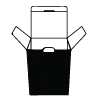

Mailers for clothes are shipping packages planned around folded apparel, the order contents, and the way the package opens at delivery. A clothing mailer box is a box format for folded garments. An apparel shipping mailer can also be a flexible bag-led format. Start with one folded garment or a complete order packed as it will ship, then record the outside length, width, and thickness.
What size should a clothing mailer box be?
A clothing mailer box should be sized from the folded garment and the full pack-out, not from the shirt label or an assumed apparel size. Measure the folded length, width, and thickness, then add the space needed for tissue, a card, or another planned component. The box should hold the order without crushing the garment or leaving unnecessary movement around it.
Mixed orders need their own check. A t-shirt, sweatshirt, and folded accessory can produce a different packed height than one shirt. Send the actual order combination when the package must handle more than one garment.
How should a t-shirt mailer box open?
A t-shirt mailer box should make the first opening easy to understand and keep the folded shirt visible after the lid or closure is opened. Decide which panel carries the logo, where the opening cue appears, and whether the garment sits under tissue or a planned card. A score is a crease pressed into the board so the box folds in the intended place.
| Mailer area | Job at delivery | Proof check |
|---|---|---|
| Outer face | Identifies the shipment | Logo and main artwork read at the finished size |
| Opening panel | Shows where to start | Closure and score direction are clear |
| Interior | Frames the folded garment | Tissue, card, and garment fit the pack-out |
| Mailer footprint | Sets the garment position | Length, width, and thickness match the packed order |
Check the assembled box with the folded garment inside. A flat artwork file cannot show whether the logo lands on a fold or whether the garment sits under the correct panel.
What should garment mailer packaging show on the outside?
Garment mailer packaging should put recognition and the opening cue ahead of decorative copy. A logo, repeat pattern, color field, short message, or collection mark can work when it fits the usable print area. Keep the exterior readable at the finished size and leave closures, seals, and folds clear of essential text.
For a flexible bag reference, see custom bags for business. For a film-based packaging reference, see mylar bags for freeze drying. Those catalog pages do not determine apparel fit. The folded garment and the chosen pack-out still control the clothing mailer brief.
How can custom clothing mailers stay consistent across repeat orders?
Custom clothing mailers stay consistent when the brand fixes the logo position, opening direction, color treatment, and panel hierarchy, then reserves marked areas for changing collection or product copy. Keep the artwork system stable, but redraw the fit when the garment, order contents, or interior components change.
Document the approved folded configuration and artwork version for each order. A familiar template does not prove that a thicker garment will fit the previous structure. Check the new pack-out before the proof is approved.
What should the sample and proof process cover?
The sample and proof process should cover the folded garment, closure, exterior print area, interior presentation, and opening sequence. A digital proof comes before anything prints, so it is the place to catch low-resolution art, RGB color shifts after press conversion, type too close to a score, and missing bleed.
The $19.99 sample kit gives you a physical packaging reference. Free design support can help organize the dieline, which is the flat cutting template used to print, cut, score, and fold the mailer.
What ordering terms apply to apparel shipping mailers?
Apparel shipping mailers use a 100-unit MOQ. Pricing is from $0.49 per unit at volume, quoted to spec. Production is typically 8 to 10 business days after proof approval, plus delivery. Free US shipping and free design support are available.
Include the folded garment dimensions, order contents, artwork status, finish direction, quantity, and destination. Compare the same pack-out with custom bags for business when a flexible route is under consideration. Use wholesale custom packaging when the brief covers repeat or larger apparel orders.
What keeps cheap mailers for clothes economical?
Blank area and conversion count usually move the quote more than decorative restraint. A right-sized cutting layout can place more pieces on each sheet and more unassembled mailers in a master carton. Printing only the exterior also removes the additional production pass required for interior graphics. Cost comparisons should hold board grade, artwork coverage, finish, quantity, tooling, carton count, pallet pattern, and destination constant.
- Board: select enough corrugated strength for the packed garment and its route.
- Ink: a smaller mark or repeat pattern uses less coverage than a solid color field.
- Finish: matte or gloss lamination adds a separate process.
- Tooling: reuse a cutting layout only when the complete apparel pack still fits.
- Storage: compare flat-pack carton density, not only quoted unit cost.
Can a clothing mailer support a return shipment?
A second adhesive strip works only when the first tear path leaves it intact. The return closure needs its own protected release liner, and the opened package must still hold the garment after tissue or cards shift. Ear locks are side tabs that engage slots to create a mechanical close, but parcel use may still require a shipping seal. Check the two-opening sequence on custom ear-lock mailer boxes before artwork occupies either tear path.
How does dimensional weight affect shipping mailers for clothes?
Dimensional weight is a carrier billing calculation based on parcel volume rather than the scale reading. For common US ground planning, a 139 cubic-inch-per-pound divisor is applied to the product of the carrier-rounded exterior measurements. Confirm the current divisor and rounding method in the selected service guide, then model single-shirt, sweatshirt, and mixed-order pack-outs separately. Light apparel with unused depth can produce a billed weight above its scale weight, so a shallower parcel may save more freight than a lower box price saves in packaging.
Which corrugated flute suits apparel shipping?
E-flute provides a compact wall for folded shirts, while B-flute and C-flute add board bulk for sweatshirts or mixed packs. When 32 ECT is specified, test the completed parcel on the intended route instead of relying on the board mark alone. Packed weight, unsupported panel span, empty space, moisture exposure, stacking, and closure all affect the final choice.
| Board option | Common apparel use | Job-specific check |
|---|---|---|
| E-flute | Folded shirts and compact presentation parcels | Corner crush and print surface |
| B-flute | Sweatshirts or mixed garment packs | Erected parcel cube |
| C-flute | Bulky multi-item shipments | Carrier billing and pallet use |
| 32 ECT board | Specified parcel distribution jobs | Loaded route trial |
Which print setup suits parcel handling?
Flexographic printing places ink directly on the corrugated liner and suits bold apparel marks, repeat patterns, and limited color sets. Digital production can handle short, collection-specific runs without plates. Offset printing can produce a detailed liner that is later laminated to corrugated board, adding setup and another converting step. At the press check, inspect registration, solid ink density, small type, fold alignment, and scuffing. Heavy ink across scores can crack, while spot UV, foil stamping, embossing, and debossing need clearance from high-contact edges.
Which structures should an apparel brand compare?
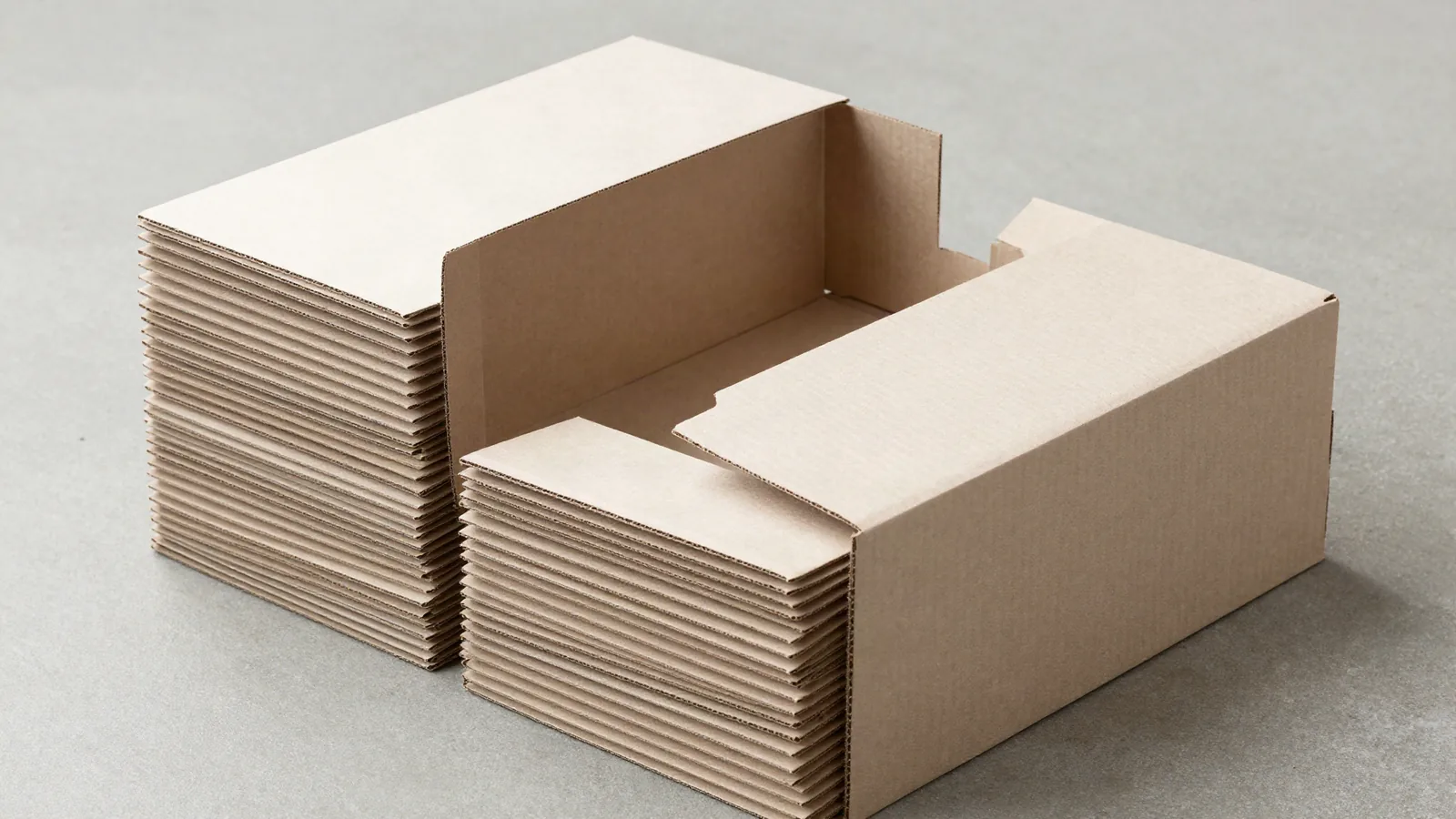
FEFCO 0427 identifies a roll end tuck front mailer with rolled sidewalls, a hinged lid, and a locking front flap. Compare that structure with custom apparel mailer boxes and custom folding shipping boxes using the same folded clothing pack. Browse the custom mailer box range, then inspect board and surface references through the sample kit.
Frequently Asked Questions
What are clothing mailer boxes used for?
Clothing mailer boxes package folded apparel for delivery and give the brand a defined outer surface and opening path. The correct box starts with the folded garment dimensions, order contents, tissue or insert, closure, and destination. Custom Packaging Lane uses a 100-unit MOQ for custom mailer projects.
Can CPL make a t-shirt mailer box?
CPL can plan a t-shirt mailer box around the folded shirt, closure, artwork, and interior components. Send the folded length, width, and thickness, plus the quantity and destination. Free design support can organize the dieline and digital proof before anything prints.
What is the MOQ for custom clothing mailers?
The MOQ for custom clothing mailers is 100 units. Pricing is from $0.49 per unit at volume, quoted to spec. The quote follows the chosen mailer format, packed garment dimensions, materials, printing, finish, quantity, and destination.
How long does apparel mailer production take?
Apparel mailer production is typically 8 to 10 business days after proof approval, plus delivery. The clock starts after proof approval, not when the initial request is sent. Confirm the folded garment, pack-out, artwork, format, quantity, and destination before the proof is approved.
Is design support available for garment mailer packaging?
Free design support is available for garment mailer packaging. It can help organize the folded garment dimensions, dieline, logo placement, opening cue, closure, and interior presentation. The sample kit costs $19.99 and gives you a physical packaging reference before final proof approval.