




























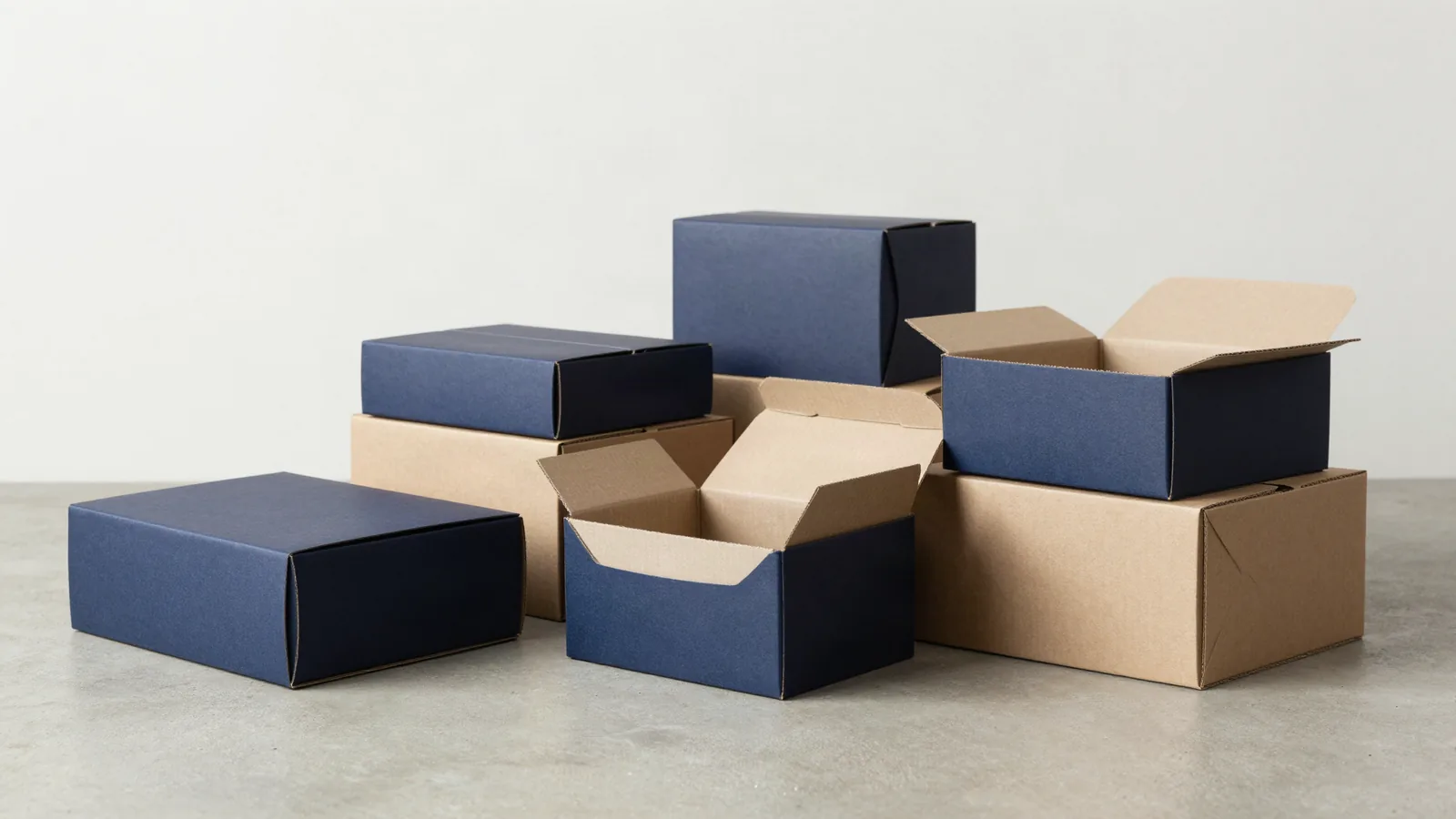




















































Packaging customization is the deliberate choice of structure, size, material, artwork, finish, insert, closure, and delivery format around a real product. A useful brief begins with what the package must do, then separates changes to the physical build from changes to the printed surface. Wine box packaging is one real catalog direction to use when the product needs a defined cavity and presentation path.
What should I customize first on a package?
The product job comes before decoration. Decide whether the package must hold, display, protect, divide, carry, mail, or present the item. Then map the opening, closure, product position, and customer-facing panel. A structure change alters the dieline and assembly path. A finish change may affect only the printed surface. Keeping those choices separate makes the quote easier to read and the proof easier to check.
Which package choices change the dieline?
Physical choices change the cut shape, scores, glue tabs, or interior geometry. The table separates those choices from the checks they require.
| Choice | Common options | Physical checkpoint |
|---|---|---|
| Structure | Tuck, auto-lock bottom, crash-lock bottom, mailer | Opening, loading, closure, assembly |
| Material | SBS, C1S, C2S, kraft, rigid chipboard, corrugated | Caliper, surface, folds, support |
| Offset CMYK, digital, flexo by surface | Coverage, panel order, color areas | |
| Finish | Matte, gloss, soft-touch, spot UV, foil, embossing, debossing | Effect location and surface compatibility |
| Interior | Tray, divider, foam insert, cavity layout | Fit, clearance, access, loading order |
| Outer format | Rigid, sleeve, drawer | Reveal, friction, clearance, repeat opening |
Which board range fits a customized carton?
The board choice sets the fold, surface, and support available to the structure. Typical industry references for folding cartons and sleeves include SBS, C1S, or C2S paperboard in the 12 to 24 pt range. Kraft board in the 18 to 24 pt range gives a different printed surface. Rigid chipboard from 1.5 to 3 mm wrapped in 100 to 157 gsm art paper is a reference for structured boxes. Corrugated E, B, and C flutes with a 32 ECT reference create another outer-package direction.
How should I state custom dimensions?
Use length x width x depth, with inside measurements for the product, wrap, insert, and card. Record assembled outside dimensions when the package will be stored or shipped. About 1/16 in, or 1.5 mm, is a common packaging tolerance convention, subject to the structure and contents. Include product clearance, fold direction, seam position, closure depth, label placement, and loading order. A guessed dimension can leave an insert loose or place artwork across a score.
What does the print process change?
Offset CMYK can suit detailed paperboard artwork, digital printing can suit a short run or artwork test, and flexo is commonly considered for corrugated surfaces. Low-resolution art becomes soft at final size. RGB art can shift when it is converted for press. Missing bleed leaves a hard edge at trim, and type set too close to a score can become difficult to read after folding. Matte or gloss lamination changes reflection. Soft-touch changes hand feel. Spot UV, foil stamping, embossing, and debossing need clear panel boundaries and a compatible surface.
How do inserts change the package?
An insert is part of the package geometry, not an afterthought. Map the product outline, accessories, cavity depth, finger access, and removal path before the outer box is finalized. An insert drawn from guessed dimensions can leave the product moving inside the box. Wax packaging and towel packaging show how product shape can change the outer structure and interior plan. If the contents touch the packaging, ask us about food-contact options for your product.
Which catalog formats can anchor a customization brief?
Sock packaging can frame a compact retail presentation. Private label packaging can organize brand panels, product information, and finish choices. Use each catalog format as a starting point for the product role, opening, size, material, and artwork. For a broader design framework, see custom packaging design.
What belongs in a packaging customization worksheet?
- Describe the product, package job, opening, closure, inside fit, and customer-facing panel.
- Choose structure, material, dimensions, print method, finish, insert, and delivery layer.
- Mark board caliper, artwork coverage, folds, seams, glue zones, windows, and effect areas.
- State inside and outside dimensions, tolerance convention, product clearance, and loading order.
- Share artwork status, quantity, destination, and any food-contact question.
What should a customization quote include?
Send one product description, one dimension set, the intended packout, the artwork status, and the destination with the format options you want compared. Custom Packaging Lane quotes packaging customization from a 100-unit minimum. Pricing is from $0.49 per unit at volume, quoted to spec. Production is typically 8 to 10 business days after proof approval, plus delivery. Free US shipping and free design support support preparation, and the free dieline records the selected structure. The $19.99 sample kit is credited to the first order.
Frequently Asked Questions
Can I change the structure after artwork starts?
A structure change can alter the dieline, panel order, scores, glue tabs, and artwork placement. Packaging customization should settle the physical build before final artwork is approved. If the structure changes later, recheck dimensions, folds, closure depth, bleed, and the location of every finish or printed panel.
Should custom packaging dimensions use inside or outside measurements?
Custom packaging dimensions should use inside measurements for the product, wrap, insert, and card. Record assembled outside dimensions when storage, shelf space, or shipping matters. State length x width x depth and include clearance, seam position, fold direction, and closure depth so the dieline reflects the packed product.
What does a packaging dieline show?
A packaging dieline is the flat cutting template for the package. It shows cut boundaries, fold or score lines, glue tabs, panel order, lock areas, windows, and insert relationships. Artwork should be checked against that template because type near a score, missing bleed, or a logo crossing a glue zone can create a physical production problem.
Can an insert be part of a customized package?
A product-specific insert can be part of a customized package when the cavity, product outline, accessories, finger access, and removal path are planned with the outer box. The insert should hold the item without unwanted movement and should not block the closure. Test the insert inside the closed package, not on its own.
How do finishes affect a custom packaging quote?
Finishes affect a custom packaging quote because matte or gloss lamination, soft-touch, spot UV, foil stamping, embossing, and debossing add separate surface instructions. The quote needs the effect location, artwork coverage, substrate, print process, and structure. Clear panel boundaries also prevent finishes from crossing scores, folds, tabs, or glue areas.












