




























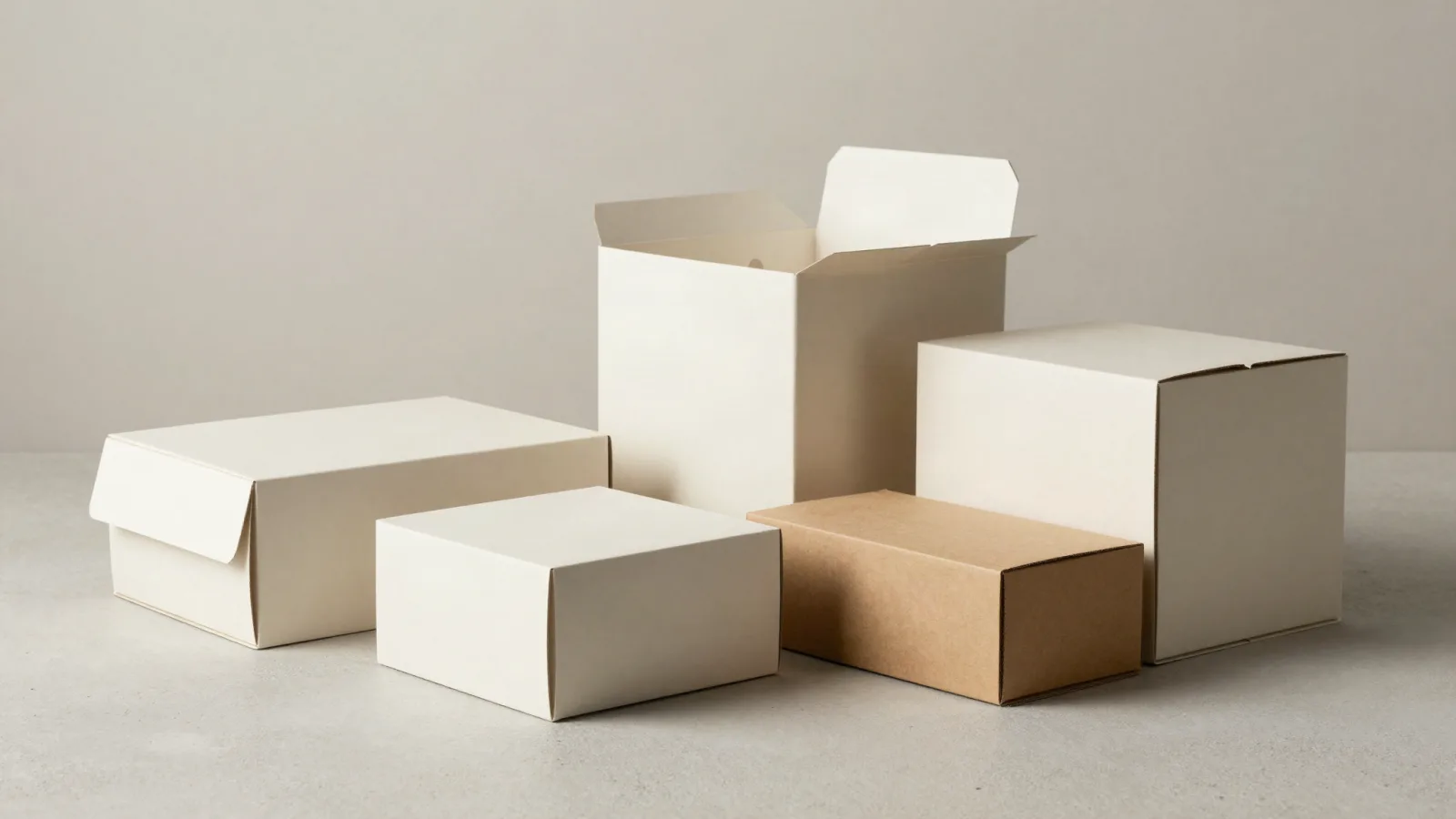




















































Packaging for incense sticks needs a package record that matches the filled bundle, not a generic scent label. A dieline is the flat cutting template a printer uses to place artwork, scores, glue tabs, and cut lines before the package is made. Start with the stick length, bundle count, inner arrangement, and the way a buyer should open the package.
How should packaging for incense sticks organize several scents?
Use one fixed brand system and give each scent its own controlled fields. Keep the logo treatment, collection name, panel order, and opening logic in the master layout; change the scent name, fragrance description, color cue, and approved copy in the variant fields. The system should make a new scent easy to place without moving the brand mark or rewriting the package structure.
| Line element | Keep stable | Change by scent | Check in the proof |
|---|---|---|---|
| Brand identity | Logo treatment and placement | Approved color cue | Brand mark stays readable |
| Scent naming | Panel location and type order | Scent name and description | Variant copy matches the record |
| Package route | Opening logic and family layout | Box or pouch format | Format matches the filled bundle |
| Surface direction | Finish family | Selected artwork detail | Artwork fits the finished panel |
Should incense sticks use a box or a pouch?
Choose a box when the bundle needs a defined front face and planned closure; choose a pouch when a flexible surface and a different opening path fit the filled product better. The scent name does not decide the structure. Bundle arrangement, stick dimensions, opening, and handling determine the package record.
What should an incense stick dieline show?
An incense stick dieline should show the finished panels, scores, glue tabs, opening, bleed, and any perforated path before artwork is approved. Keep type and small marks away from score lines because folds can interrupt them. A perforation is a row of cut and uncut sections that creates a planned tear path. Perforated packaging is a useful catalog reference when the opening itself is part of the package task.
How should scent information sit on the package?
Put the scent name where it can be found first, then repeat it in the variant field used for the side or back panel. Keep brand copy and scent copy in separate fields, because a last-minute fragrance edit should not shift the logo or opening instructions. Check spelling, type size, color cue, and panel order in every variant proof.
How should the filled bundle be checked inside the package?
The filled bundle should sit without rattling, crushing the ends, or blocking the planned opening. If an insert holds the sticks, draw it around the packed product rather than leaving loose clearance. When several scents ship together, record the bundle arrangement and how the finished packages nest in the master carton, so the packing conversation starts with the real units.
Which CPL catalog pages can help compare an incense format?
Wine box packaging is a reference for a structured front and planned opening. Wax packaging gives an adjacent compact-product example. Private-label packaging can frame a shared brand family across scent variants, while Seed packaging shows another small-product format with information on a limited panel. These pages are catalog starting points, not interchangeable incense specifications.
What should the digital proof catch?
The digital proof should catch the errors that become expensive after printing: low-resolution art, RGB artwork that shifts when converted for press, missing bleed, type too close to a score, and a scent name placed on the wrong panel. Check the assembled orientation too. An opening that works on the flat file can expose the wrong scent panel once the bundle is inside.
What does an incense packaging order cost and take?
Custom Packaging Lane uses a 100-unit MOQ. Pricing is from $0.49 per unit at volume, quoted to spec, with the format, bundle, material, artwork, finish, opening, and quantity shaping the quote. Production is typically 8 to 10 business days after proof approval, plus delivery. Free US shipping and free design support are available. A $19.99 sample kit is credited toward the first order. Use custom packaging design to send the scent family, product dimensions, chosen format, and proof owner.
Frequently Asked Questions
What determines the right incense package format?
The right incense package format follows the filled bundle, stick dimensions, opening, and handling path. A box gives the bundle a defined front and closure; a pouch gives it a flexible printed surface. Custom Packaging Lane can compare the available route with free design support, then send a digital proof before printing.
How can several incense scents share one dieline?
Several incense scents can share one dieline when the brand layout, panel order, and opening stay fixed while scent name, description, color cue, and approved copy use controlled variant fields. Each variant still needs its own digital proof, because a changed line of text can affect spacing or panel placement.
Can incense packaging include a perforated opening?
Incense packaging can include a perforated opening when the selected structure supports a planned tear path. Perforation uses cut and uncut sections, so the proof should show its direction and the panel revealed after opening. The finished bundle also needs a physical fit check before approval.
Which CPL product references fit an incense project?
CPL product references for an incense project include perforated packaging, wine box packaging, wax packaging, private-label packaging, and seed packaging. Each page represents an adjacent structure or information problem, not a fixed incense specification. The actual quote follows the filled bundle, dimensions, artwork, finish, opening, and quantity.
When does incense packaging production timing begin?
Incense packaging production timing begins after proof approval, not when the order discussion starts. The typical production period is 8 to 10 business days after proof approval, plus delivery. The MOQ is 100 units, pricing is from $0.49 per unit at volume, quoted to spec, and free US shipping is available.












