




























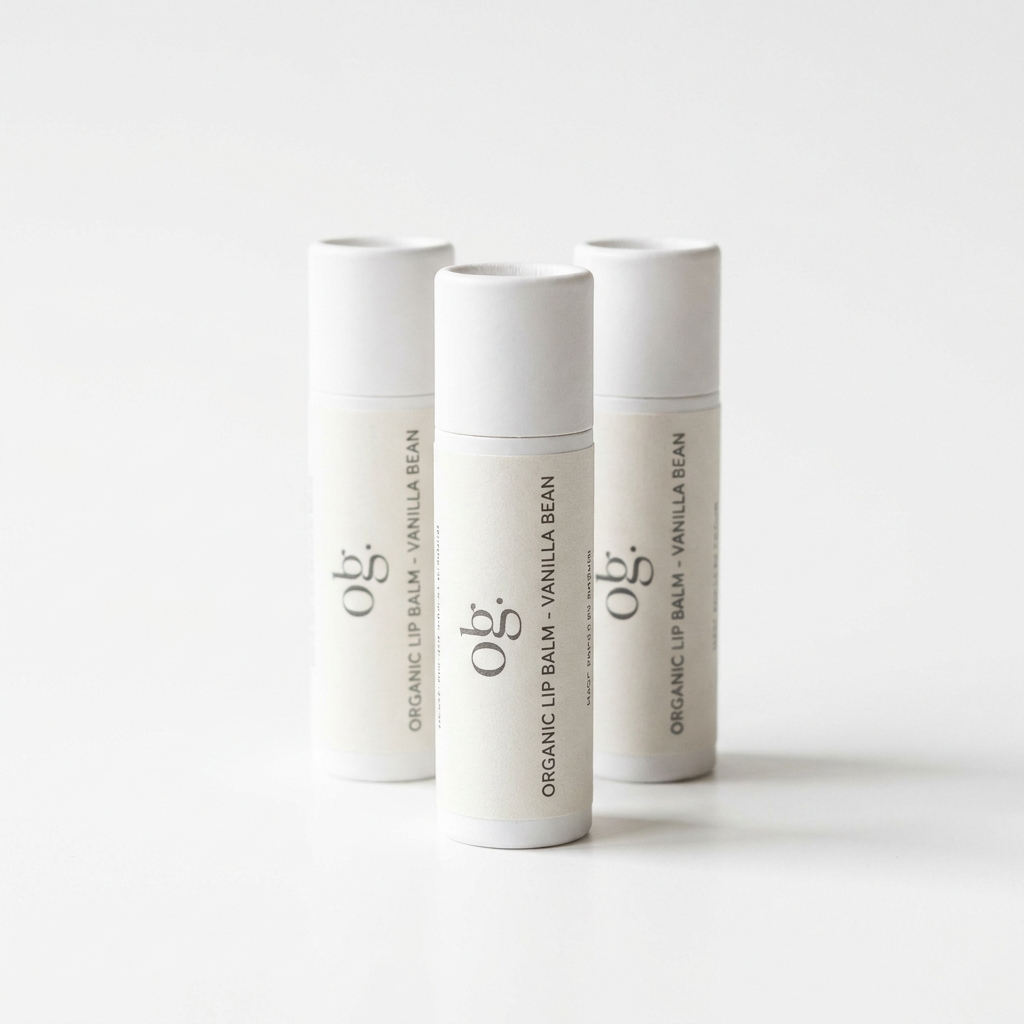




















































How do custom push-up paper tubes work?
Custom push-up paper tubes hold a solid or semi-solid product on a paper platform inside a wound paperboard cylinder. The customer presses the platform upward from the base with a thumb, then lowers or leaves the platform in position after use. The tube, platform, and cap are selected as one construction because platform travel and cap clearance affect how the finished package works.
Push-up is simple at the point of use. The design work happens before the proof. Send the product dimensions or target fill volume, and we draw the dieline with free design support. The digital proof is where you check the platform position, cap fit, seam, score, bleed, and artwork wrap.
Which products fit a push-up paper tube?
Push-up paper tubes fit deodorant sticks, lip balms, body balms, solid lotion, sunscreen sticks, beard balms, and solid perfume. The product has to hold its shape while the platform moves. A softer formula may need an interior liner or a different fill check. Tell us the formulation type before the diameter and height are finalized.
| Product format | Tube check | Practical issue |
|---|---|---|
| Deodorant stick | Fill height and platform travel | Cap must clear the exposed stick |
| Lip or body balm | Formula and liner check | Oil can interact with an unlined interior |
| Solid perfume | Diameter and closure fit | Print and opening should suit a smaller format |
Do push-up paper tubes need a liner?
A liner is an interior layer between the paperboard and the product. Push-up tubes may need one for oil-based balms, butters, solid lotions, or other formulas that can interact with paper. The liner choice follows the formulation, not a generic product category. Share the ingredients and fill behavior during quoting. Ask us about food-contact options for your product if the tube will be used for a food-contact application.
How do I choose the size and paper?
Diameter and height follow the fill volume, product diameter, finished height, platform travel, and cap clearance. A lip-balm mini and a full-size deodorant stick are different constructions even when the brand system is shared. Send the actual product dimensions where possible. If the formula is still being tested, send the target fill volume and expected stick height so the first dieline has useful inputs.
Kraft paper gives the tube a brown base, while white paper gives colors and fine artwork a cleaner starting point. Matte lamination reduces shine, gloss lamination increases it, and foil or embossing adds a surface detail. Keep type away from the seam and score, add bleed, and check RGB-to-press color changes on the digital proof.
What can go wrong with push-up action?
A platform that binds makes the product hard to advance. A platform with too much travel can push the stick above the cap clearance, while too little travel can leave product behind in the tube. A soft formula may need a liner or a different fill check. Test the hand motion, product release, cap fit, and exposed height before the artwork is approved.
Can a push-up tube replace a plastic twist-up?
A push-up tube can replace a plastic twist-up when the product is a solid or semi-solid format and the user can advance it with the paper platform. The user motion is different because the platform is moved from the base by hand. Check that motion with a sample before approving a large run.
See custom push-up paper tubes, custom paper deodorant tubes, and custom kraft paper tubes. For another paper tube construction, check custom paper tubes.
What does a push-up tube order include?
The MOQ is 100 units. Pricing is from $0.49 per unit at volume, quoted to spec. Free design support includes drawing the dieline, and free US shipping is available. Production is typically 8 to 10 business days after proof approval, plus delivery. Order the $19.99 sample kit, credited toward the first order, to check the platform action, paper, and finish before you approve production.
Once the tube construction is clear, custom packaging solutions can help with the next format in the same launch.
What should I test before approving the proof?
Test the platform travel, cap clearance, product release, hand feel, and print position. Check the seam and score against the logo, then check bleed and small type at the actual package size. The production clock starts at proof approval, so put formulation and fit questions into the quote request before that step.
What should I send for a push-up tube quote?
Send the product diameter, height, target fill volume, formulation type, artwork, desired paper, closure preference, and liner questions. If the product is still in development, include the expected stick height and how firmly the formula sets. Those details let the dieline account for platform travel and cap clearance before the digital proof.












