














































































What are RSC boxes used for?
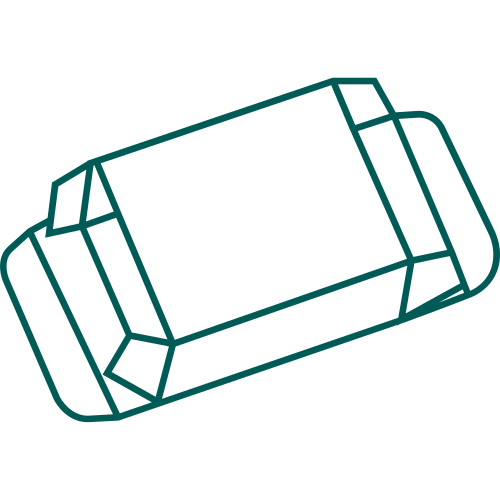
RSC means regular slotted container, a corrugated box whose main flaps meet at the center when closed. The format is common for shipping, storage, fulfillment, and outer transport cartons because the folding sequence is predictable and the closure is familiar. Tape, adhesive, or strapping can secure the top and bottom after the product is loaded.
Measure the packed product first. Record the product arrangement, inserts, cushioning, stacking direction, and whether the box is hand-packed or moved through a carrier network. Write dimensions as length x width x depth, then label them as inside or outside measurements. About 1/16 in, or 1.5 mm, is a common planning tolerance, but the filled box still needs a physical fit check against the dieline, the flat cutting template used to print, score, and cut the box.
Which corrugated flute and board reference fit an RSC box?
Flute describes the corrugated profile, while ECT is an edge crush test reference for board strength. E-flute is finer and usually gives a smoother print surface. B-flute adds board depth and cushioning for general-purpose cartons. C-flute is thicker and is often discussed when cushioning and stacking carry more weight. A 32 ECT reference can be part of the quote, but it does not replace the flute selection.
| Board input | Common industry reference | Practical effect |
|---|---|---|
| Flute profile | E, B, or C flute | Changes thickness, cushioning, print surface, and folding behavior. |
| Strength reference | 32 ECT | Provides an edge crush reference for stacking-oriented board. |
| Outer liner | Kraft or white liner | Changes printed contrast and the visible carton surface. |
| Direct print | Flexo on corrugated | Fits handling marks and simpler direct graphics. |
Board selection follows the carton size, product weight, stacking context, print needs, and distribution path. A thicker flute is not automatically the better choice. It can increase the outside footprint and change how the flaps fold.
How should an RSC box be closed?
Closure is a packing decision, not a decorative detail. Tape suits a familiar shipping workflow, adhesive can create a more permanent seal, and strapping can support certain handling patterns. The right choice depends on box weight, opening frequency, warehouse process, and whether the carton needs to be reopened.
Keep the closure area clear in the dieline. Put branding on the panels that remain visible after closure, and keep important artwork away from seams, score lines, flap overlap, and handling labels.
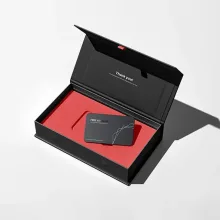
Catalog formats help separate the shipping layer from the retail layer. Window display boxes can provide a product-facing inner pack. Window boxes give another visibility reference. Waffle boxes show a smaller packaged-goods format, while can anchor a product-specific conversation.
How do I size an RSC box for shipping?
Dimensional weight is based on outside length, width, and height, not the usable cavity. Use the packed product and its protective material as the measurement source, including any inner carton, pouch, wrap, divider, or insert. Leave clearance for loading and closure, but remove empty volume that does no protective work. For US ground carrier planning, dimensional weight commonly uses length x width x height divided by 139. That is a billable-volume convention, not a freight quote.
- Measure the finished packed unit in the direction the RSC will be assembled.
- Choose E, B, or C flute after reviewing cushioning, stacking, print surface, and storage footprint.
- Place handling marks and artwork away from seams, scores, and flap overlap.
- Use flexo when the direct corrugated graphic suits that process.
- Confirm parcel or pallet handling and the delivery zone before final approval.
What details belong in an RSC box quote?
A useful quote brief names inside length x width x depth, product weight, orientation, protective materials, flute or board preference, print coverage, closure method, quantity, delivery location, and pallet or parcel constraints. State whether the RSC is an outer shipper or a retail-facing carton. That distinction changes what the outer surface needs to do.
Custom Packaging Lane quotes to spec from a 100-unit minimum. Pricing is from $0.49 per unit at volume, quoted to spec. Production is typically 8 to 10 business days after proof approval, plus delivery. Free US shipping, free design support, a free dieline, and a $19.99 sample kit credited to the first order are available. Review wholesale custom packaging and order the sample kit before the final structure is approved.
Frequently Asked Questions
What does RSC mean in corrugated packaging?
RSC means regular slotted container, a corrugated structure with main flaps that meet at the center when the box is closed. RSC boxes are used for shipping and storage because they fold in a predictable sequence and can be sealed with tape, adhesive, or strapping. The term does not specify flute, ECT, dimensions, print, or closure by itself.
How do I choose E-flute, B-flute, or C-flute for an RSC box?
E-flute has a finer profile and usually supports a smoother print surface. B-flute adds board depth and cushioning for general-purpose cartons. C-flute is thicker and is often considered for shipping, cushioning, and stacking. Product weight, box size, storage footprint, print detail, and distribution conditions should guide the choice, with 32 ECT treated as a separate strength reference.
How can an RSC box reduce dimensional weight?
An RSC box can reduce dimensional weight when its outside length, width, and height contain less avoidable empty space. US ground carrier planning commonly uses length x width x height divided by 139. Measure the packed product and protection first, then keep enough clearance for loading, cushioning, and closure. A smaller carton must not crush the product or force a poor flute choice.
Can RSC boxes have printed branding?
RSC boxes can carry direct corrugated graphics, handling marks, and a simple brand treatment. Flexographic printing is common for corrugated surfaces. Keep critical artwork clear of scores, seams, flap overlap, and closure areas, then check contrast on the selected kraft or white liner. A separate printed retail carton can carry more detailed presentation when the RSC is only the shipping layer.
What information should I send for an RSC box quote?
An RSC box quote should include inside length x width x depth, product weight, orientation, protective materials, preferred flute, print coverage, closure method, quantity, destination, and parcel or pallet constraints. State whether the carton is an outer shipper or retail-facing pack. A clear brief lets the structure, board, print process, and handling path be reviewed together.