


























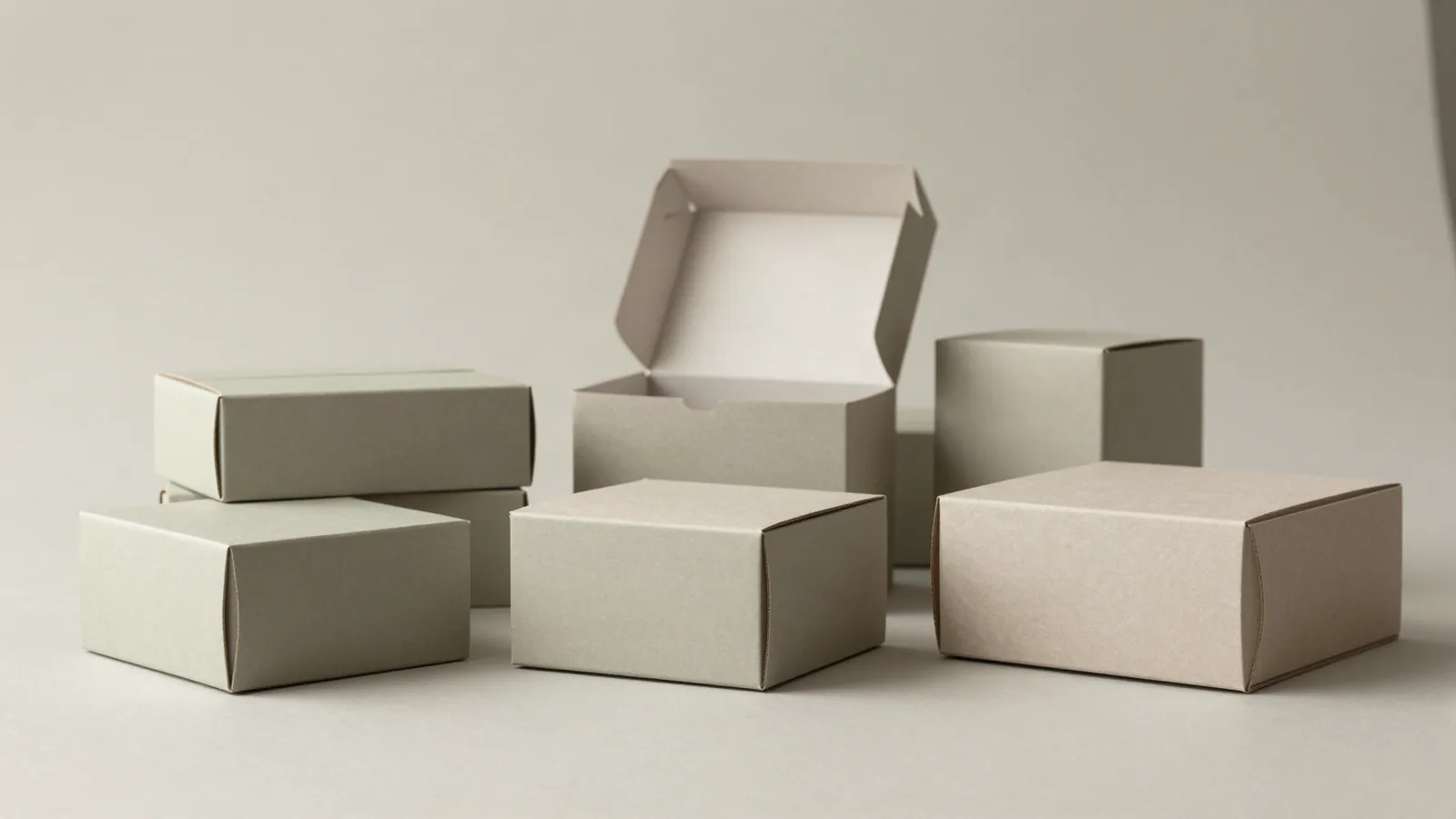




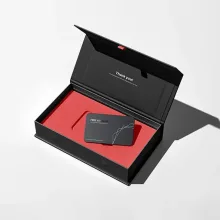
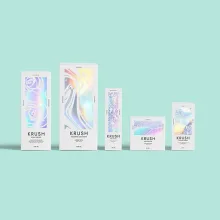
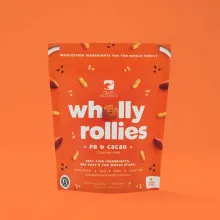

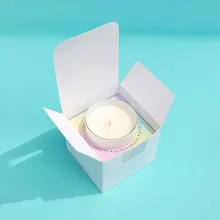




































Premium custom packaging starts with the product, the opening motion, and the way the package keeps its shape. A decorative treatment cannot repair a loose fit, a lid that binds, or an insert that traps the product. Set the construction first, then map print and finish onto it.
Rigid, folding, flexible, and reusable soft formats each change the handoff. A rigid box uses wrapped chipboard and holds shape without a fold. A folding carton uses scored paperboard and stores flat. Mylar or foil laminates use layers with different barrier and sealing jobs.
Which structure matches the opening sequence?
A lift-off lid slows the reveal, a drawer adds pull friction, and a sleeve keeps an outer brand layer on the package. The structure also determines where the product sits, where an insert can go, and how the customer reaches the contents.
| Structure | Opening experience | Specification to watch |
|---|---|---|
| Two-piece rigid | Classic lift-off presentation | Tray and lid alignment, wrap coverage, and edges |
| Magnetic flap | Controlled close and reveal | Magnet placement, flap stiffness, and closure feel |
| Drawer or slide | Layered opening | Tray-to-sleeve fit and friction |
| Sleeve over carton | Outer brand layer over an inner pack | Clearance, seam position, and artwork registration |
| Custom tin | Durable container and repeat use | Metal shape, lid fit, decoration, and interior protection |
Compare custom tin packaging for a durable container, custom taper candle packaging for an elongated product, and custom printed macaron packaging boxes for compartmentalized presentation. Custom greeting card packaging gives another reference for sleeve, insert, and opening-sequence work.
Which materials support the intended hand feel?
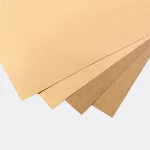
Rigid presentation boxes commonly use 1.5 to 3 mm chipboard wrapped in 100 to 157 gsm art paper. Folding cartons may use SBS, C1S, or C2S paperboard in the 12 to 24 pt range. Kraft board in the 18 to 24 pt range creates a natural visual direction. Span, product weight, edge wear, print surface, and opening behavior should drive the comparison.
Chipboard gives the rigid box its shell because the wrapped board holds shape without a fold. The folding carton gets its form from scored panels. Those are different construction decisions, even when both carry the same artwork and finish map.
What flexible materials belong in the brief?
PET carries print and surface duties in many laminates, AL is the metal barrier layer, and PE provides the sealable side. The layer stack affects light exposure, moisture protection, odor transfer, closure, and heat sealing. Non-woven polypropylene in an 80 to 120 gsm range and cotton canvas in an 8 to 12 oz range can support reusable soft packaging.
If the package will touch food, ask us about food-contact options for your product. State the product exposure and filling method in the brief so the material discussion starts with the actual use.
How should finishes be combined without losing readability?
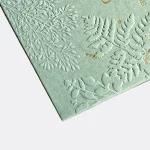
Offset CMYK is commonly used for detailed graphics. Digital printing can suit short runs. Matte or gloss lamination changes reflection across the printed face. Soft-touch changes hand feel. Spot UV, foil stamping, embossing, and debossing create selected contrast or texture.
Map the logo, product name, opening cue, and small pattern first. Put each effect on its own artwork layer. Check folds, seams, corners, magnets, glue flaps, and high-contact areas before approving the proof. A physical sample matters when fit, foil, embossing, debossing, soft-touch, or closure feel carries the design.
How much clearance should a custom package allow?
Write inside dimensions as length x width x depth and include inserts, clearances, and removal force. About 1/16 inch, or 1.5 mm, is a common tolerance reference for box dimensions. The sample should control final fit because board, insert thickness, closure, and product surface change the result.
For shipment planning, dimensional weight for US ground is commonly reviewed as L x W x H divided by 139. Review the package both flat and assembled, check the storage footprint, and decide whether a separate protective shipper is needed. Keep copy away from folds, seams, magnets, and glue flaps.
What should I send for a custom packaging quote?
A useful request names the packed product, structure, material, finish, quantity, and delivery point. Add the information that controls fit and handling before discussing decorative details.
- Provide product dimensions, packed contents, and the intended removal sequence.
- State the preferred structure, material, board direction, and insert approach.
- Share artwork, print coverage, finish map, and logo placement.
- Describe storage conditions, shipping role, and whether the package ships flat or assembled.
- List questions about samples, fit, closure, and surface feel.
Custom Packaging Lane provides a free dieline and free design support. The minimum order is 100 units, with pricing from $0.49 per unit at volume, quoted to spec. Production is typically 8 to 10 business days after proof approval, plus delivery. Free US shipping. Start with custom packaging solutions and order the $19.99 sample kit, credited to the first order.
Frequently Asked Questions
Is premium packaging only made with rigid boxes?
Premium packaging can use a folding carton, sleeve, tin, drawer, magnetic flap, or reusable soft package. The structure should match the product, opening sequence, storage, and shipping role. Board caliper, print quality, edge treatment, inserts, and restrained finishing can change the result more than choosing the heaviest format.
What is the difference between a rigid box and a folding carton?
A rigid box commonly uses chipboard, often around 1.5 to 3 mm, wrapped in printed art paper. A folding carton is creased paperboard that ships and stores flat before assembly. Rigid construction gives a firm shell, while folding cartons suit flat storage and scored closures. Product fit and opening behavior should guide the choice.
Which finishes work well for a premium logo?
Spot UV, foil stamping, embossing, and debossing can focus attention on a logo or selected panel. Matte lamination gives a quieter surface, while gloss increases reflection and soft-touch changes the hand feel. Confirm registration around folds and seams, then inspect a physical sample when texture or reflectivity carries the design.
Can premium packaging include an insert?
Premium packaging can include an insert that holds the product in position, separates components, or creates a deliberate reveal. Paperboard, foam, and shaped structural components are common approaches. Specify packed orientation, clearance, and removal force. Test the insert inside the final structure because its thickness can change the closure and internal dimensions.
How do I start a premium packaging project?
Start with product dimensions, packed contents, target quantity, brand artwork, preferred structure, finish direction, and delivery location. State whether the package should feel giftable, reusable, protective, or collectible. The packaging brief can then address the dieline, material, insert, and finish. Check fit, closure, print, and handling before approving the final design.