




























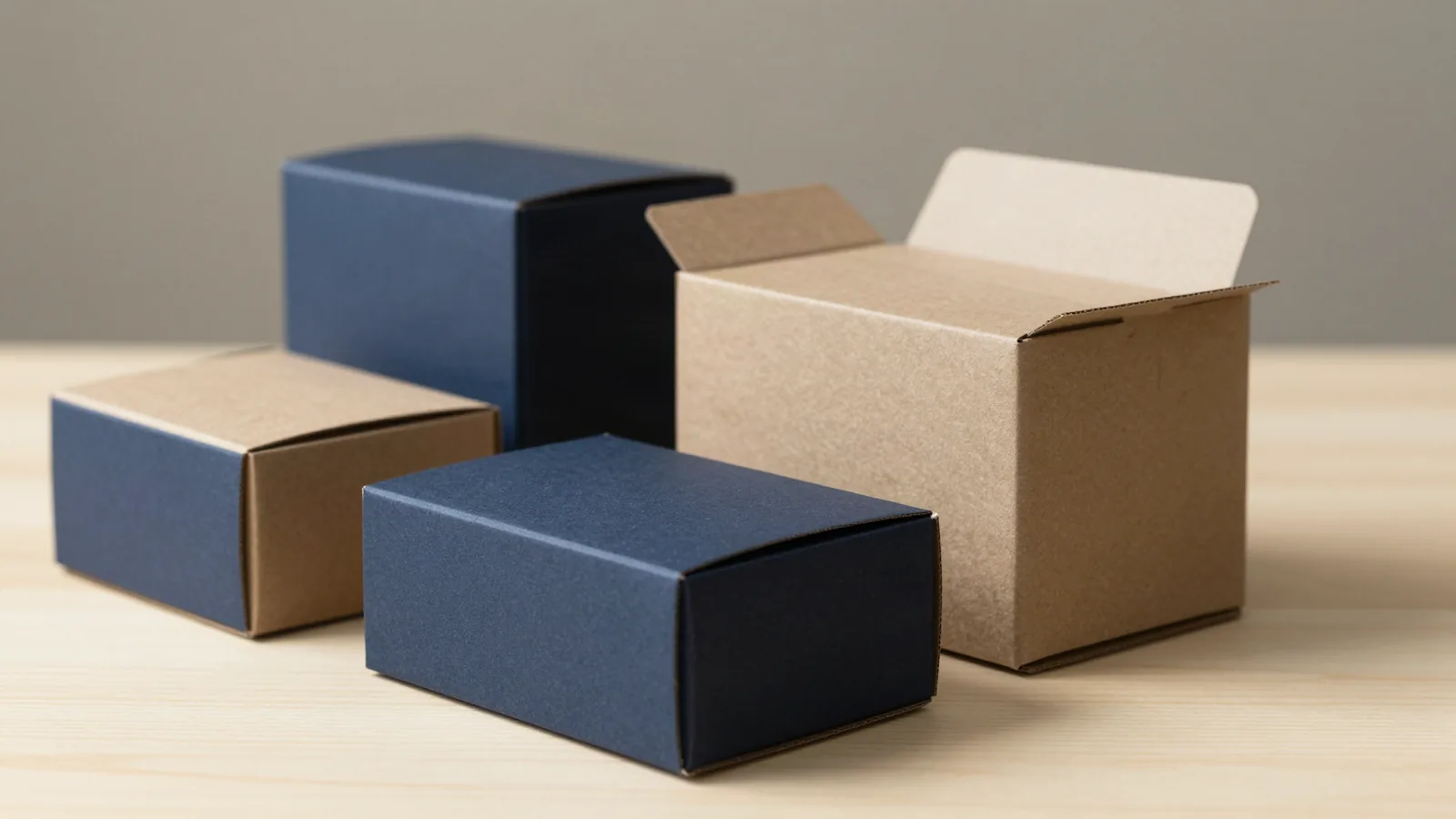




















































Premium box packaging design is the coordination of a box structure, product fit, print file, and finish map. The work starts with the object inside. A logo can cross a score, a glue flap can land on a printed panel, and a lid can bind when the physical construction is left until the end.
Choose the opening, loading direction, closure, and interior clearance before adding foil, spot UV, or tactile effects. A digital proof is the point to catch a barcode too close to a fold, RGB art that shifts after press conversion, or low-resolution art that will look rough on the sheet.
Where should box packaging design begin?
Product dimensions and opening motion set the box footprint before decoration enters the brief. Decide whether the carton must stand, stack, ship flat, or present a specific face, then record the loading direction, closure, and interior clearance.
| Design layer | Common industry option | Proof check |
|---|---|---|
| Structure | Straight tuck, reverse tuck, auto-lock, or rigid lid | Panel order, folds, closure, and glue areas |
| Board | 12 to 24 pt paperboard or 1.5 to 3 mm chipboard | Stiffness, scoring, wrap direction, and fit |
| Offset CMYK, digital, or flexo for corrugated | Color coverage, type size, and artwork alignment | |
| Surface | Matte, gloss, soft-touch, spot UV, or foil | Finish boundaries and readability under light |
| Relief | Embossing or debossing on selected artwork | Line weight, registration, and crease clearance |
What does a box dieline show?
Cut lines, scores, bleed, glue flaps, tuck panels, and panel faces turn a flat sheet into an assembly plan. A dieline is the flat cutting and folding template used before a box is assembled. It identifies the front, back, side, and interior faces, plus the areas that will be cut, folded, glued, or tucked.
Place the brand mark, product name, opening instruction, and required information on the faces visible in the intended position. Leave seams and glue areas clear. If the structure changes, the artwork map changes with it, so settle the dieline before decorative work is locked.
Which board suits a folding carton or rigid box?
Folding cartons commonly use SBS, C1S, or C2S paperboard in the 12 to 24 pt range. Rigid boxes start with chipboard in the 1.5 to 3 mm range and often wrap it in 100 to 157 gsm art paper. Kraft board in the 18 to 24 pt range gives a different print ground and texture. The carton gets shape from scores and panels. The rigid box holds shape through wrapped board plus a separate lid or base.
How should finishes be placed on box artwork?
Matte and gloss lamination cover broad printed faces, while spot UV and foil stamping concentrate attention on marked areas. Soft-touch changes the tactile response. Embossing raises artwork. Debossing presses it below the surface. Offset CMYK suits detailed carton graphics, digital printing can suit short runs or a seasonal version, and flexo is commonly associated with corrugated packaging.
At a press check, inspect ink coverage, registration, type size, and finish boundaries on the actual sheet. Keep fine type, barcodes, scores, and tight folds out of crowded effects. A finish should make the panel easier to read from the intended viewing angle.
What must stay clear of folds and glue flaps?
Type, fine borders, foil edges, and small marks need quiet space around scores, cuts, seams, and glue flaps. Add bleed beyond a cut line so trimming does not expose a white edge. Mark the front, back, side, and interior faces on the approved dieline, then check the folded box from the angle a buyer sees.
When is rigid construction a better fit?
A rigid construction fits when a firm shell, separate lid, drawer or slide motion, or magnetic flap is part of the opening. A folding carton can ship flat and use straight tuck, reverse tuck, auto-lock, or a rigid lid structure. Compare product fit, insert clearance, storage, opening force, and display position before settling the format.
Which product box references can I compare?
Tall bottles, broad footwear cartons, category-specific packs, and private-label programs need different panel orders and openings. Compare wine box packaging for a tall presentation format, shoe box packaging for a broader footprint, and for another category structure. Wax packaging and private label packaging add compact and coordinated brand references.
What should I check before approving a proof?
The folded package exposes errors that a flat PDF can hide. Check the following on the approved file and assembled package:
- Confirm product fit, insert clearance, loading direction, and closure motion.
- Check panel order, cut lines, scores, glue flaps, tuck areas, and bleed.
- Inspect logo placement, small type, color coverage, barcode position, and reading angle.
- Mark matte, gloss, soft-touch, spot UV, foil, embossing, and debossing boundaries.
- Review the assembled box from the intended viewing angle before the production file is released.
Custom Packaging Lane quotes premium box packaging design from a 100-unit minimum, with pricing from $0.49 per unit at volume, quoted to spec. Production is typically 8 to 10 business days after proof approval, plus delivery. Free US shipping, free design support, and a free dieline are available. Review custom packaging design and order the $19.99 sample kit, credited to the first order.
Frequently Asked Questions
What is a packaging dieline?
A packaging dieline is the flat cutting and folding template that maps cuts, scores, bleed, glue flaps, tuck panels, and visible faces before a box is assembled. Artwork sits on that map. The physical product should be checked against the dieline because a fit change can move the panel order, closure, insert, and artwork-safe areas.
When should I use a rigid box instead of a folding carton?
Use a rigid box when the package needs a firm shell, separate lid, drawer motion, or magnetic flap. Use a folding carton when scored paperboard, flat storage, tuck closure, or lock construction fits the job. Compare product fit, insert clearance, opening force, storage, and display position before choosing the structure.
How do matte, gloss, and soft-touch finishes differ?
Matte lamination reduces surface reflection, gloss lamination increases reflection, and soft-touch changes the tactile response of the printed panel. Spot UV and foil add selected effects, while embossing and debossing change surface height. Map every treatment around type, folds, seams, and glue flaps so the assembled box stays readable.
How can I keep artwork from breaking across a fold?
Keep type, logos, borders, foil edges, and small marks away from scores, cuts, seams, and glue flaps. Use the approved dieline to identify those areas before final artwork. Add bleed beyond the cut line and inspect the folded package from the viewing angle that matters. The assembled box catches errors a flat file can hide.
What should a box designer receive before starting?
A box designer should receive the physical product or dependable dimensions, desired structure, opening direction, insert needs, artwork files, required copy, finish direction, quantity, and delivery location. State whether the box is for shelf display, gifting, fulfillment, or shipping. That brief gives the dieline, board choice, panel order, and proof review a defined job.












