





























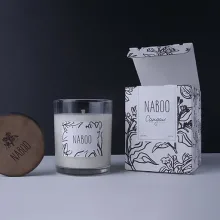

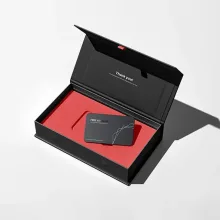
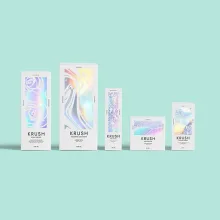
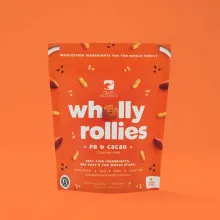
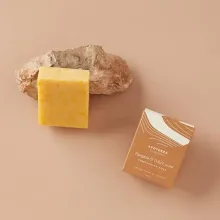





































A package design brief starts with the item, the pack-out, and the way the package will be handled. Record the product shape, packed dimensions, presentation goal, orientation, closure, insert needs, artwork status, and whether the finished pack goes to a shelf, a parcel carrier, or both. A logo is an artwork element. It is not a package specification.
What should a custom package design brief answer?
The first useful detail is the product's packed position and the space it needs inside the package. State which panel faces forward, how the customer opens the package, whether it needs reclosure, and where an insert, window, barcode, or required copy must sit. Custom woozy bottle boxes are a practical catalog reference when bottle geometry drives the design.
How do product measurements become a dieline?
Inside length x width x depth gives the clearest fit starting point when the product controls the package. A dieline is the flat cutting, folding, and gluing template that turns the package concept into printable panels. Label each value as a product measurement, desired inside measurement, or finished outside measurement. About 1/16 in, or 1.5 mm, is a common planning tolerance reference, subject to the approved construction. Measure the cap, base, protrusions, and insert, because each one can move a score or shrink a printable panel.
| Design input | Typical industry reference | Decision to make |
|---|---|---|
| Product fit | Inside length x width x depth | Clearance around the product and insert |
| Folding carton | SBS, C1S, or C2S, 12 to 24 pt | Which panels carry the message |
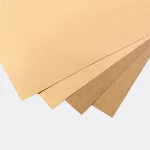
| Natural board direction | Kraft, 18 to 24 pt | Whether the board appearance stays visible |
| Rigid presentation | Chipboard, 1.5 to 3 mm, wrapped in 100 to 157 gsm art paper | Lid fit and opening motion |
| Parcel format | Corrugated E, B, or C flute, with 32 ECT as a common reference | Protection and handling needs |
Which structure fits the pack-out?
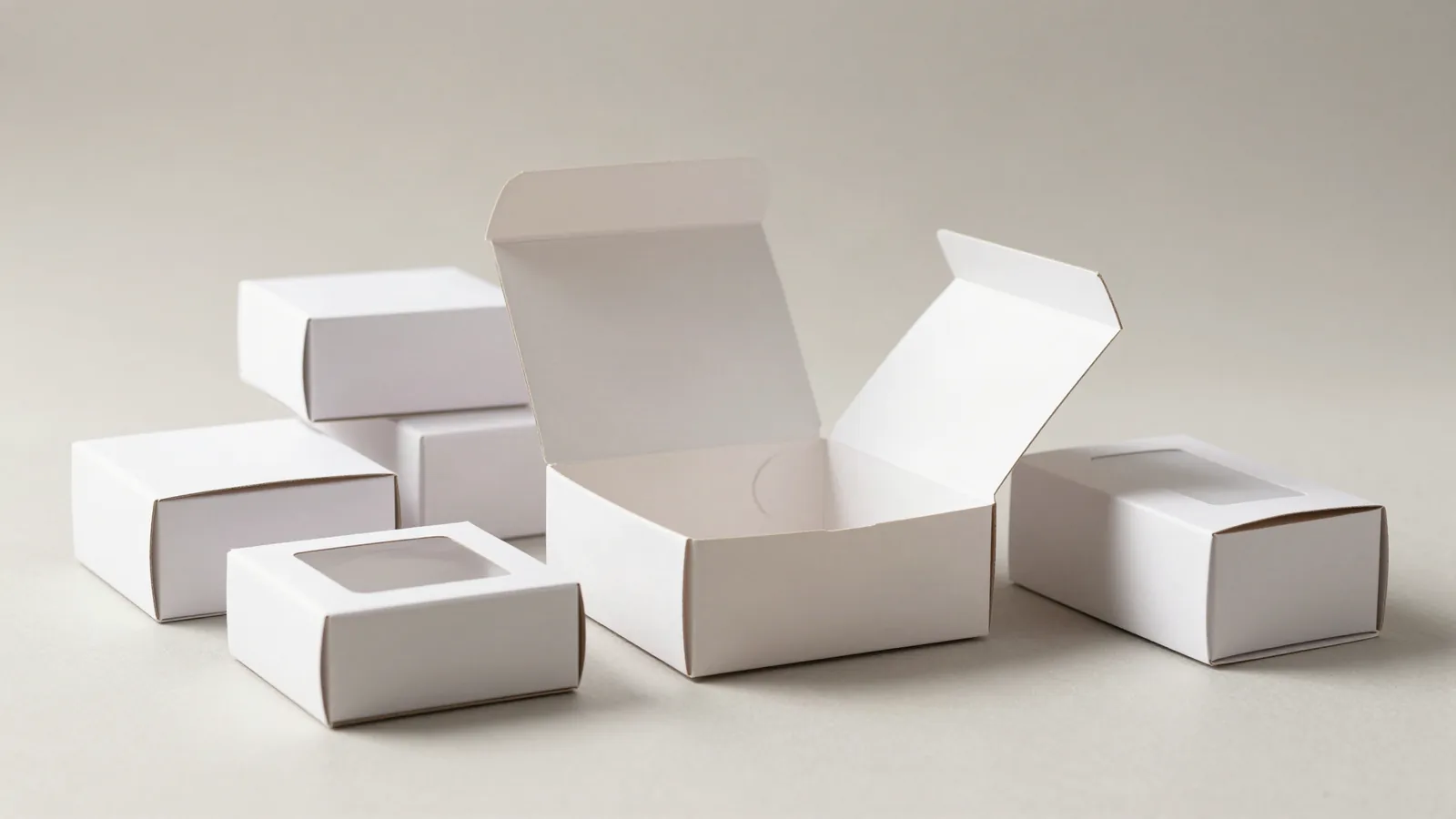
A straight tuck end and reverse tuck end use familiar folding-carton closures, while auto-lock and crash-lock bottoms change the base assembly. A sleeve wraps an inner package. A two-piece rigid box separates base and lid, and a magnetic flap or drawer format changes the product reveal, hand movement, and opening sequence. A mailer with a roll end tuck top, commonly referenced as FEFCO 0427, connects the opening sequence with parcel handling.
Which board should I compare for the design?
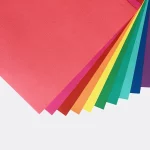
SBS, C1S, and C2S paperboard in the 12 to 24 pt range are common folding-carton references. SBS has a bright coated printing surface, C1S has one coated side, and C2S has coated faces on both sides. Kraft board around 18 to 24 pt leaves a different surface character. Rigid chipboard from 1.5 to 3 mm, wrapped in 100 to 157 gsm art paper, holds shape without a fold and changes the hand feel. Board choice changes stiffness, scoring, folds, and the appearance of unprinted areas.
How should artwork and finishing be mapped?
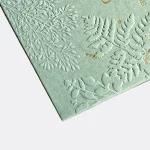
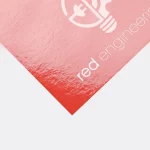
The dieline should show bleed, safe areas, folds, scores, glue flaps, and opening direction before artwork is placed. Offset CMYK is commonly used for detailed paperboard graphics, while digital printing can suit short runs or development. Matte or gloss lamination changes reflection. Soft-touch changes the hand feel. Spot UV, foil stamping, embossing, and debossing each need their own marked area so the proof shows where the effect belongs.
What should a design proof show before approval?
The assembled package should settle the fit question. Check panel order, trim, score lines, glue areas, tuck tabs, insert position, barcode quiet zones, small type, and the front panel from the intended viewing angle. A low-resolution image can look acceptable on screen and fail at print size. RGB artwork can shift when converted for press. If there is a window, PET film around 0.2 to 0.3 mm is a common reference, and the patch must stay clear of scores and glue.
Which product examples help define the design direction?
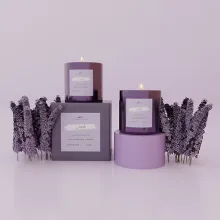
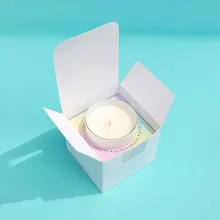
Different formats expose different design decisions. Custom white paper bags put handles, gussets, and broad print panels into the brief. Custom votive candle boxes focus attention on compact fit. Custom vial boxes raise questions about narrow components, compartments, and label visibility. Use those catalog examples with the actual product measurements, not as a substitute for them.
What should I send for a custom package design quote?
A design quote needs labeled product dimensions, preferred structure, board direction, artwork status, print coverage, finish, insert or window needs, quantity, and delivery destination. Mark which decisions are fixed and which need comparison. Custom Packaging Lane quotes the finished design to spec from a 100-unit minimum, with pricing from $0.49 per unit at volume. Production is typically 8 to 10 business days after proof approval, plus delivery. Free design support includes a free dieline and free US shipping. The $19.99 sample kit can be credited to the first order. Use custom packaging design to start the project brief.
Frequently Asked Questions
How do I begin a custom package design brief?
A custom package design brief should begin with the product's labeled length, width, and depth, its packed orientation, and the way it will be handled. Add the intended structure, opening direction, insert or window needs, artwork status, board preference, print coverage, finish, and the panels that must carry the main message.
Should package measurements be inside or outside?
Inside package measurements usually provide the clearest fit reference because they describe the space available to the product. Outside measurements matter for display, storage, and shipping review. Label each value, write it as length x width x depth, and include the cap, handle, protrusion, insert, or clearance that changes the footprint.
Which structure suits a presentation-led package design?
A two-piece rigid, magnetic flap, drawer or slide, or sleeve structure can suit a package where the opening motion and product reveal need attention. A straight tuck end or reverse tuck end may suit a simpler folding carton. Compare lid fit, assembly, printed area, product removal, and board behavior before approving the structure.
Can a custom package design include specialty finishes?
A custom package design can include matte or gloss lamination, soft-touch, spot UV, foil stamping, embossing, or debossing. Mark each area on the dieline and keep effects away from folds, scores, glue zones, and small copy. The proof should show the intended placement before the artwork is approved for production.
What should I inspect on a package design proof?
A package design proof should be checked on the assembled structure, with the actual product or a dependable product drawing. Inspect fit, panel order, trim, scores, glue areas, closure direction, insert position, safe areas, small type, barcode space, and window placement. Resolve physical fit before approval because the flat file cannot show every assembly issue.