





































































A custom pencil box should fit the set people will actually pack, including the longest pencil, grouped width, stack depth, eraser, sharpener, or insert. The outer artwork comes after the inside plan. Board caliper, closure, sleeve fit, tray clearance, and the way the box opens all affect the finished package. The pencil boxes catalog page is the direct product reference.
What is a custom pencil box?
The structure is a printed package shaped around pencils or a grouped writing set. It may be a folding carton, sleeve, drawer or slide, or two-piece rigid box. Start with the longest item and the arrangement inside the box, then choose how the customer opens it. That sequence sets the usable interior before the graphics are placed.
Which box style works for pencils?
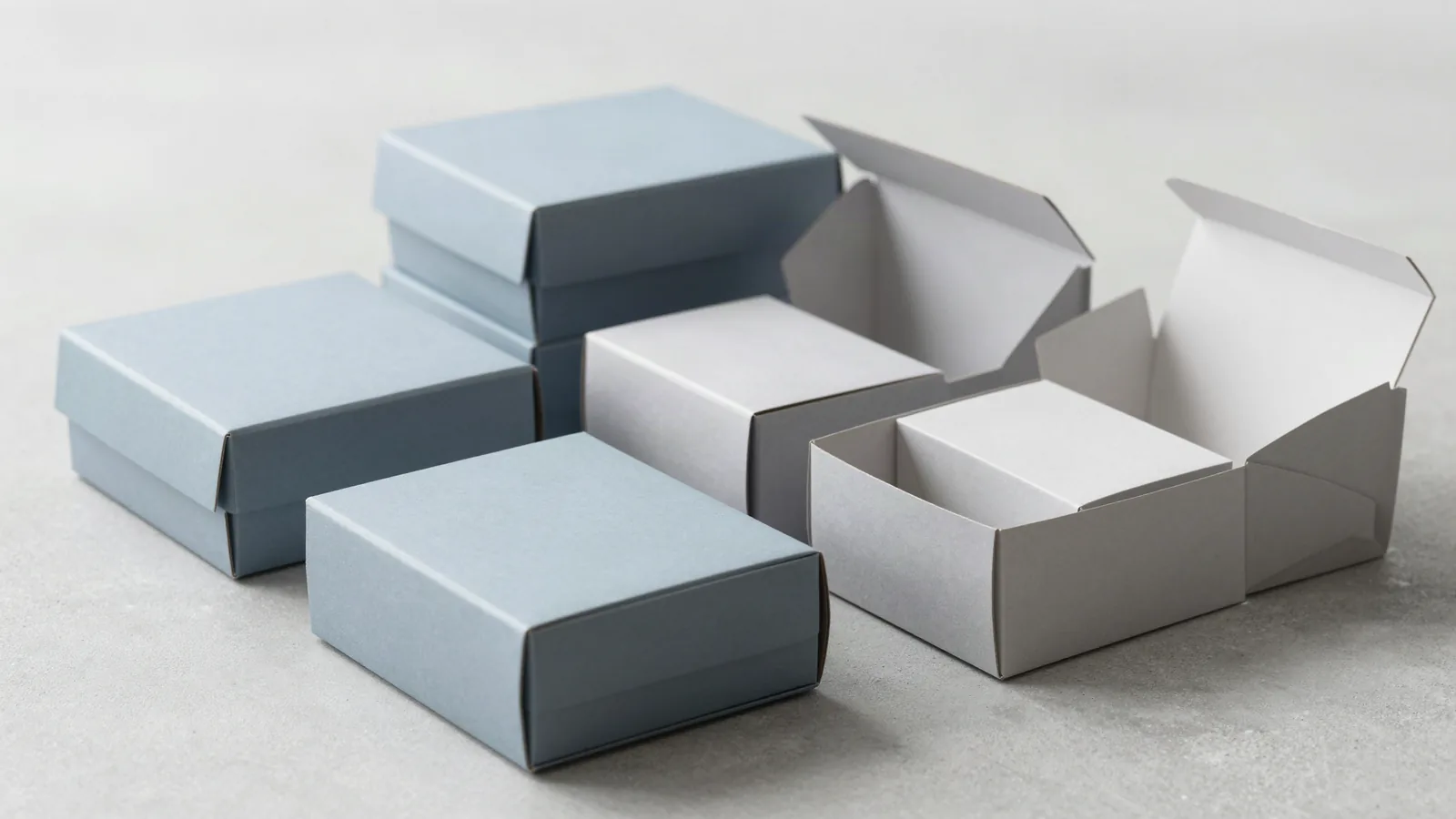
The closure changes the opening motion and the support needed inside. A straight tuck end folds top and bottom flaps into the carton. A sleeve slides over an inner support, while a drawer or slide moves a tray through an outer sleeve. A two-piece rigid box keeps a fixed shape.
| Structure | How it closes | Question to answer |
|---|---|---|
| Straight tuck end | Top and bottom tuck panels fold into the carton | Will the set stay positioned without a tray? |
| Reverse tuck end | Opposing tuck panels close from different sides | Which panel faces the display side? |
| Sleeve | Open-ended printed band slides over inner support | Does the inner package control the set? |
| Drawer or slide | Inner tray moves through an outer sleeve | Should the set appear gradually? |
| Two-piece rigid | Lid and base meet around a fixed box body | Does the presentation need a firm shape? |
What board should a pencil box use?
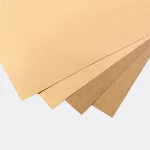
SBS, C1S, and C2S paperboard in the 12 to 24 pt range are common folding-carton references for printed pencil boxes. Kraft board around 18 to 24 pt changes the surface and visual base. A rigid box commonly uses chipboard in the 1.5 to 3 mm range, wrapped in 100 to 157 gsm art paper. If the set needs an outer shipping layer, E, B, and C flute corrugated board and 32 ECT are common references.
How should pencil box dimensions be measured?
Inside measurements are the starting point for the pencil set. Measure the longest pencil, widest grouped arrangement, and stacked depth, then write the required box size as length x width x depth. Include the eraser, sharpener, insert, and any clearance the set needs. A common drafting reference is about 1/16 in, or 1.5 mm, tolerance. Confirm the final fit against the physical set before approving the dieline.
How can an insert control movement inside the box?
An insert can divide pencils, separate accessories, create a lift point, or stop a small set from shifting. Paperboard inserts suit folded structures, while foam or rigid supports use different cut and fit requirements. Size the insert to the inside package, then check it against the closure and artwork panels. A cavity cut to the exact product profile can hold position, but hand access still needs to be drawn into the layout.
Which print finish fits a pencil box?
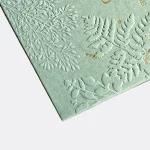
Offset CMYK is a common choice for detailed paperboard artwork, while digital printing can suit short runs or artwork testing. Matte or gloss lamination changes the surface. Soft-touch changes the tactile feel, and spot UV, foil stamping, embossing, or debossing can mark selected panels. Keep decorative effects away from scores, cut edges, and glue tabs so the assembled box follows the proof.
Which product references can inform the design?
The custom foam box inserts page is useful when the set needs shaped support or separation. Shoe box packaging shows a larger folding package with lid or tuck construction. An embossed tin box gives a different hard-container direction for comparison. These references frame structure and finish choices, but the pencil dimensions still control the dieline.
What should I prepare for a pencil box quote?
The useful starting point is the longest pencil and its packed arrangement, not the front artwork. Provide the required inside space, accessories, preferred structure, opening direction, board, artwork status, finish, quantity target, and delivery location. Mark the display panel, artwork coverage, scores, cut edges, glue tabs, and insert position. Custom packaging design is the right hub once the pencil box brief is ready.
Custom Packaging Lane quotes custom pencil boxes to spec from a 100-unit minimum, with pricing from $0.49 per unit at volume, quoted to spec. Production is typically 8 to 10 business days after proof approval, plus delivery. Free US shipping, free design support, and a free dieline are available. The $19.99 sample kit is credited to the first order. Send the pencil set and artwork when the structure is ready for review.
Frequently Asked Questions
How much room do pencils need inside a box?
Pencil-box space starts with the longest pencil, widest grouped arrangement, and stack depth. State the required inside measurements as length x width x depth, then include an eraser, sharpener, insert, and needed clearance. Check the physical set against the approved dieline because the outside artwork cannot reveal an interior fit problem.
What is the difference between a sleeve and a tuck carton?
A sleeve is an open-ended printed band that needs an inner package or support. A straight tuck end or reverse tuck end is a folding carton with closing flaps. Choose a sleeve when the inner component already controls the set. Choose a tuck structure when the carton itself must close around the pencils and accessories.
Should accessories share the same pencil box?
Erasers, sharpeners, and other accessories can share a pencil box when the inside arrangement includes their width, height, and access needs. Map those items beside or below the pencils before the outside panels are designed. A paperboard, foam, or rigid insert can separate the pieces when movement would make the set hard to remove.
Can a pencil box use an insert?
A pencil box can include a paperboard, foam, or rigid insert that divides pencils, separates accessories, creates a lift point, or limits movement. Identify the cut shape and material direction, then size the insert to the inside package. Check the insert against the closure, lid clearance, and hand access before proof approval.
Which finish is easiest to check on a pencil box proof?
A pencil box proof should show the selected print and finish on the panels, scores, cut edges, and glue tabs. Offset CMYK suits detailed artwork, while digital printing can suit short runs or testing. Matte or gloss lamination, soft-touch, spot UV, foil stamping, embossing, and debossing each change the surface or selected areas.