




























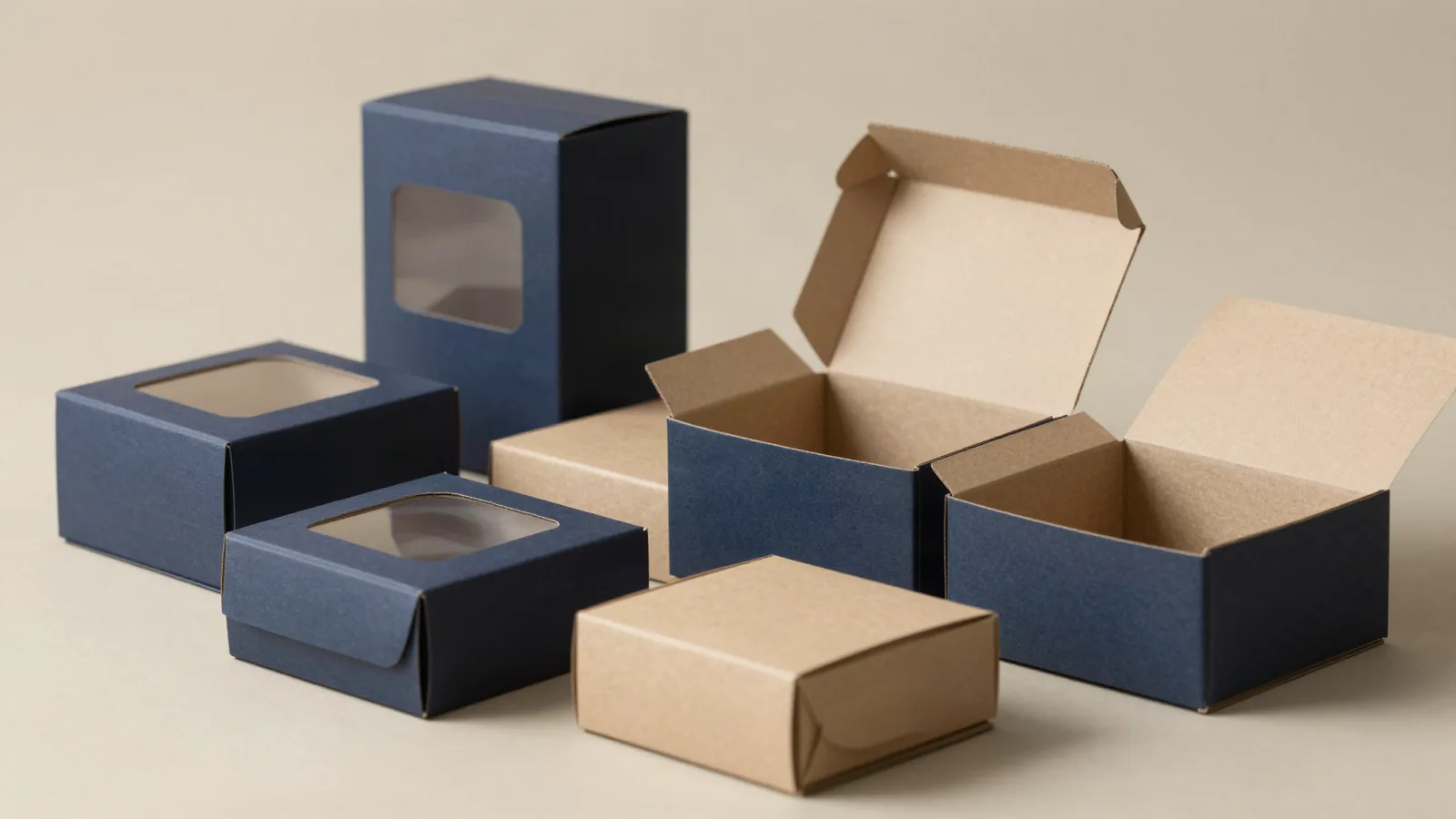




















































An accessory has to fit the primary package, attach the way the pack-out requires, and leave enough room for artwork and handling. A sleeve can cover an inner carton. An insert can separate or support components. A window patch can show a selected area. A carry bag can leave with the packed product. State whether the piece is loose, glued, folded, or fitted into another package before the file is drawn.
What counts as a custom packaging accessory?
A custom packaging accessory is a separate piece that supports, covers, organizes, shows, or carries a primary package. The accessory has its own dimensions, attachment method, artwork panels, and finish areas. That distinction matters when a sleeve wraps a box, a divider holds components, or a bag carries the product after purchase.
Which accessory structure fits the job?
The attachment method decides the first structural question. A sleeve needs controlled clearance around the inner pack. An insert needs stable support points and a removal path. A window patch needs a flat panel with room for film and adhesive. Compare the accessory with the primary package before artwork moves into the dieline.
| Accessory | Typical industry construction | Decision to settle |
|---|---|---|
| Sleeve | SBS, C1S, or C2S paperboard, 12 to 24 pt | Inside length, width, depth, and sliding clearance |
| Rigid insert | Chipboard, 1.5 to 3 mm, wrapped in 100 to 157 gsm art paper | Cavity, support points, and removal method |
| Window patch | PET film, about 0.2 to 0.3 mm | Flat patch area away from scores and glue tabs |
| Carry bag | Non-woven polypropylene, 80 to 120 gsm, or cotton canvas, 8 to 12 oz | Handle, decoration area, and packed size |
Which materials work for accessory pieces?
SBS, C1S, and C2S paperboard in the 12 to 24 pt range are common for printed sleeves, bands, and folding inserts. Kraft board around 18 to 24 pt leaves a natural surface. Rigid accessories use chipboard with wrapped art paper. Bag-style accessories may use non-woven polypropylene or cotton canvas. Board thickness changes fold behavior and stiffness, while film, rigid board, and fabric change how the accessory attaches and sits beside the primary package.
How should accessory print and finish be specified?
Offset CMYK is a common choice for detailed paperboard artwork. Digital printing can suit short runs or artwork testing. Flexo is commonly used for corrugated outer packaging rather than fine folding-carton detail. Matte or gloss lamination changes surface reflection. Soft-touch changes the tactile surface. Spot UV, foil stamping, embossing, and debossing can mark a selected logo, border, or information panel. State whether the effect covers the full sheet or one mapped area.
How do fit and dimensions change the dieline?
A dieline is the flat cutting and folding template for the accessory. Write dimensions as length x width x depth and use inside measurements for the space the accessory must hold. About 1/16 in, or 1.5 mm, is a common drafting tolerance reference, but the finished fit also depends on product shape, packed thickness, attachment method, folds, seams, and glue tabs. A sleeve needs packed thickness, not only flat product dimensions.
Keep clear space around folds, scores, seams, window edges, and glue zones. For an insert, cut the cavity around the real product rather than a nominal rectangle. A physical check can reveal a rattle, a tight removal point, or a sleeve that twists when it slides over the inner package.
Which catalog formats help compare accessory directions?
Catalog formats make accessory choices concrete. Custom tin packaging is a reference when a sleeve or insert sits around a hard container. Custom scissor packaging frames a narrow product with a shaped presentation. Custom greeting card packaging helps compare sleeves, bands, and flat inserts. Custom drone packaging boxes show why protective fit and accessory placement belong in one review. The custom packaging solutions hub gives the broader project route.
What should I send before an accessory is quoted?
A quote needs the primary product dimensions, packed thickness, accessory role, attachment method, opening direction, preferred material, artwork status, finish areas, quantity, and delivery location. Include a physical reference when possible. Mark the logo area, information panel, window, handle, cavity, scores, and glue tabs. A clean brief prevents an accessory from being drawn as a separate object with no relationship to the package it has to fit.
- Label product and finished accessory measurements as inside or outside.
- State whether the piece is loose, folded, glued, fitted, or carried with the package.
- Identify board, rigid, film, or bag material and the surface finish.
- Show the attachment point, removal path, and decoration area.
Custom Packaging Lane quotes accessories to spec from a 100-unit minimum, with pricing from $0.49 per unit at volume. Production is typically 8 to 10 business days after proof approval, plus delivery. Free US shipping and free design support with a free dieline are available. The $19.99 sample kit can be credited to the first order.
Frequently Asked Questions
What is the difference between an insert and a sleeve?
An insert sits inside or against the primary package to separate, support, or position the product. A sleeve wraps around an inner package as an outside printed layer. The insert changes the space and support inside the package, while the sleeve changes the outside fit and presentation. Specify both if the accessory set uses both pieces.
Which paperboard is common for a printed packaging accessory?
Printed packaging accessories commonly use SBS, C1S, or C2S paperboard in the 12 to 24 pt range. Kraft board commonly falls around 18 to 24 pt. The board changes surface, stiffness, scoring, folding, and unprinted appearance, so compare caliper with the sleeve or insert structure and the primary package fit.
Can a packaging accessory include a window?
A packaging accessory can include a PET window film commonly around 0.2 to 0.3 mm thick. The dieline needs a flat patch area with clearance from scores, glue tabs, and the product. Decide the window location before artwork approval because the opening changes the printed panel and the assembly path.
What should an accessory dieline include?
An accessory dieline should include labeled length, width, and depth, inside measurements, opening direction, attachment method, artwork panels, scores, cut lines, glue areas, and any insert or window request. A dieline is the flat cutting and folding template. Product dimensions and packed thickness are needed to place the accessory correctly.
Can cotton or non-woven bags work as packaging accessories?
Cotton canvas around 8 to 12 oz and non-woven polypropylene around 80 to 120 gsm are common bag-material references for carry-style accessories. They behave differently from paperboard and need their own handle, decoration, packed-size, and attachment decisions. Specify how the bag sits with the primary package and how the product is removed.












