




























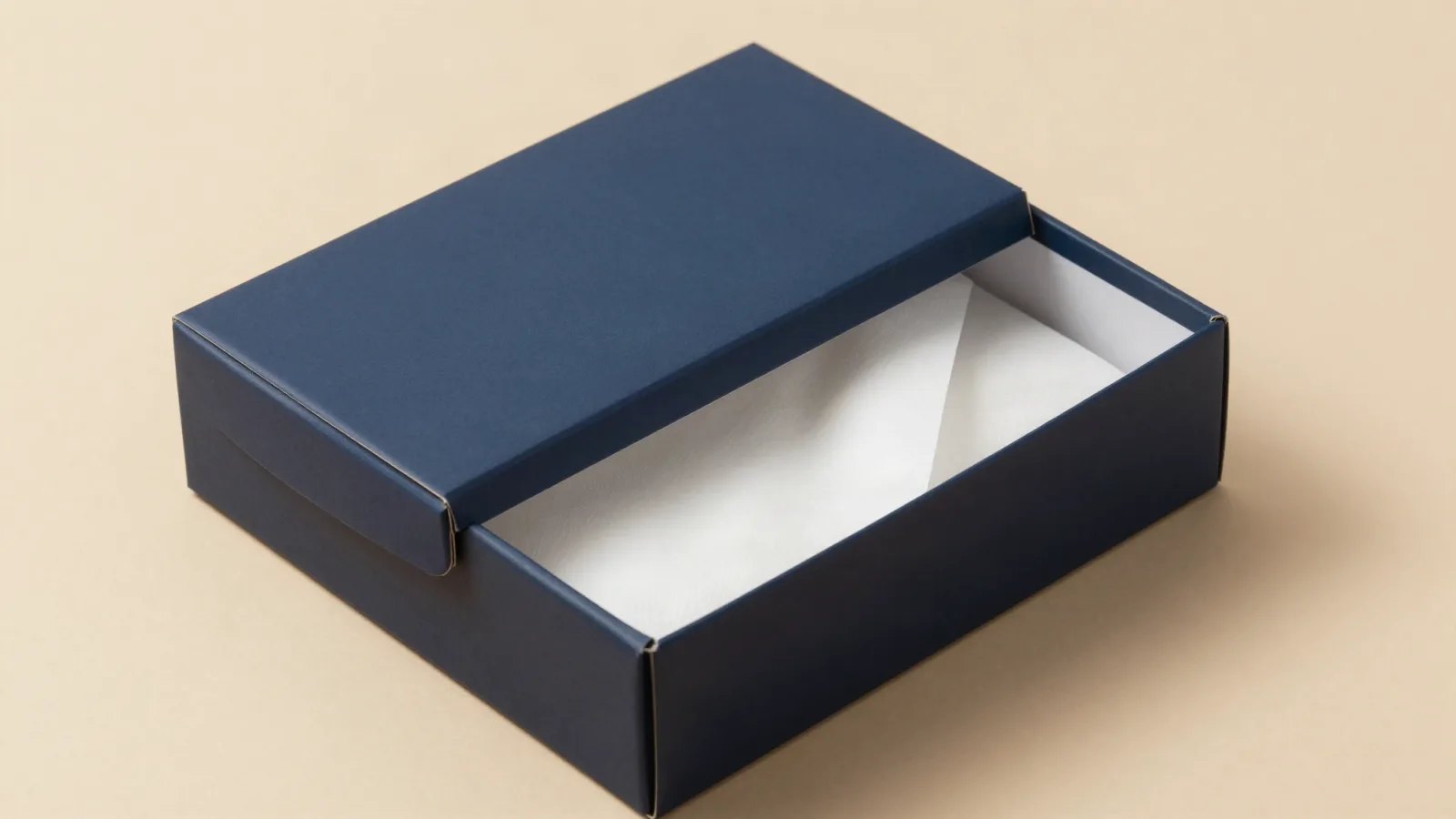




















































A tie box is a package sized around a folded necktie, bow tie, or menswear accessory. A dieline is the flat template used to print, cut, and crease the package. Start with the packed product, because the folded shape, label, band, and tissue determine the usable space inside the box.
A tie that looks neat on the packing table can shift after a loose insert, a lid that pinches the fold, or a box that leaves too much headspace. Send the actual pack-out, not only the tie name. That gives the quote and the proof something real to work from.
What should a tie box protect and present?
A tie box should hold the folded tie in its intended position, leave enough room for removal, and keep the brand panels readable after the box is closed. Record the folded length, widest point, thickness, label, band, tissue, and any accessory that shares the package.
The route after packing also matters. A box handed over as a gift can prioritize the opening motion, while a box that goes through parcel handling needs a fit that does not let the tie slide into the lid. State whether the box is for one tie, a bow tie, or a set.
Which tie box opening fits the selling moment?
A rigid two-piece box fits a lift-off presentation, a drawer box creates a sliding reveal, and a magnetic closure box gives the lid a defined closing motion. A window cut-out box puts part of the tie in view before the customer opens it.
| Box direction | What the customer sees | What the proof must show |
|---|---|---|
| Rigid two-piece box | Lid lifts from the base | Lid clearance, base depth, and folded tie position |
| Magnetic closure box | Flap opens and closes over the tie | Flap path, closure location, and artwork |
| Drawer box | Tray slides from an outer sleeve | Tray travel, stop, and product removal |
| Window cut-out box | Selected tie area stays visible | Window edge, tie position, and print around the cutout |
These structures create different hand movements and different printed panels. Pick the opening first, then check the folded tie against the base, tray, flap, or window. A box that opens well on screen can still bind when the tie or insert takes up the last bit of space.
How should you size a tie box?
Size a tie box around the tie in its final folded condition, including the label, band, tissue, and any accessory packed beside it. Send length, width, and thickness for the complete pack-out. If two ties share the box, measure them together and mark the removal order.
Free design support can turn those measurements into a dieline and a digital proof before anything prints. Check low-resolution art, RGB art after conversion for press, missing bleed, and type that sits too close to a score. The proof is the point to correct the fit.
When does a tie box need an insert?
Use an insert when the folded tie needs a defined pocket, support, or separation from another accessory. A board support can hold the fold in a repeatable place. A foam insert can create a shaped interior when the product needs more control inside the box.
Plan the insert and the outer box as one pack-out. If the insert is cut to the exact product size, the tie can stay put. If the lid, window, or drawer is checked without the insert in place, the final assembly can feel tight or leave the product loose.
Which CPL products help compare tie packaging?
The direct reference is custom tie boxes. Custom tin tie kraft bags show a bag direction for an accessory line. Shoe box packaging gives a larger apparel presentation reference, and custom foam box inserts show how interior support can be handled separately from the outer box.
Keep the outside readable after the structure is chosen. Matte lamination cuts surface reflection, gloss lamination makes printed areas look brighter, and foil, embossing, or debossing can mark a logo or collection name. Put those treatments on the artwork map before the proof is approved.
What should a tie box proof show?
A tie box proof should show the folded product, the closed package, the opening motion, and every printed or structural feature that affects the pack-out.
- The folded tie, label, accessory, and insert in their intended positions.
- The closed box, open box, and any drawer, flap, lid, or window movement.
- Logo placement, collection copy, product details, and bleed.
- Matte, gloss, foil, embossing, debossing, or window areas.
- Quantity, destination, artwork version, and approval record.
What are the MOQ, price, and production terms?
The MOQ is 100 units. Pricing is from $0.49 per unit at volume, quoted to spec. Production is typically 8 to 10 business days after proof approval, plus delivery. Free US shipping and free design support are available. The $19.99 sample kit is credited toward the first order. For a wider logo and packaging brief, use custom boxes with logo.
Frequently Asked Questions
What can a custom tie box hold?
A custom tie box can hold a folded necktie, bow tie, or related menswear accessory. The quote should identify the folded length, widest point, thickness, label, band, tissue, and any second item. If several products share one box, send the complete arrangement so the tray or insert is sized around the full pack-out.
Is a drawer box or rigid box better for ties?
A drawer box creates a sliding reveal, while a rigid two-piece tie box opens by lifting the lid from the base. A magnetic closure changes the flap motion, and a window cut-out keeps part of the tie visible. Choose from the opening you want and check the actual tie fit in the digital proof.
What measurements does CPL need for tie packaging?
CPL needs the folded tie length, widest point, thickness, label, band, tissue, and any accessory that will share the package. Send measurements for the complete pack-out, not only the loose tie. A physical sample or dimensioned sketch also helps the dieline, insert, lid, and opening stay aligned.
Can tie packaging use a foam insert or window?
Tie packaging can use a foam insert, a board support, a window cutout, or a combination of those features. The insert should be checked with the folded tie and outer box together. The proof should show the window edge, tie position, closure, and product removal path before approval.
What is the minimum tie box order?
The minimum tie box order is 100 units. Pricing is from $0.49 per unit at volume, quoted to spec. Production is typically 8 to 10 business days after proof approval, plus delivery. Free US shipping and free design support are available, and the $19.99 sample kit is credited toward the first order.












