




























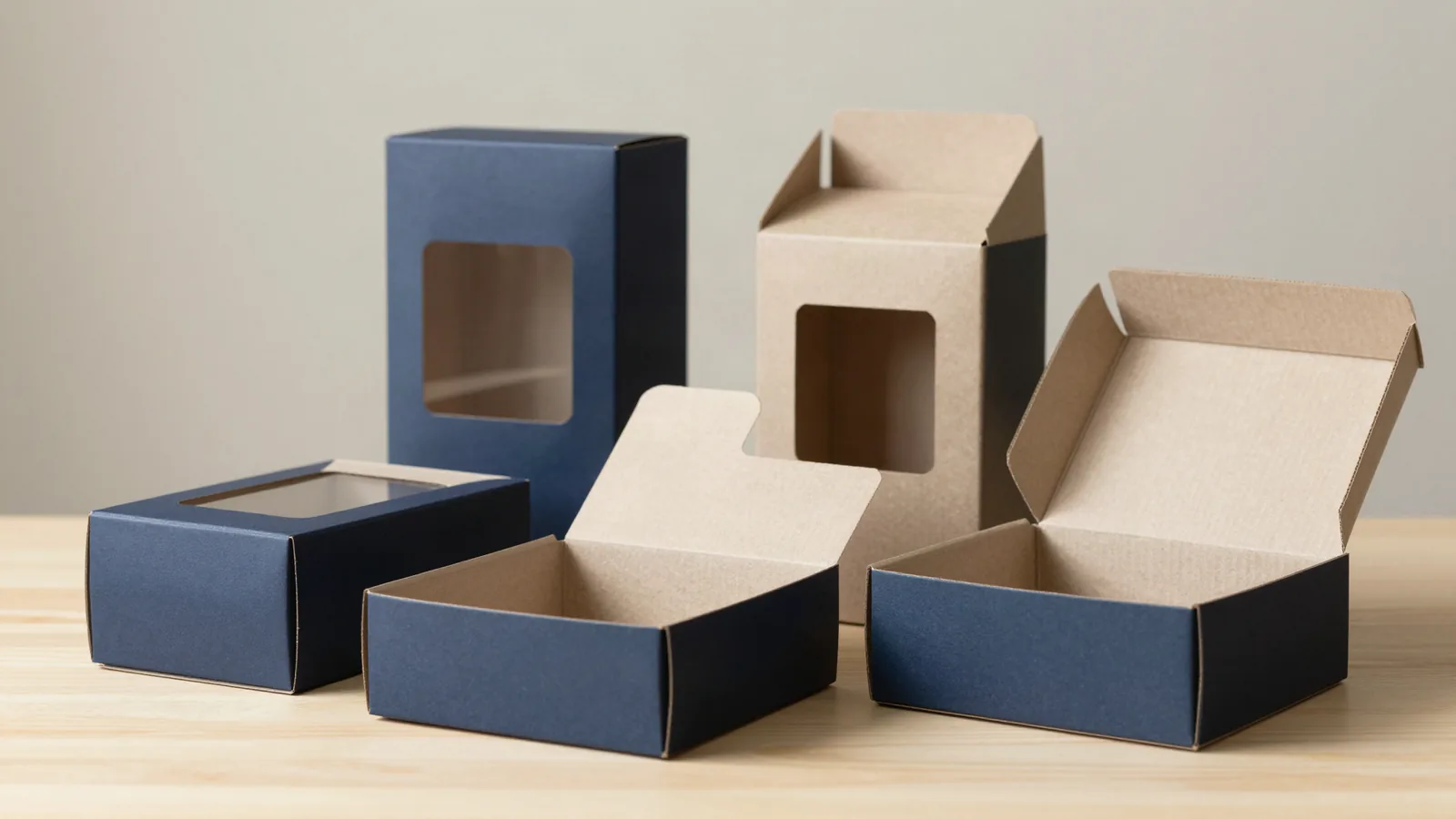




















































Veterinary packaging starts with the contents and the hands that open it. A pack-out is the full arrangement of the item, insert, and any clinic components inside the package. Define the product, intended user, storage path, and information that must remain legible. FEFCO 0427 is a standard code used to identify a roll end tuck top mailer style. Mylar is a film laminate, and its barrier comes from a metallized film layer that blocks light, moisture, and odor transfer.
What should veterinary packaging say at a glance?
The front panel needs a clear product name and variant hierarchy before decoration takes up space. Place the quantity statement supplied by the brand, handling direction, and variable information where staff can find them without turning the package through every face. A folding carton gives several printed panels. A pouch needs a front panel that stays visible after filling.
| Packaging direction | Common structure reference | Specification focus |
|---|---|---|
| Small folding carton | Straight tuck end or reverse tuck end | Panel hierarchy, closure, fit, and readable copy |
| Clinic kit carton | Auto-lock bottom or crash-lock bottom | Hand setup, insert position, and base support |
| Shipping-oriented outer pack | Roll end tuck top mailer or FEFCO 0427 | Inside fit, corrugated profile, closure, and handling |
| Flexible packet or refill | Mylar or foil laminate with PET / AL / PE layers | Opening, seal area, opacity, and artwork placement |
A pouch built with PET / AL / PE layers uses PET for film strength, AL for barrier and opacity, and PE for seal behavior. That construction behaves differently from a paperboard carton, so the opening, seal area, and printed panel need their own check. Put only supplied product information on the package; do not infer a product claim from the material.
Which material fits a clinic carton?
A folding carton starts with the board caliper needed for its folds, closure, insert, and hand feel. The typical industry reference for SBS, C1S, or C2S paperboard is 12 to 24 pt. Kraft board is commonly discussed in the 18 to 24 pt range. Rigid chipboard is typically 1.5 to 3 mm and can be wrapped in 100 to 157 gsm art paper.
Corrugated E, B, and C flutes are common outer-package references, with 32 ECT used as a common strength convention. E-flute gives a finer print surface and smaller profile. B and C flute add more thickness, cushioning, and stacking structure when the package travels inside a shipper.
How should a clinic kit open and close?
Map receiving, storage, opening, product removal, and reclosure in that order. Straight tuck end and reverse tuck end cartons give different top-panel relationships. Auto-lock and crash-lock bottoms change how the empty package forms before filling. If a tear path or controlled access point is needed, compare a perforated construction. Describe the motion staff should use and the point at which the package is considered open.
What dimensions belong in the packaging brief?
About 1/16 in, or 1.5 mm, is a common tolerance reference for the space between a product and package features. State the contents and insert as length x width x depth, then label inside and outside measurements. Inside dimensions are usually the clearer fit reference. The applicable tolerance still depends on board, folds, closure, insert, and finish.
If the carton will travel inside a shipper, separate product fit from carrier planning. For US ground planning, dimensional weight commonly uses L x W x H / 139. A box that fits the product can still take up unnecessary shipping cube, so check the closed pack-out before choosing the outer shipper.
Which finishes keep veterinary information readable?
Offset CMYK suits detailed paperboard panels, while digital printing can suit short runs or an early artwork direction. Flexographic printing is commonly associated with corrugated surfaces. Matte or gloss lamination changes reflection. Soft-touch changes hand feel. Spot UV, foil stamping, embossing, and debossing can distinguish selected brand details when they stay clear of folds, seals, and labels.
Inspect the proof for low-resolution art, RGB color that shifts during press conversion, type set too close to a score, and bleed missing from the file. Check variable areas and product information after folding, not only on the flat artwork. The same words can become hard to find when a panel wraps around a corner.
Which CPL formats are useful references?
Private-label packaging is a reference for a coordinated product family and consistent panel system. Compare perforated packaging when a defined opening or access path matters. See towel packaging when the line includes soft clinic supplies that need a simple outer pack. These are format references only. Contents, dimensions, opening, materials, artwork, and handling requirements decide the project direction.
What must the proof settle before approval?
The proof should settle fit, opening, storage, print, and any interior-contact question before the production clock starts. Load the actual contents and insert. Follow the clinic workflow from receiving through storage and removal.
- Identify the contents, product family, kit components, and intended user.
- State the opening, reclosure, insert, storage, display, and shipping sequence.
- Provide inside measurements, outside size, clearance, and the carrier package relationship.
- Mark product information, variable areas, logo panels, folds, seams, seals, and finish locations.
- Ask us about food-contact options for your product if the contents touch the inside packaging.
How do I start a veterinary packaging quote?
Send the contents, inside fit, outside size, opening sequence, insert needs, artwork status, quantity, and delivery location. CPL quotes veterinary packaging to spec from a 100-unit minimum. Pricing is from $0.49 per unit at volume, quoted to spec. Production is typically 8 to 10 business days after proof approval, plus delivery. Free US shipping, free design support, and a free dieline are available. Order the $19.99 sample kit, which is credited to the first order. Start through custom packaging solutions.
Frequently Asked Questions
When is a pouch a better fit than a carton?
A pouch can suit a flexible refill or packet when opening, seal area, opacity, and printed-panel visibility matter more than a rigid shape. PET / AL / PE laminate layers have different jobs inside the film stack. Choose the pouch after checking the contents, seal path, storage position, and the information that must remain visible.
What does FEFCO 0427 identify?
FEFCO 0427 is a standard code used to identify a roll end tuck top mailer style. The code gives the packaging team a shared structure reference, but the finished package still needs the correct inside fit, corrugated profile, closure, and carrier relationship for the clinic kit or supply.
How can an insert keep a clinic kit orderly?
An insert gives each kit component a defined location and prevents small pieces from settling beneath the main item. Size the insert around the actual contents, then test removal with the intended hand motion. Check that the insert does not block product information, close against a score, or make reclosure awkward.
What is the practical difference between matte and gloss?
Matte lamination reduces surface reflection and can make dense package copy easier to inspect under bright clinic lighting. Gloss lamination creates more reflection and a sharper surface appearance. Both choices need a folded proof because glare, folds, seals, and the viewing angle can change how product information reads.
Which panel areas need extra checking?
Panels near scores, glue zones, seals, closures, and variable information need extra checking because folds and assembly can hide or distort copy. Inspect the front, side, back, and inside surfaces after conversion. Confirm that the product name, supplied handling direction, quantity statement, and opening cues remain easy to find.












